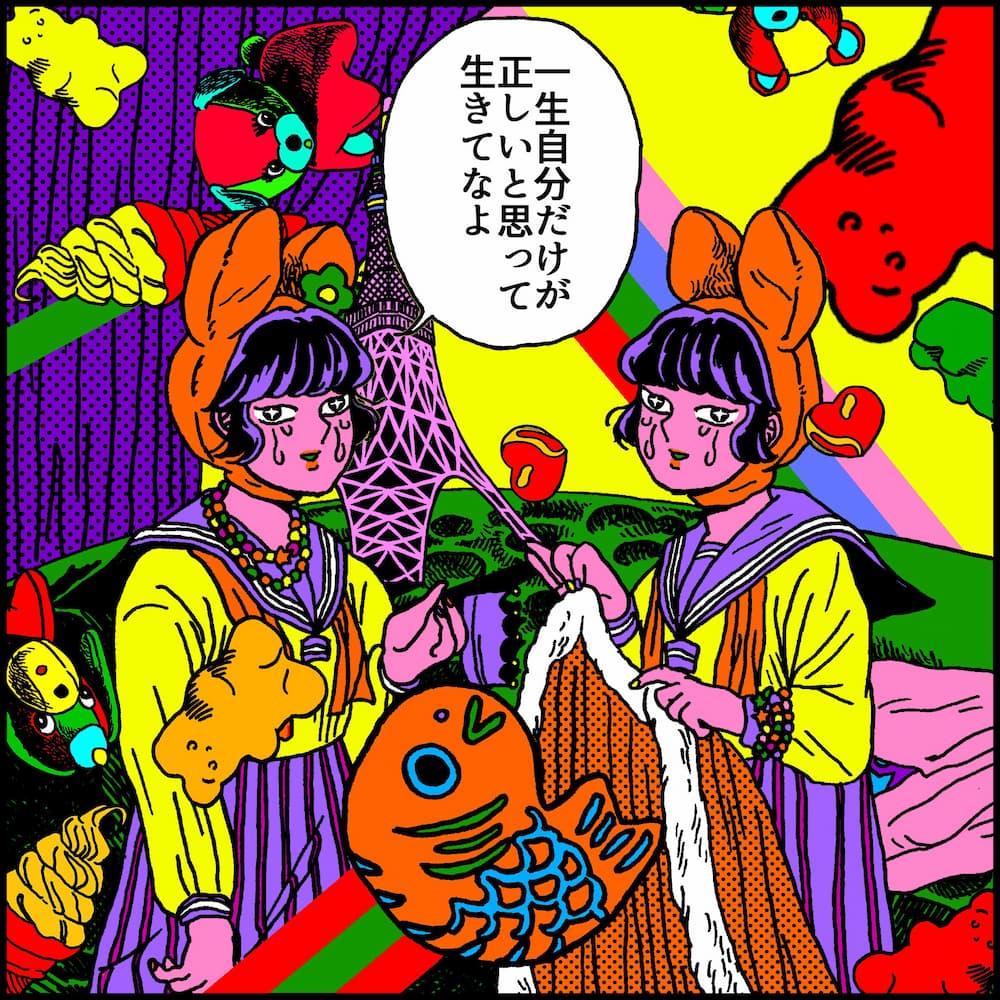
Continuing from Part 1, this interview features Chiaki Harada, an illustrator and artist renowned for her distinctive use of color, original characters, and poetic dialogue.
How “Horror” Saved Her from a Creative Slamp
If you’re comfortable answering, is there anyone who you consider a rival?
Chiaki Harada: In the past, I used to think of many people as rivals (laughs). But I started to have this mindset that each and everyone should just do what they love and since then, I stopped worrying much about others. If I had to name an eternal rival, or rather someone I truly admire, it would be Kazuo Umezu. My ultimate goal is to become an energetic elderly, just like Umezu.
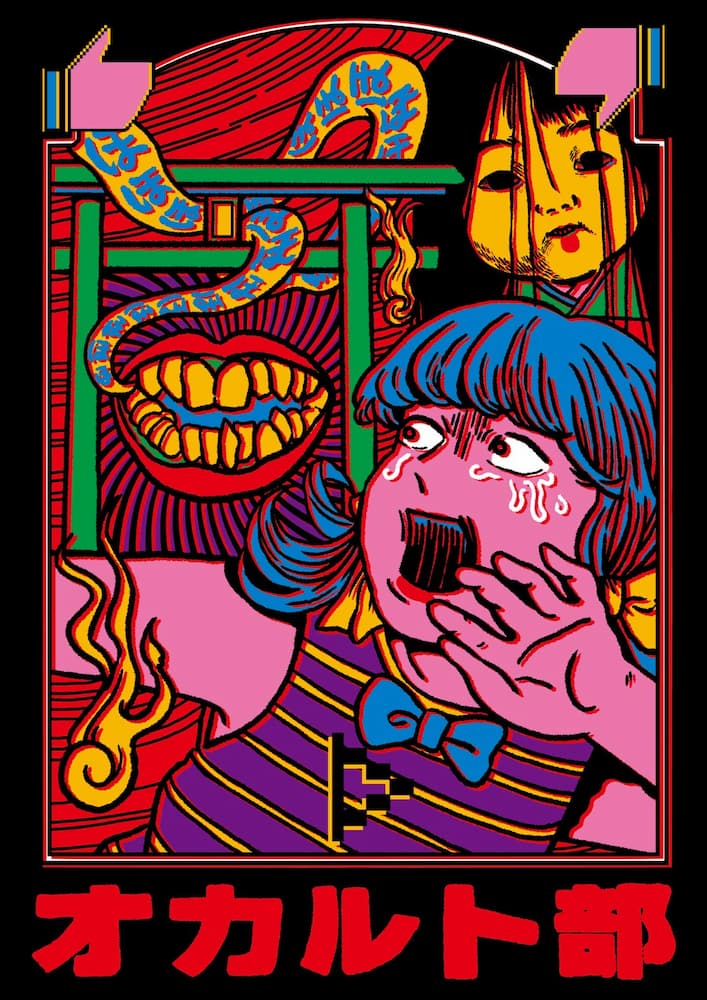
I saw in a past interview that you mentioned you want to write horror. Starting with Kazuo Umezu(related article:From Horror to Grand Art: Kazuo Umezu), artists who have inspired you also create horror works. How is the progress on the Chiaki Harada version of horror coming along?
Chiaki Harada: Actually, there’s been a proposal for a few years now to publish it as a book! But it’s currently been held up. I really want to put it out, so I know I need to properly write the rest. I feel truly sorry to everyone at the publishing company…
That’s very exciting! Was there an exact moment where it triggered you to want to do horror?
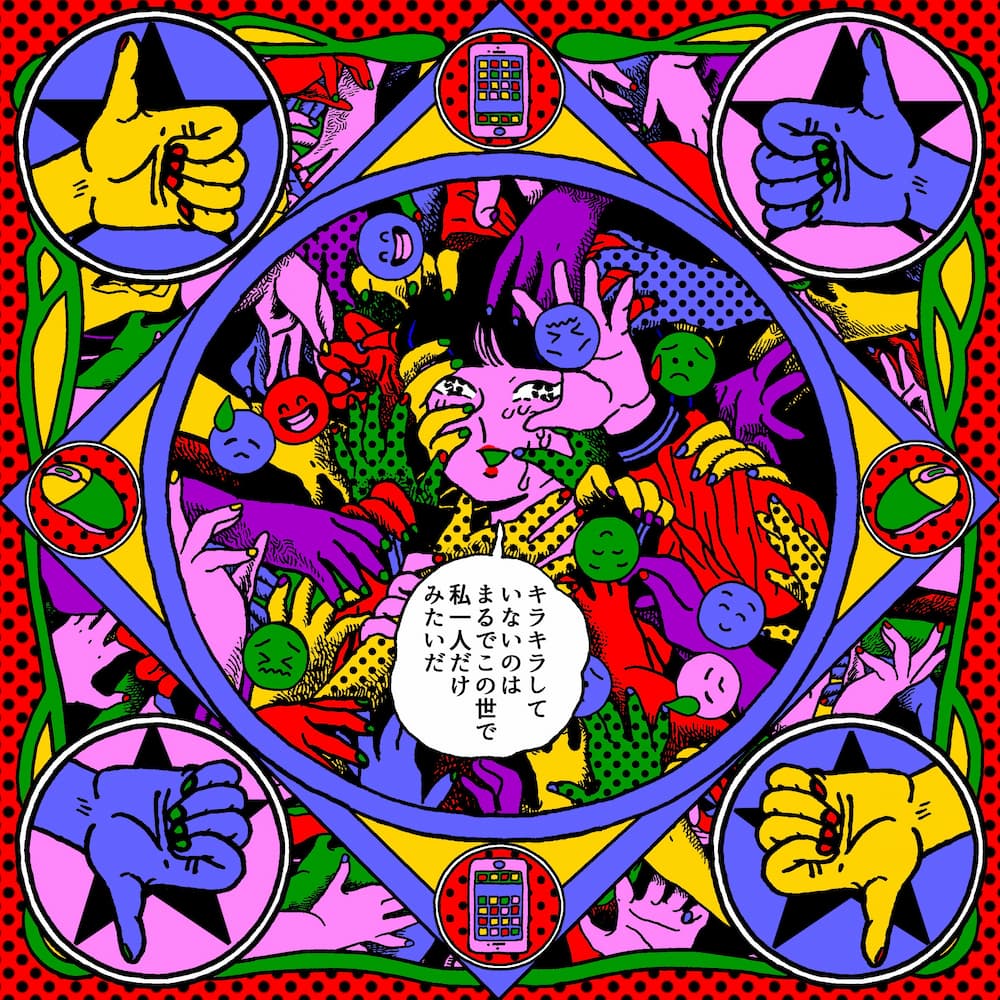
Chiaki Harada: Originally, my illustration often used dialogues that were like insults. I wanted to draw things that everyone may be thinking in their head but don’t really say it out loud. From a certain point though, especially on Twitter, I felt like a lot more people were getting into “reply battles” and easily posting whatever came to mind. I began to feel that posting my illustrations alone on that kind of timeline could make some people feel uncomfortable.
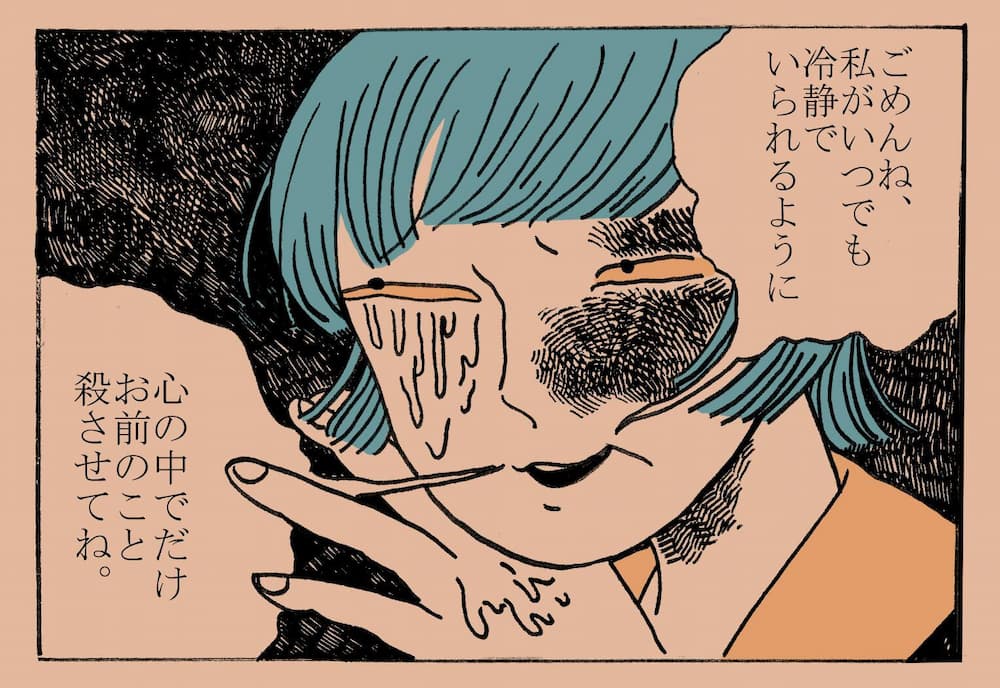
At that time, my personal life was also getting messy – I felt ill, was forced to move, and so many things came all at once. Combined with the COVID period, I went through a prolonged time of creative exhaustion, and found myself unable to draw illustrations or write literary essays. But I still wanted to draw something and had to support myself financially. I wanted to keep delivering my drawings to the viewers too. It was then that I realized insults were not enough, and as I reflected on what I genuinely loved, horror just came to mind.
I quietly added to my website that “I can draw horror-themed illustrations,” and then I started receiving requests from horror story YouTubers and true-crime/urban-legend YouTubers. After I started creating horror artworks, I was really happy to realize that I still had things I could express.
SNS and Society. Everyone Should Do Their Own Unique Work.
Now anyone can freely share their voice, but at the same time, I think there’s also a risk associated with being publicly visible. As a creator who has made extensive use of SNS, is there anything you are conscious of?
Chiaki Harada: While I don’t get many chances to meet the viewers, I really love the people who follow my work. Buying my merchandise or saying that they “like” my work may require a little courage. That’s why I want to make sure those people never feel embarrassed.
If I post something extreme and get backlashed from it, the people who follow me may feel upset or embarrassed. I definitely want to avoid such a situation. I constantly try to keep in mind the wish that everyone would live a calm, peaceful, and happy life.
Some artists actively post social and political opinions on social media. How do you maintain your distance from society?
Chiaki Harada: In my case, it’s probably closer to watching quietly from afar. Recently,my musician friend made a political tweet that caused a huge controversy, but that didn’t stop me from being friends with them at all. People often categorize us as “musicians” or “illustrators,” but I’ve been thinking lately that everyone is just fulfilling “their own unique role.”
Even if we draw similar pieces, my work is mine and their work is theirs. Even making political comments is part of that person’s style and their work, at least that’s what I think.
Chiaki Harada’s Daily Life. Gradually Resolving Long-Held Resistance Towards One’s Parents Through the Act of Raising a Child.
Do you have a particular preference about fashion or appearance?
Chiaki Harada:To be honest, I don’t have much interest in fashion… I don’t care much about clothes, hair, or nails. I think I used to think about it a lot in my own way, but actually my mother was an overbearing type who decided everything I wore. Even when I wore clothes that I chose myself the first time, she kept saying “that doesn’t suit you” and “that looks weird.” Out of rebellious spirit as a reaction to that, I think there was a time when I wore bright colored clothes.
Do you go out with your child on your days off?
Chiaki Harada: It’s increased lately. I don’t have many memories of my parents taking me out to play when I was a child, so I want to do things that I wished had been done for me when I was little for my child. It doesn’t have to be anywhere special but I try to go for a walk at least once a day, or do chores together, or play together.
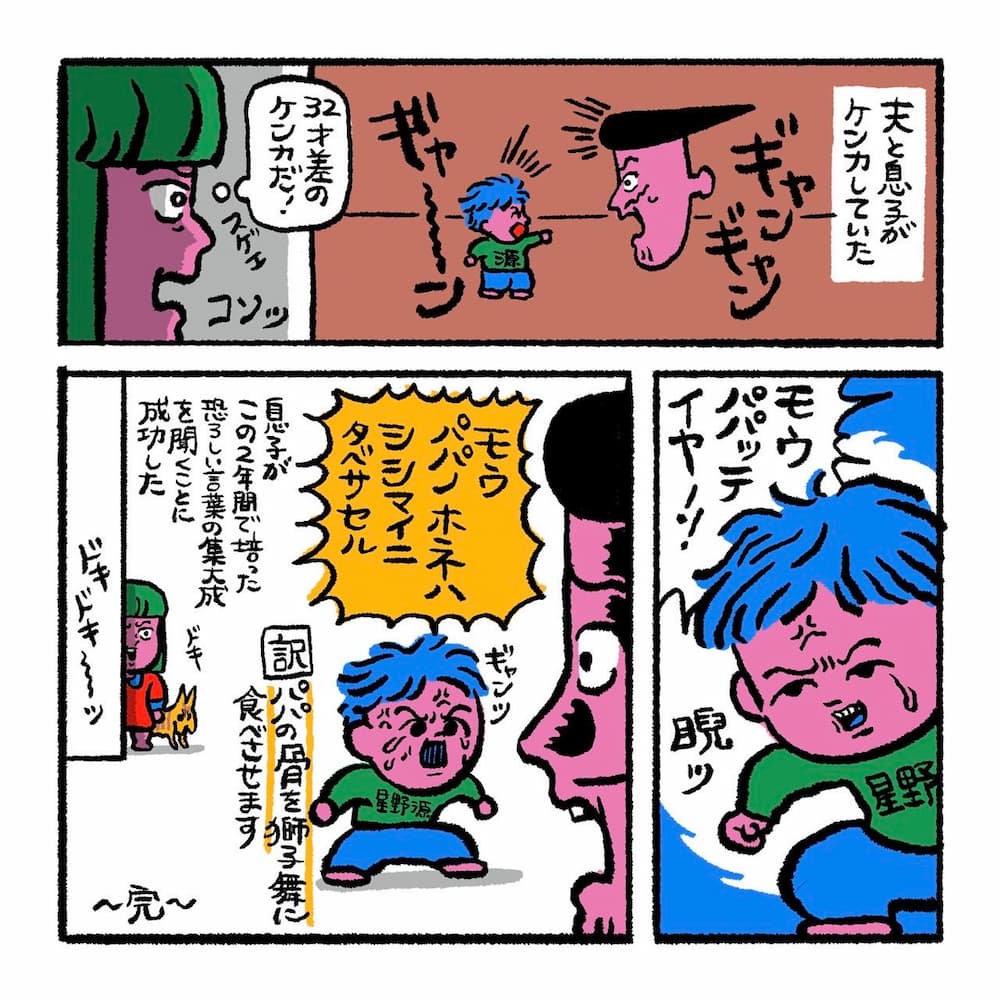
Could you tell us a bit more about your parents?
Chiaki Harada: We really didn’t get along in the past. When I was around fifth grade, my father just sort of disappeared. At that time, the atmosphere at home was bad, and I thought “I don’t want to be with Dad!” In the end, my father and I ended up living separately and from then on, my mother’s interest focused solely on me and we kept clashing.
Even recently, we were constantly fighting and weren’t on good terms, but after my child was born, my mother, my father, and my father’s partner started coming over to visit. Although step by step, we’ve gotten a little closer.
I myself had this feeling of questioning why I can’t forgive my parents, but through raising my own child, it feels as if the resentment is slowly being cleansed. Creating some distance between us has ultimately made things easier for everyone.
We’d like to ask about your current work and what you’d like to try in the future.
Chiaki Harada: There are so many things I want to try. I would love to write a literary essay again, and I want to try horror too. Also, partly due to the post-COVID slump, I have this sense that I haven’t fully returned to my original insult-style illustrations. But when my child starts going to kindergarten and I have a bit more time for myself, I want to draw girls in more detail.
Another thing that I’ve been interested in for a while is translating my illustrations and dialogue to share them internationally. Previously, I had translated versions of my books published in Taiwan and other Chinese-speaking districts, but this time I want to release them in English-speaking countries too. I want people from all around the world to see my work.
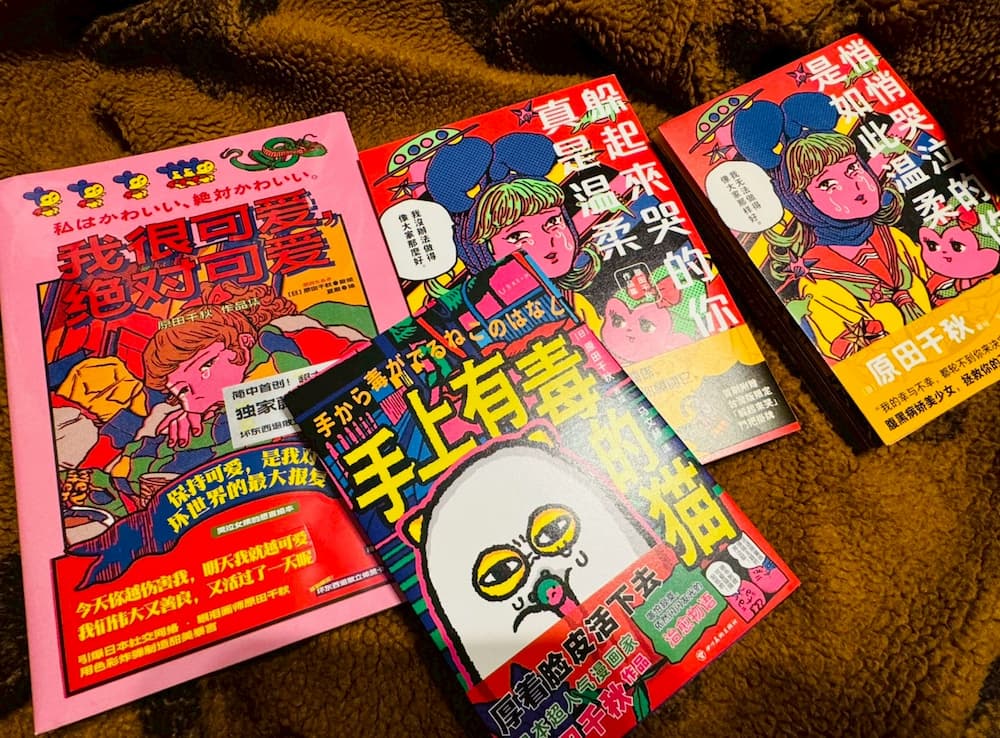
Right now, I’ve been offered to publish a parenting essay manga, and I’m hoping to release it successfully. I want to do my best to make it that far without running out of life first (laughs).
Over the course of a one-hour interview from her workspace, Chiaki Harada shared more dreams than could possibly be contained in that time. SNS, illustration, art, and parenting. As Chiaki Harada continues to cultivate various fields, we hope to continue watching her courageous journey – sharing both laughter and tears along the way.