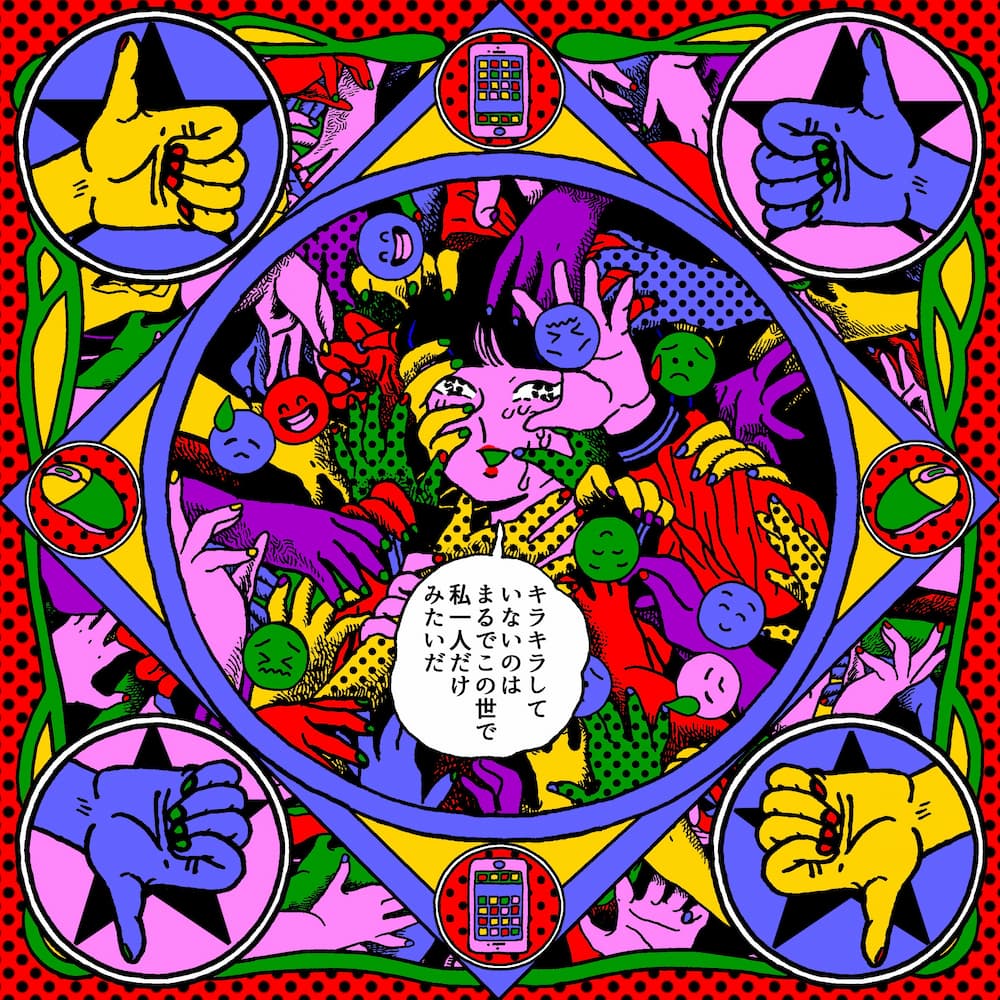
Chiaki Harada is an illustrator, creator, and mother. During the height of Twitter’s popularity, her distinctive worldview – vividly colored visuals and original characters delivering sharp badmouthing – attracted widespread attention. Harada has reflected the environment and emotions surrounding her, constantly experiencing a diverse range of expressions. This two-part interview delves into the creative world of Chiaki Harada.
Choosing Her Own Path: The Beginning of Chiaki Harada’s Challenge Beyond Constraints
Thank you for joining us today! First, I would like to ask a bit about your journey until today. Could you briefly teach us when you started drawing in your current style?
Chiaki Harada – I started drawing illustrations just after I turned twenty, so it was a bit of a late start. At that time, Twitter was at its height of popularity and I began receiving a lot of work for web manga and literary essays through Twitter. So I think I’m one of the “Twitter-born creators.” I truly feel that Twitter has really helped me grow and contributed significantly to who I am today.
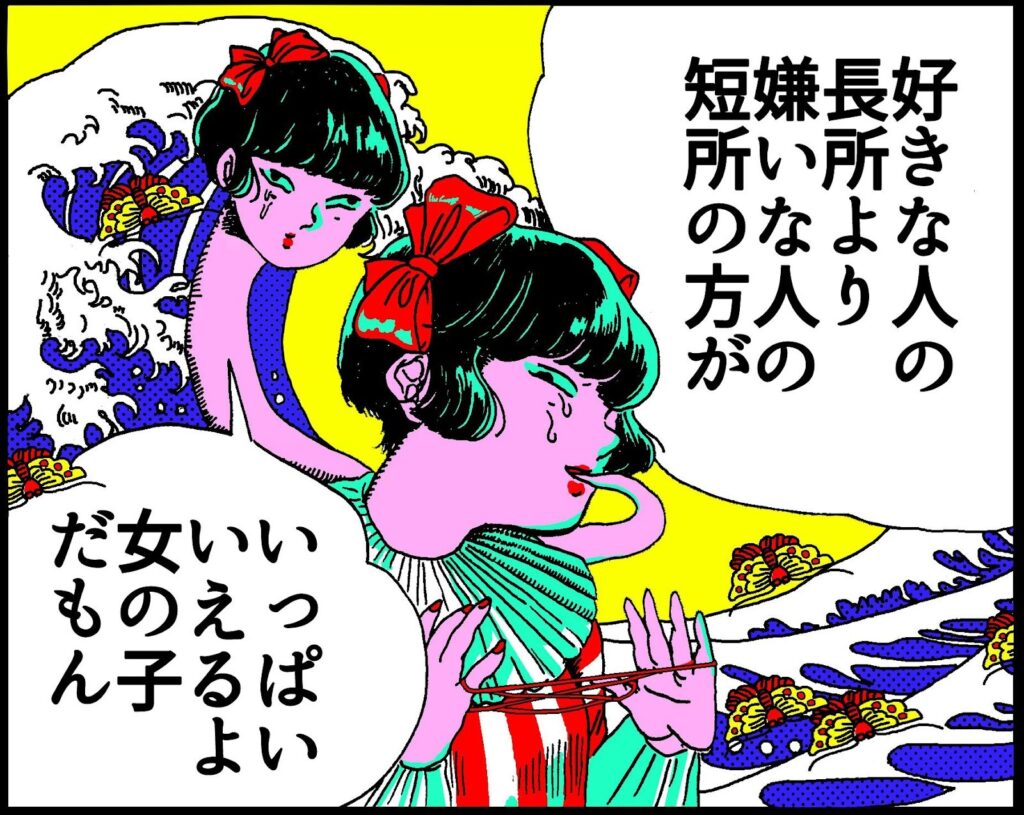
Now, we’d like to shift our focus to your personality and everyday life. What initially inspired you to upload images on Twitter?
Chiaki Harada – The trigger… Well, I was given a computer at a daily young age, which was quite early for that time. My family got access to the internet early on, and back then, various online communities were trending – such as BBS, drawing boards, blogs, and Mixi. I moved between these platforms, drawing and experimenting online, and Twitter was naturally the extension of that experience.
At the time, meme posts would often go viral, and watching how the follower count grew made me feel excited. I continued to post illustrations while thinking of ways to increase the number of followers. Twitter was a space to explore ways of expanding my audience by experimenting with the illustration style – like adding color, or including dialogue and turning the drawings into short manga
So your current style, manga, and illustrations are the extension of meme tweets and various other posts?
Chiaki Harada – That too, but I also think I just wanted to become “somebody” (laughs).
You have been active across various fields – illustrator, designer, university lecturer, etc. Do you have a principle that you keep in mind to remain unique and authentic across these different fields?
Chiaki Harada – I probably have a strong desire to always do things that feel like “I’m being myself.” Especially when I’m lecturing, people might see me as “someone who sort of casually became a creator.” But actually, I have my own journey of how I managed to consistently get jobs as a creator. I wish to convey that experience as a lecturer, but not in a “you should all copy this” way. Rather, I want to show them one example of this is how I did it and this is one way to take a detour.
Regardless of the work, I continue with the feeling that I want to create something that is “unique and authentic to me.”
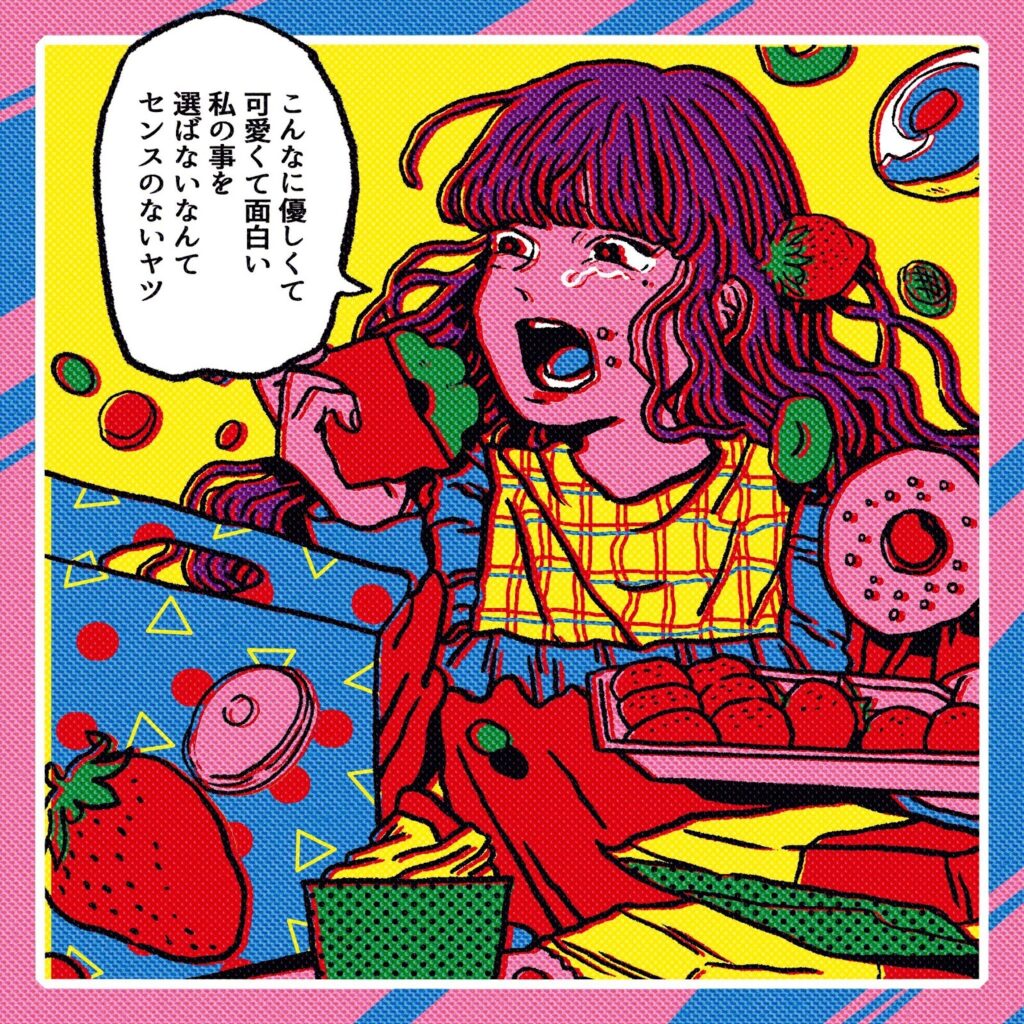
The illustration motifs really express your authenticity!
Chiaki Harada – Right, I particularly like to draw girls. Opposingly, I haven’t really thought much about drawing men.
True, I do see illustrations of your family but there’s definitely an impression that male characters are rare.
Chiaki Harada – Yes. I do draw men when requested for work, but fundamentally I love to draw girls and crying children. When people see those motifs, many seem to think, “Ah, that’s so like her.”
Conversely, do you find it difficult to draw men or smiling girls?
Chiaki Harada – It’s not that I can’t draw them at all, but it feels a bit different from the “feeling” I want to draw. It’s more about how I perceive the motif… After all, it feels right for me to draw crying girls.
I Just Don’t Want to Be Told “You Changed After Having Kids”
In your earlier artworks, it seemed to have a strong impression of powerful works and sharp phrases. Meanwhile, your recent work feels more self-help oriented, with words that many people can empathize to. Even with your illustrations, there’s an impression that you’ve distanced yourself from dialogue.
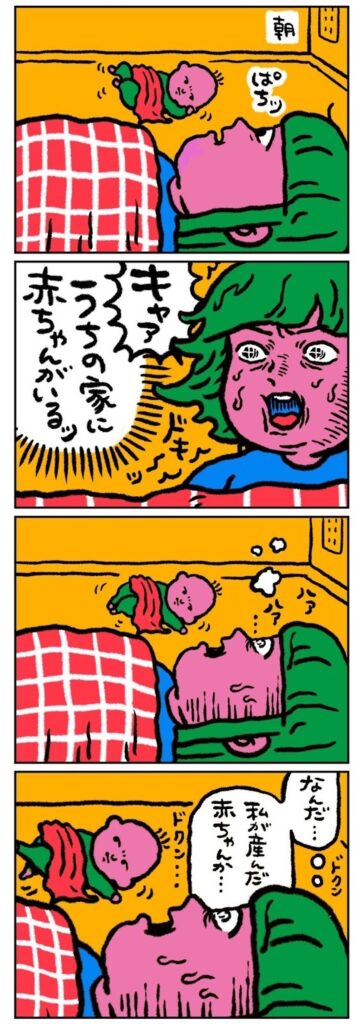
Chiaki Harada – If there’s been any change, the biggest one is that I’m looking after my child at home. My child wakes up at 5 am, and we’re together until the time they go to bed, which is around 7pm. I do some house chores after that, and then draw or check emails until about 1 am. Compared to before, the time I can devote to drawing has drastically decreased. So, for the past three to four years, I’ve continuously had a sense of saving time as well as “doing what I can do now,” It’s not that I’ve changed dramatically, but more that I’m desperately doing what I can with limited time.
Perhaps the production process itself has become more organized. What’s the workflow for creating artworks with dialogue?
Chiaki Harada – I constantly take notes of my thoughts on my iPhone! When I have time, I check back on the notes and draw whatever feels ready to be drawn. Before having a child, I was drawing all the time, but lately I just think about how to use my time well.
Also, I’ve gotten better at reading my own mood (laughs). I choose what to draw based on my honest feelings about what I want to write or what seems doable now.
By having a child, has it changed the way you approach work or the way you think towards work?
Chiaki Harada – How do I put this… I have a strong sense of “In the end, I’ll still keep doing it anyways” (laughs). While difficult things have expanded, I still end up drawing and I can’t quit.
It is often said that “you’ll become more soft once having kids” or “your art style will probably change,” but whether you have kids or get married, you’ll still experience unpleasant things. That’s probably applicable to everyone – even those who are incredibly beautiful, wealthy or living in a luxury high-rice mansion can all experience frustrating moments. So I don’t really want to think that just because I have a family or seem happy, I can’t write certain types of content. I just don’t want to be told “you changed after having kids.” There’s just a bit of pride in that.
I’m “Surprisingly Normal”
It was striking when you mentioned earlier in the interview that there are moments when you think you might be surprisingly “normal.” At art universities and specialized schools, most people think of how to express originality and show their own colors, but when was the time you felt that “I might be normal”?
Chiaki Harada – I think I’ve felt that way since when I was quite young. When I think back to my past, there are very few things that feel exclusive to me. Looking back at things that I thought were “major incidents” when I was young, I often think breaking up with someone was way harder (laughs).
I see my life as “a life that isn’t particularly dramatic when viewed as a content,” but within that, I try to think of how I could turn it into work. Also, I often get misunderstood as someone who is mentally ill, except my artwork requires me to be energetic to create it (laughs).
The interview proceeded in a friendly atmosphere. In the second part, we’ll delve deeper into more personal aspects, including Chiaki Harada’s biggest creative slump and her relationship with her family, alongside topics that revealed her characteristic ability to view herself objectively and her gentle way of speaking.