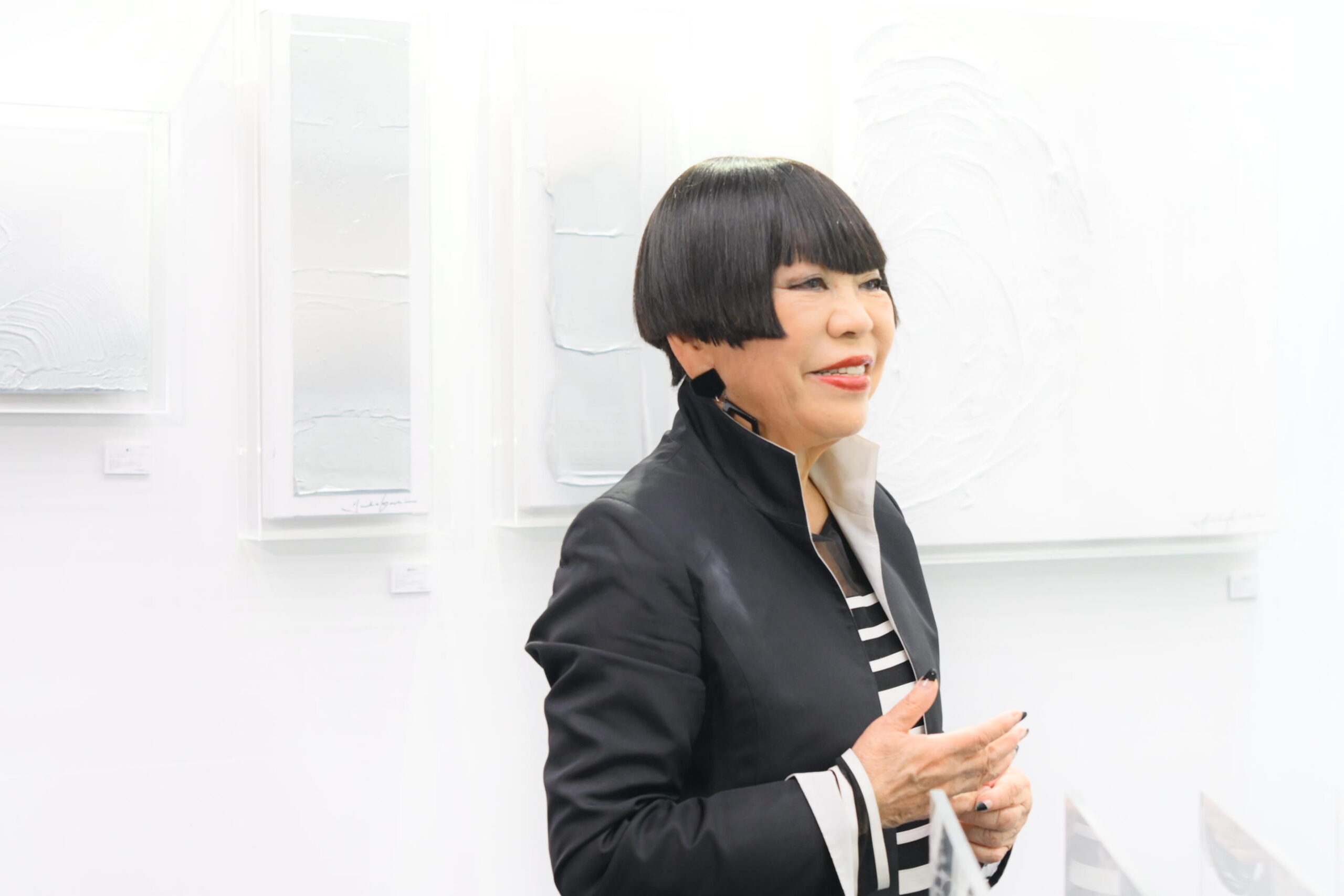
The art event “BENTEN 2 Art Night Kabukicho” invites audiences to rediscover the light and shadow of Kabukicho through its culture. For Chim↑Pom from Smappa!Group, who curate the event, Maki Tezuka has long served as a vital conduit between the collective (from their pre-name-change era to the present) and the district. He also acts as a broader hub connecting Kabukicho with the “outside world.” (For details on the name change, see Bijutsu Techo’s interview “Why did Chim↑Pom from Smappa!Group choose to rename? On the importance of ‘mutation.’”)
Entering the district in 1997 as a host and now an entrepreneur running numerous host clubs, restaurants, and salons, Tezuka has contributed to Kabukicho’s cultural reputation as an executive director of the local shopping association and founder of the volunteer group Yachō no Kai. (For the turbulent story of Tezuka and Kabukicho, see his book Shinjuku/Kabukicho: Why Do People Seek the “Night City”?)
So what future does he envision for Kabukicho? Through “BENTEN 2 Art Night Kabukicho,” we explore the future he seeks and his unwavering love for the district.
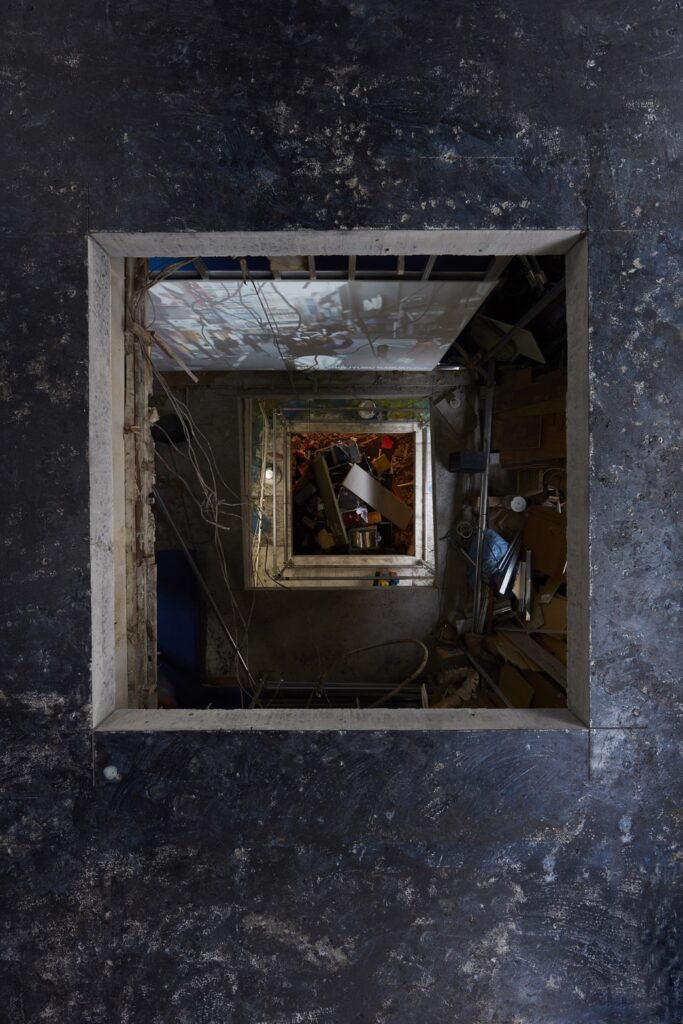
Cyanotype, room, installation / Photo: Kenji Morita
Courtesy of the artist, ANOMALY and MUJIN-TO Production
Carrying the Deep Layers of Kabukicho on Contemporary Art
While Mr. Ushiro spoke from an artistic perspective, you’ve led many initiatives in Kabukicho including work with local government. What are your thoughts on “BENTEN 2 Art Night Kabukicho”?
Tezuka: After the war, there was a movement to rebuild this district through culture. Contemporary art can capture and express social phenomena. With this year’s theme, “Urban Rewilding,” art that goes beyond the surface is well suited to a district as rapidly changing as Kabukicho.
For this event, do you focus more on people working in Kabukicho or those from outside?
Tezuka: My strongest wish is to make life more enjoyable for the insiders—not only those here now but those who will come to work here. That includes people who visit to see the cultural side—different from the stereotypical image—and people who want to help create the event. In fact, BENTEN also has a recruiting aspect: some visitors from last year ended up working with us.

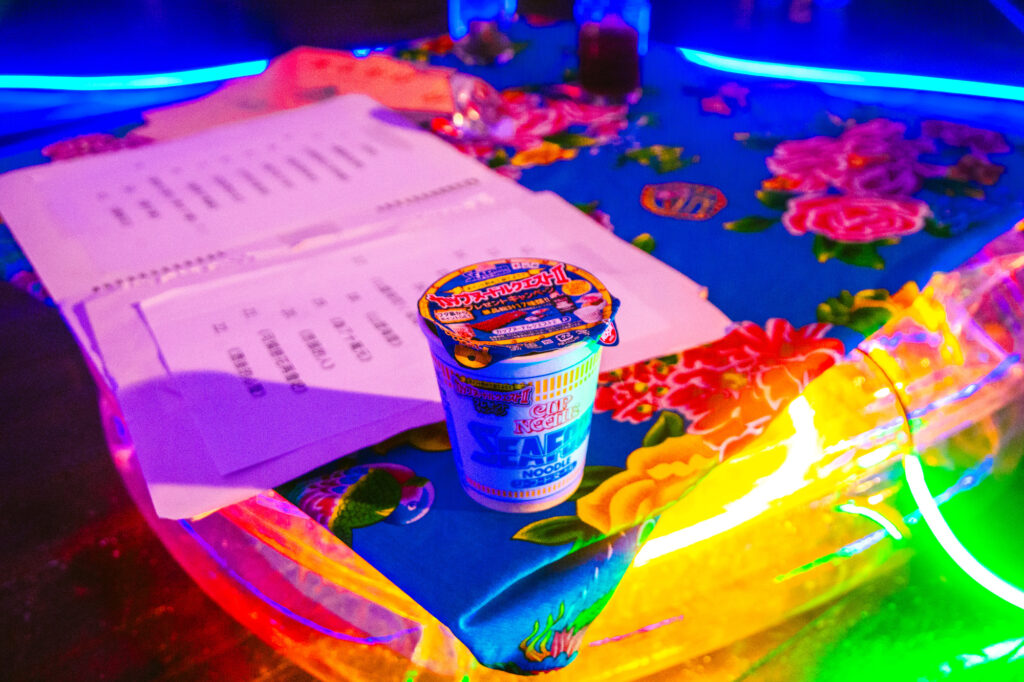
“A-Yoko,” a chaotic alley of performances, pop-ups, and food inside the Ojo Building
Shifting “Insider” Mindsets—From a Pass-Through Town to a Place to Stay
Tezuka: Many people live through social media, which is flooded with easy, stereotyped narratives. Kabukicho’s ephemerality amplifies that mindset, so surface-level stories get more attention. As a result, the self-awareness and real, on-the-ground sense of those who come and work here can thin out. I want to gradually adjust that gap between prevailing impressions and actual reality.
Otherwise we lose our sense of locality—“we create things here; this is our hometown”—and Kabukicho becomes just a place people pass through. That has its charms, but we are the ones who stay. I want to give meaning to that, and I’m always thinking about how to involve insiders. I see BENTEN 2 long-term, as a way to gradually build such a current.

In Kabukicho’s history, Kibei Suzuki—who worked to rebuild the district after the war—also faced misunderstanding and setbacks, correct?
Tezuka: Yes. After Suzuki, many who embedded culture here were Taiwanese entrepreneurs who had built wealth. You need both resources and ideals—lacking either fails. I believe holding that balance is my role. For this event, more than half the venues are our Smappa!Group rentals—that’s frankly disappointing. Going forward, I want to gather more insiders who share this intention and involve the entire district.
What ideas do you have to involve the district even more widely?
Tezuka: While I value contemporary art as a gateway to reach abroad, I also want to add more entertainment-oriented elements—things insiders can join casually and link to their livelihoods.
From Art Event to a Cultural Festival—with Art at the Core
Golden Gai is packed with foreign visitors. What do you think about the inbound surge?
Tezuka: If profit is the goal, you just target foreigners. But then you get only a surface-level Kabukicho. That has its place, but insiders and visitors should mingle to cultivate culture.
What’s most important in striking that balance?
Tezuka: I’m not an artist—that’s key. My role is to understand contemporary art, connect the city’s future (beyond art) with the outside, and steer how Kabukicho is presented so it aligns with on-the-ground reality.
I see—more of a third-party perspective.
Tezuka: Exactly. We must be careful not to misinterpret Kabukicho.
That sounds less like art curation and more like Kabukicho curation—advice only someone who knows the area deeply could give.

“Tokyo Sabaku,” one of the venues for “BENTEN 2 Art Night Kabukicho”
Tezuka: Understanding how we’re seen is crucial. Rather than asking what we want Kabukicho to become, we should frame it within contemporary art, guarantee quality, and add entertainment to widen the entrance. Then it becomes coherent—evolving into a city-scale festival, not just an art event, with contemporary art at the center. That’s what I want. It lets even those indifferent to art think about the city as their own matter and become active citizens of it.
And always grounded in the city’s culture.
Tezuka: Exactly. I want to adjust the external gaze and change things from within. It’s not “only those who get it should come.” I also want to revisit history—like the once-successful ice-skating rink project—without simply repeating the past, but by inheriting the city’s history and doing what fits the present.

Kabukicho as “Nourishment for Life”
This art event depends on viewers roaming the city. Are you intentionally designing it so people understand Kabukicho by walking it?
Tezuka: Very much so. The roaming format lets each participant decide for themselves what this city is. Come to the nightlife on your own, find it interesting—that’s what gives the event meaning.
What kind of city do you want Kabukicho to become?
Tezuka: I want it to be a place where working in Kabukicho becomes nourishment for life. People already say it was a good experience, but often what’s missing is culture. I’d be happy if they could say exposure to culture here was valuable. This city has that potential—it’s a place that prompts you to consider how you want to live.
What does Kabukicho mean to you?
Tezuka: Kabukicho is in constant upheaval. Here you feel the great shifts—AI, the internet age, the pandemic—in real time. Debates about foreign tourists aren’t just online discourse; they’re events right in front of you. Because change is so palpable, the zeitgeist appears on the surface. That forces us to consider how to live and who to be—not as an armchair theory, not as a pretty story. That’s what makes it compelling.
A final message to visitors?
Tezuka: Enjoy as much art as you can—and please roam the city, peek into bars and eateries, and observe the people who inhabit Kabukicho.
On November 1, as you roam the city through “BENTEN 2 Art Night Kabukicho,” the old image of a “dangerous” Kabukicho will shift, revealing a fresher outline. If this article contributes even a little to that pre-revolutionary moment, we’ll be glad.
BENTEN 2 Art Night Kabukicho
The roaming art event “BENTEN 2 Art Night Kabukicho” will be held from November 1 to 3, 2025.
Under the theme “Urban Rewilding,” it is curated by Chim↑Pom from Smappa!Group, following the success of “BENTEN 2024.”Audiences can experience Kabukicho’s cultural pulse by roaming through venues such as the Shinjuku Kabukicho Noh Stage, Ojo Building, Decameron, WHITEHOUSE, and Tokyo Sabaku. Come witness the raw reality of this chaotic, luminous city firsthand.
Hours
November 1 (Sat) 15:00–05:00 / November 2 (Sun) 15:00–05:00 / November 3 (Mon, holiday) 15:00–23:00
*Hours may vary by venue.
Tickets
Advance tickets on sale now *Until October 31 at 11:59 p.m.
https://artsticker.app/en/events/94416
At the door:
1-Day ¥3,500 / Advance ¥3,000
3-Day Pass ¥7,000 / Advance ¥6,000
Under 18 ¥2,500 / Free for junior high school and under
After midnight: ¥2,000 (incl. 1 drink)
*Some programs may require additional fees.
Website: https://www.benten-kabukicho.com/
Instagram: @benten2025_kabukicho