Starting out as a “free, behind-the-scenes” creator whose name never appeared in public, Acky Bright stepped into the spotlight in search of fulfillment in his work – and eventually crossed oceans. What he encountered there was the reality of the limited global reach of Japanese anime and manga. Drawing on his experience moving between the expressive worlds of manga and American comics, this series explores his creative philosophy and meticulous approach, as well as the essence of making things in the age of AI as seen through his eyes.
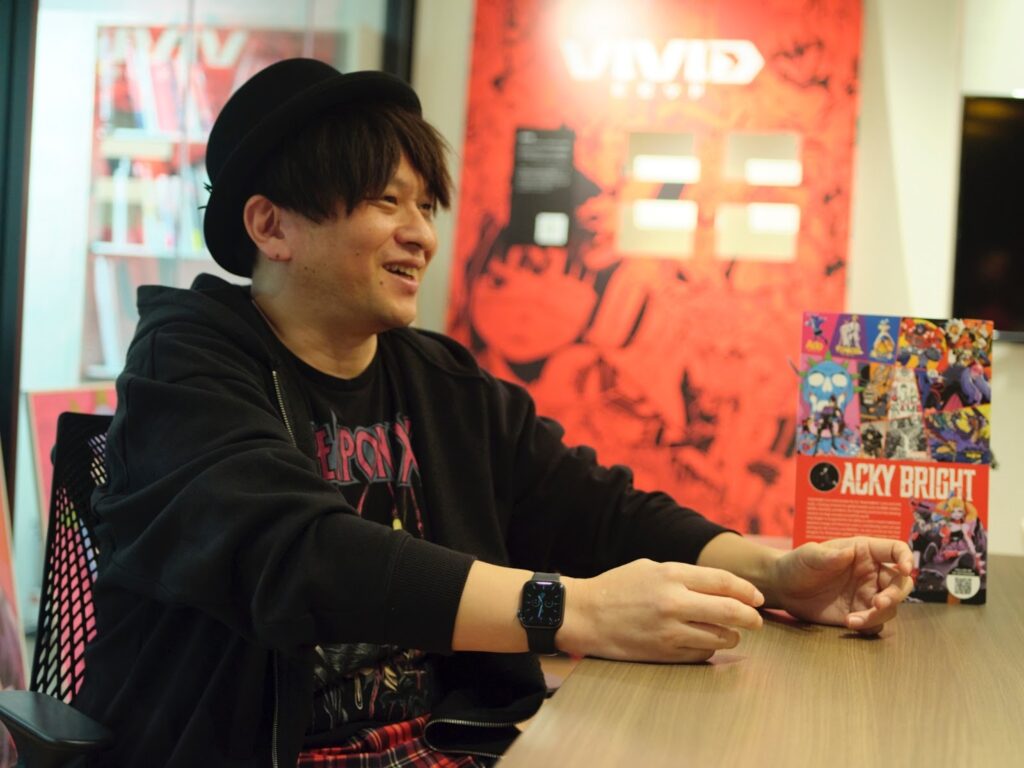
American Comics vs. Manga: What Sets Them Apart
Having worked on both American comics and Japanese manga, where do you feel the most fundamental differences lie in how they are made?
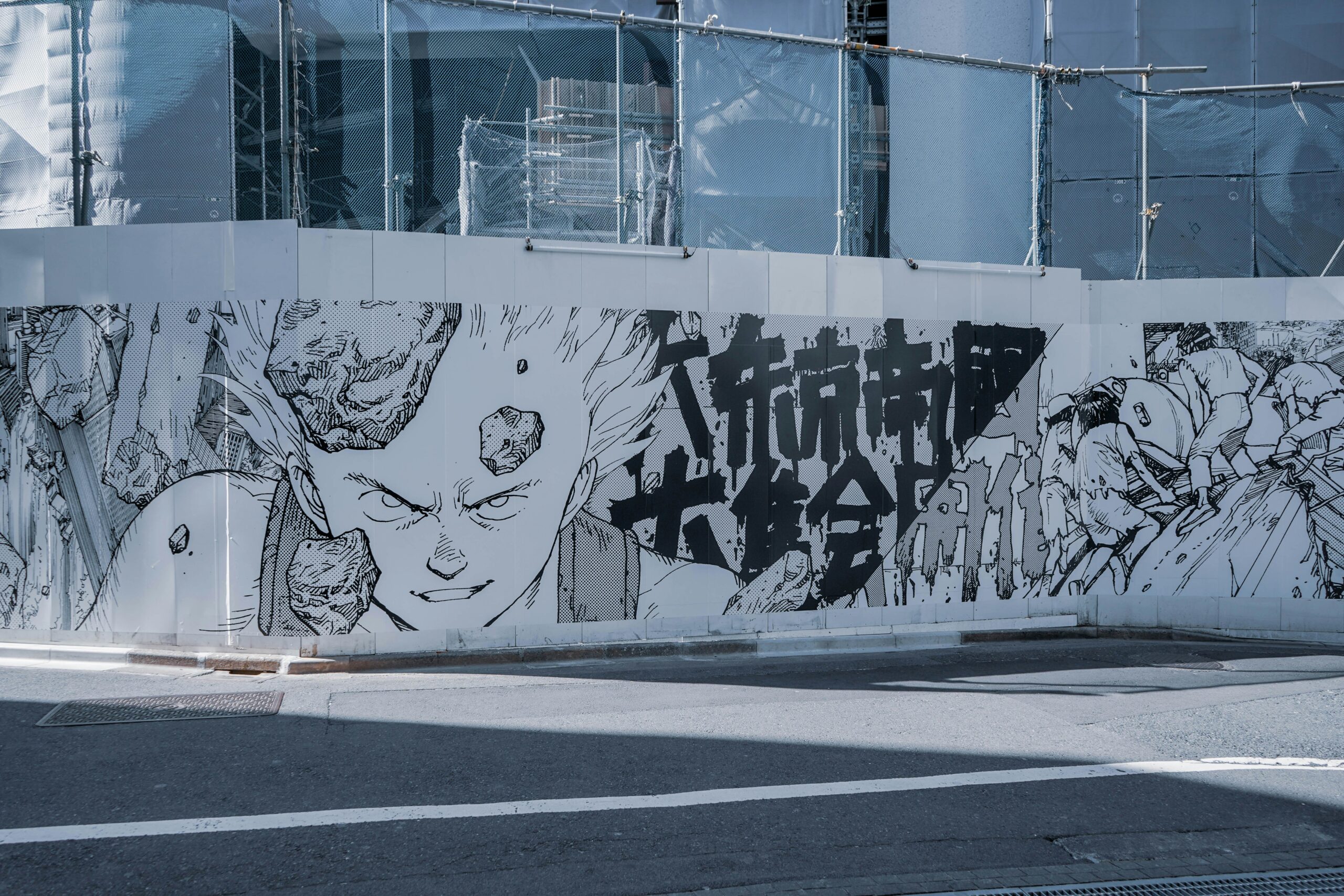
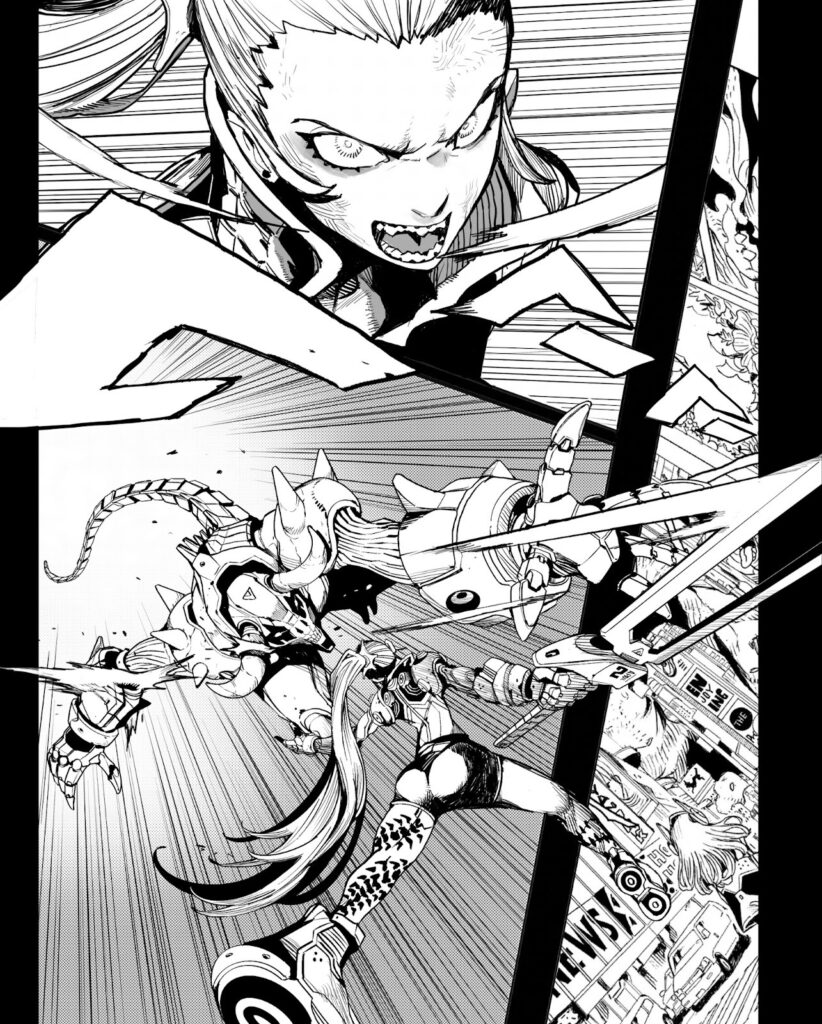
Acky Bright – The process itself is fundamentally different, so the way the work is output is completely different. In Japanese manga, it might be an oversimplification to say you start with the speech bubbles, but at the storyboard stage you first decide where the dialogue goes and design the path of the reader’s eye. To make sure it’s read, the images you want to show have to exist along that flow created by the speech balloons.
American comics, on the other hand – often referred to as graphic novels – are created with text and images conceived separately. The writer provides a script that specifies the number of pages and panels, along with descriptions of the scenes, the dialogue, and even directions such as ‘this panel should be the largest.’ The comic artist then focuses solely on drawing, without adding any speech balloons or onomatopoeia. The placement of balloons and the choice of fonts – lettering, are decided later by a separate specialist known as a letterer.
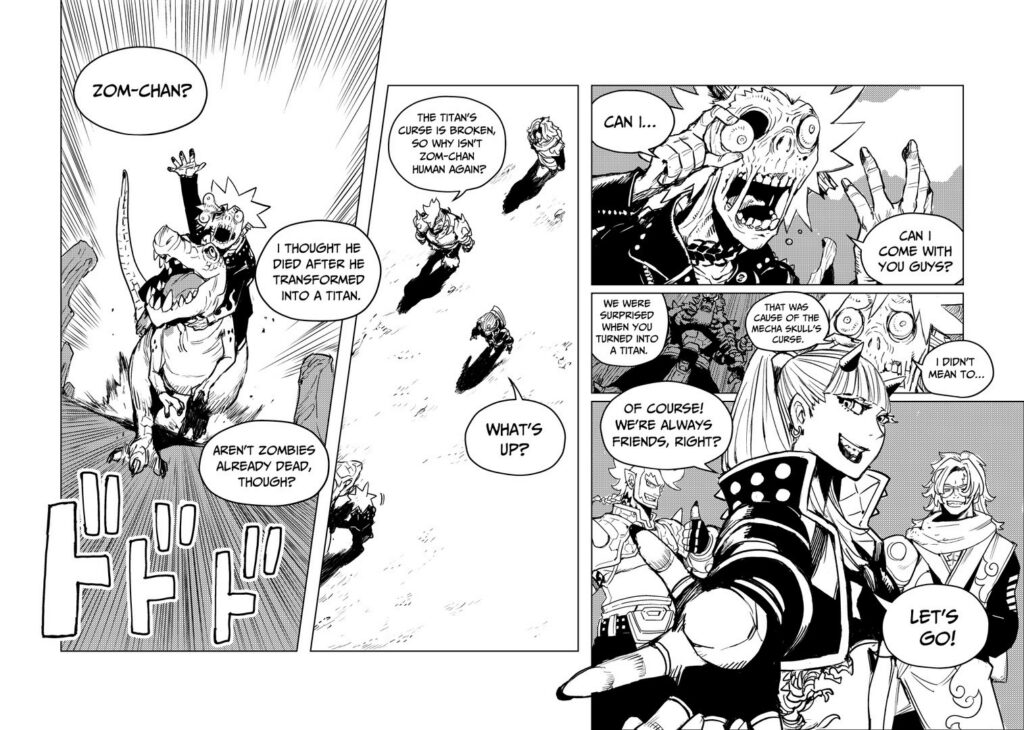
At first, I didn’t know how it would work in the world of American comics, so I added all the speech bubbles myself, using the Japanese manga approach. But when I saw the finished version, they had been placed in completely different positions anyway.
How do these different production styles influence your artistic style and the way your work ultimately looks?
Acky Bright – When I’m drawing American comics, reviewers often say they can feel the influence of Eastern manga. And when I work in Japan, people tell me my art feels ‘very American-comics-like.’ Having a place in both worlds might mean that I’ve managed to maintain a sense of originality.
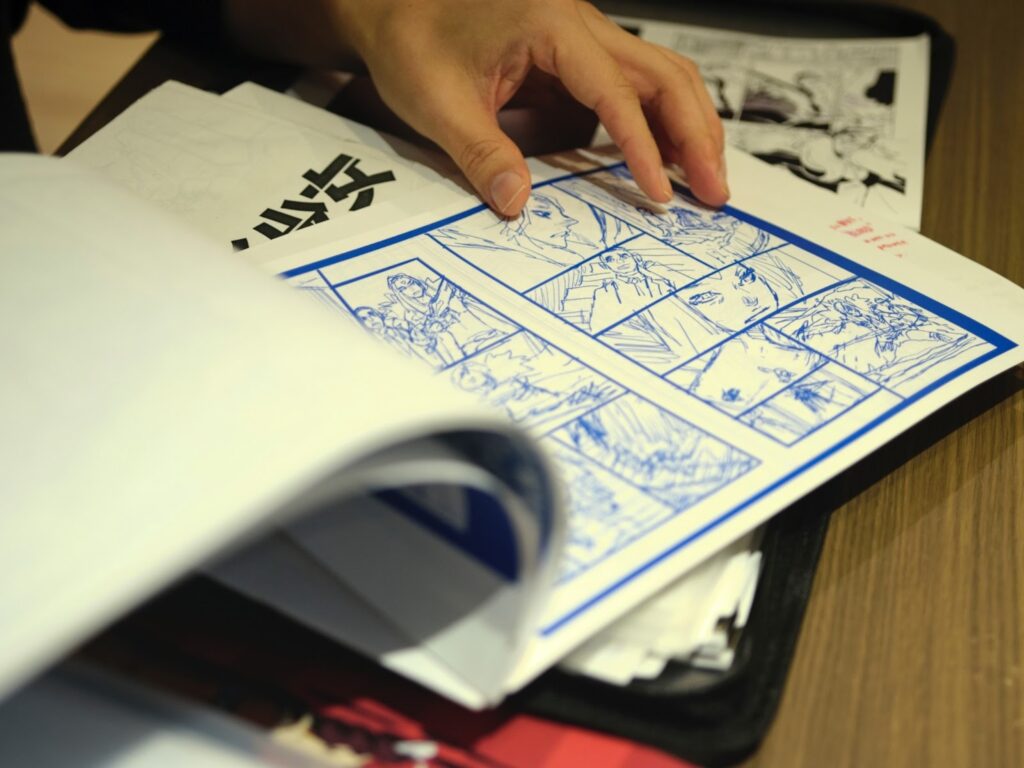
When I work on American comics, I don’t start with storyboards. I begin by translating everything into a script before moving forward. Even when I’m also serving as the writer, I don’t jump straight into drawing rough layouts the way Japanese manga artists often do. To get through editorial meetings, I follow the American comics script format, specifying all the dialogue, scenes, and panel structures in text. At a fundamental level, what you’re doing in manga and American comics isn’t all that different, but the processes are. That difference also affects panel flow and layout, so at the output stage I consciously adjust and change those elements myself. Ultimately, I’d like to fuse the two approaches, but for now I’m still in a phase of experimentation.
Redefining “Creativity” in the AI Age
With discussions around AI unfolding across the globe, what do you believe is the ‘essential’ challenge that creators need to confront in this era?
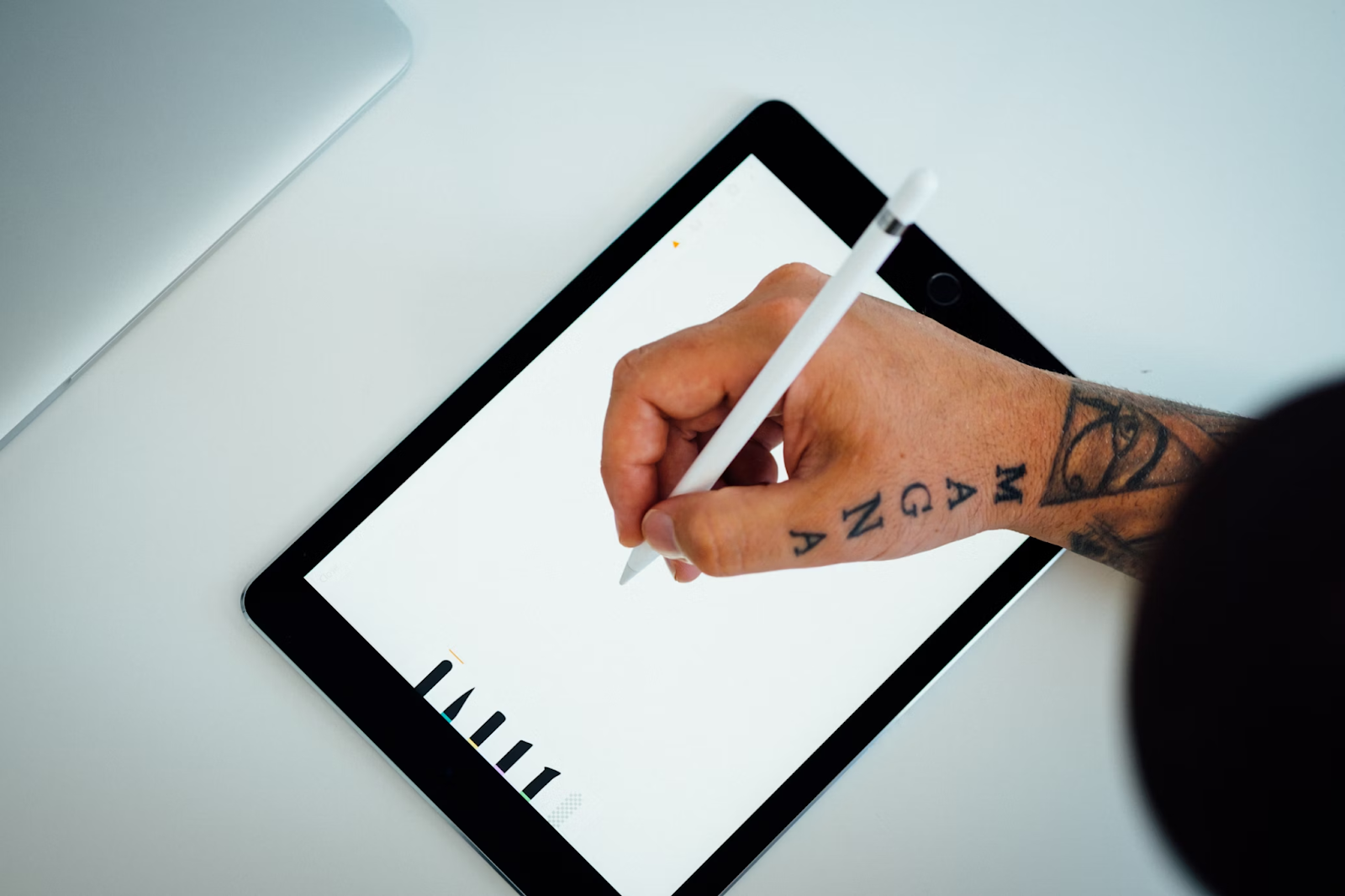
Acky Bright – I get asked this question wherever I go, and I’ve come to find one answer, which I like to explain using cooking as a metaphor. People who draw, people who make things, are essentially enjoying the process itself. But with the rise of social media, it’s become much easier to obtain external validation – the ‘results,’ like collecting likes or landing big jobs – and reaching those outcomes has started to feel like the ultimate goal. AI is a tool that makes achieving those results incredibly easy. But the real joy was always in the act of drawing itself. That’s the joy I cherish: I enjoy the process of drawing, but once a piece is finished, I’m not particularly attached to it. The same applies to cooking. It’s wonderful to cook something yourself and see people enjoy it – but serving instant food isn’t the same as cooking. Having AI produce things for you is closer to serving instant food. Asking an artist what they think about AI-generated art is like asking Usain Bolt, ‘What do you think about the new Ferrari?’ No matter how fast cars become, the value of a human running fast doesn’t change. That’s also why I do live drawing. I’m not asking people to evaluate the level of completion of the artwork; I want them to see value in the act of drawing itself, in the process as it unfolds. So before debating AI, regulations, or rules, I think creators need to return to something more fundamental: asking themselves why this work was fun in the first place, and confronting their own sense of ethics. Without that, I don’t believe it’s possible to continue this kind of work for the long term.
The Core Essence of Creation and the Philosophy Behind Character Design
What do you consider the most important ‘core’ of your creative work, and which aspects do you care most deeply about?
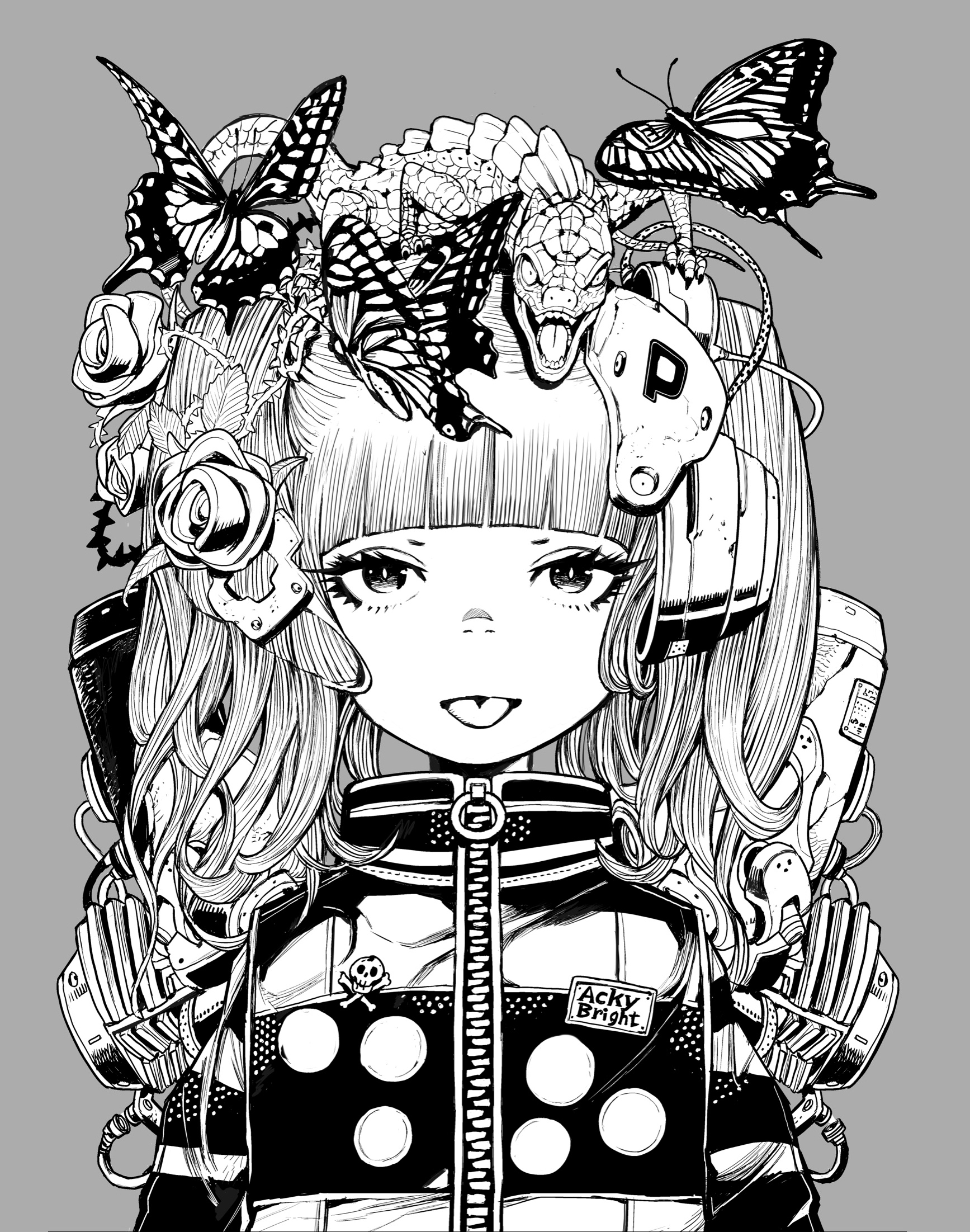
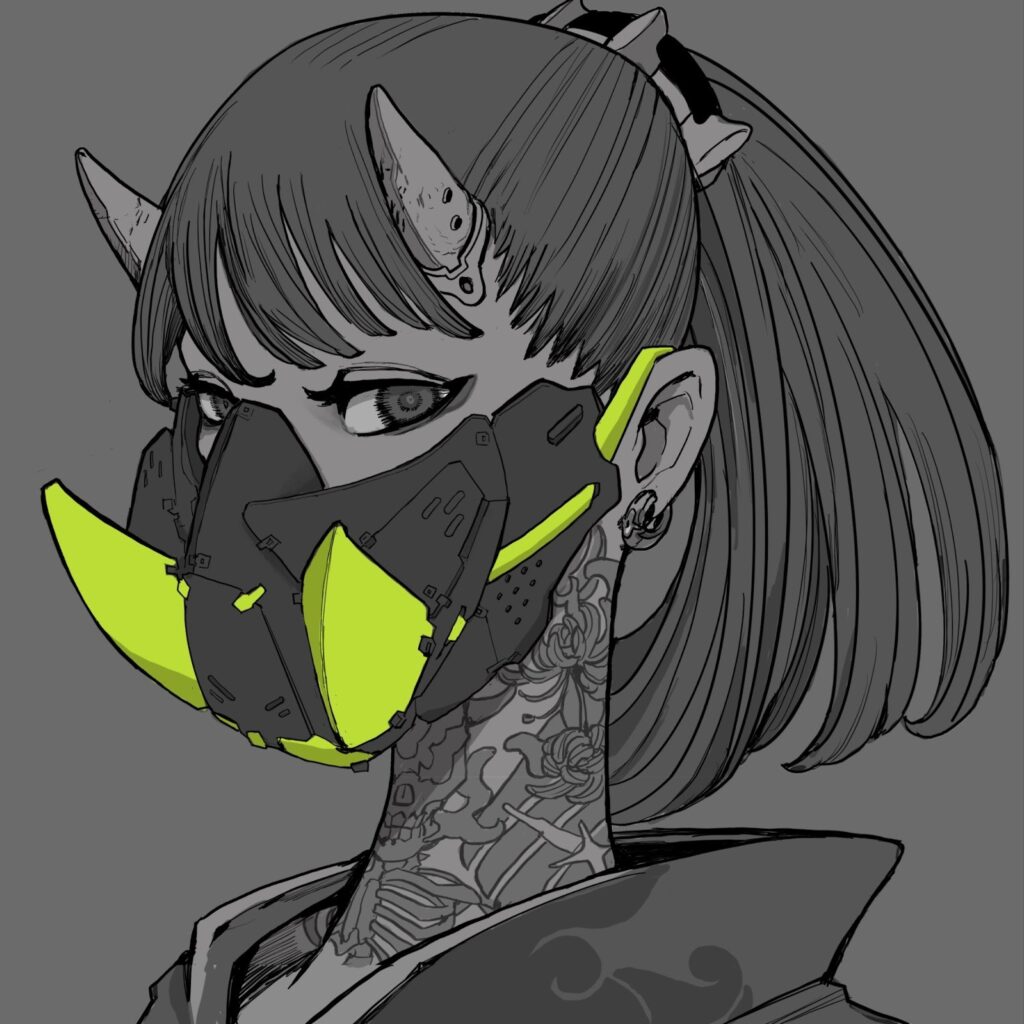
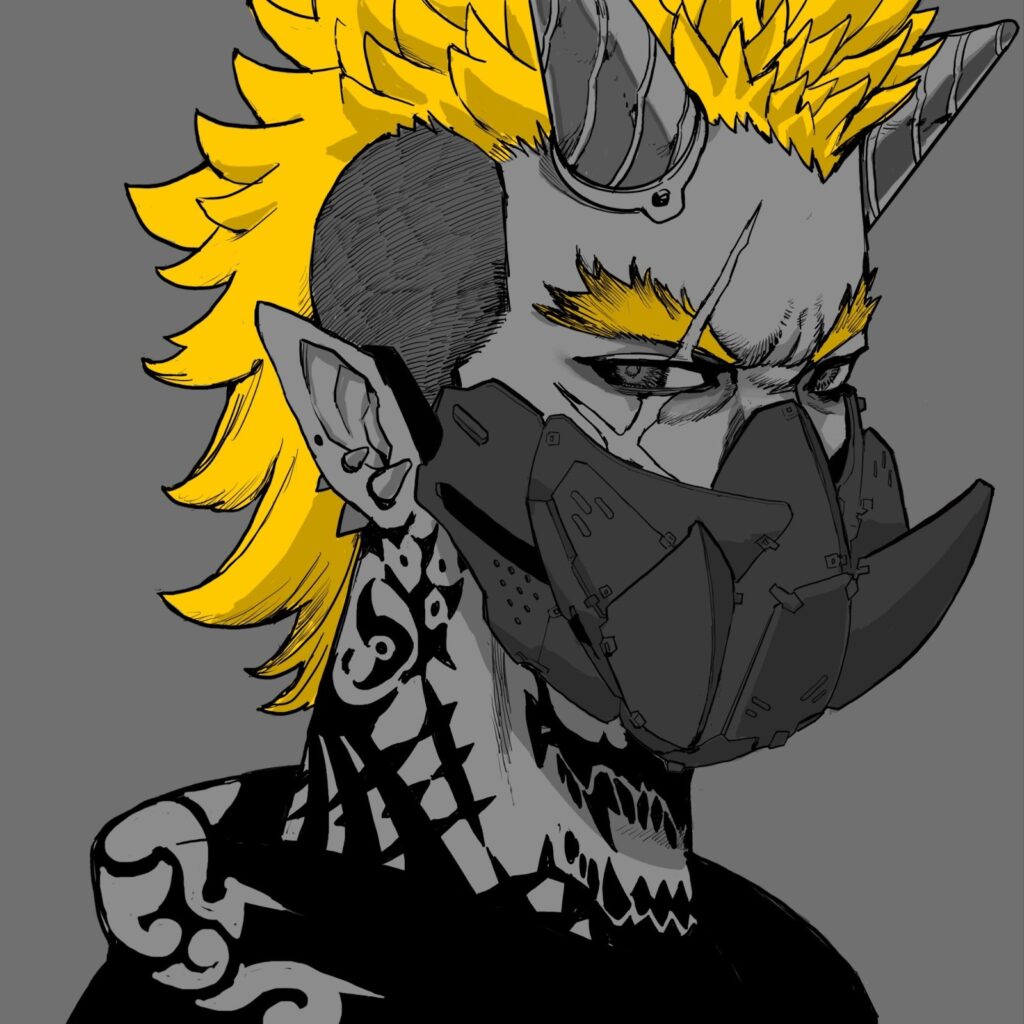
Acky Bright – At the foundation of my work is the act of creating something from none to something. In terms of visual style, I’m particularly committed to expression using black and white and to character design. That said, there’s a reason my early work was rendered in black and white.
When I first started running the design company, I was secretly drawing my own work as an artist during office hours. If I had been coloring digitally or working on something large-scale, it would have been obvious to others that I was working on ‘something’. So all I could use was a mechanical pencil and plain copy paper. Of course, that wasn’t the only reason. Combined with the fact that my roots are in Japanese manga, black and white gradually came to be recognized as one of Acky Bright’s defining styles.
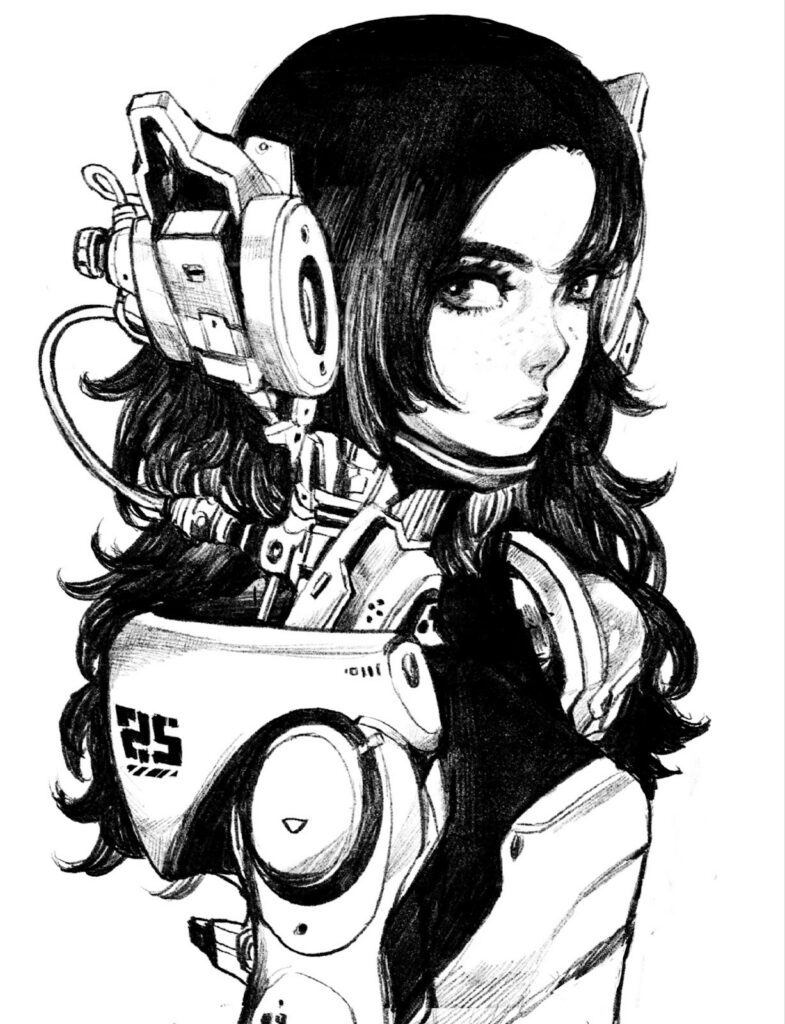
How did you develop your signature style of combining mechanical designs with female characters?
Acky Bright – Honestly, it started from a sense of insecurity – I felt I wasn’t very good at drawing girls. Even back when I was working anonymously, I did draw female characters, but those were mostly for corporate projects, where there was no need to make them especially appealing. When I began trying to draw female characters in a way that was meant to be attractive as an artist, it felt a little embarrassing to just draw straightforward, portrait-like images of women. So, almost as a way of disguising that discomfort, I started adding horns or mechanical elements. That approach ended up going viral on social media and became one of my signatures. To be honest, even now, I wouldn’t say I’m ‘good at drawing girls.

When it comes to character design, what aspects do you place the greatest emphasis on?
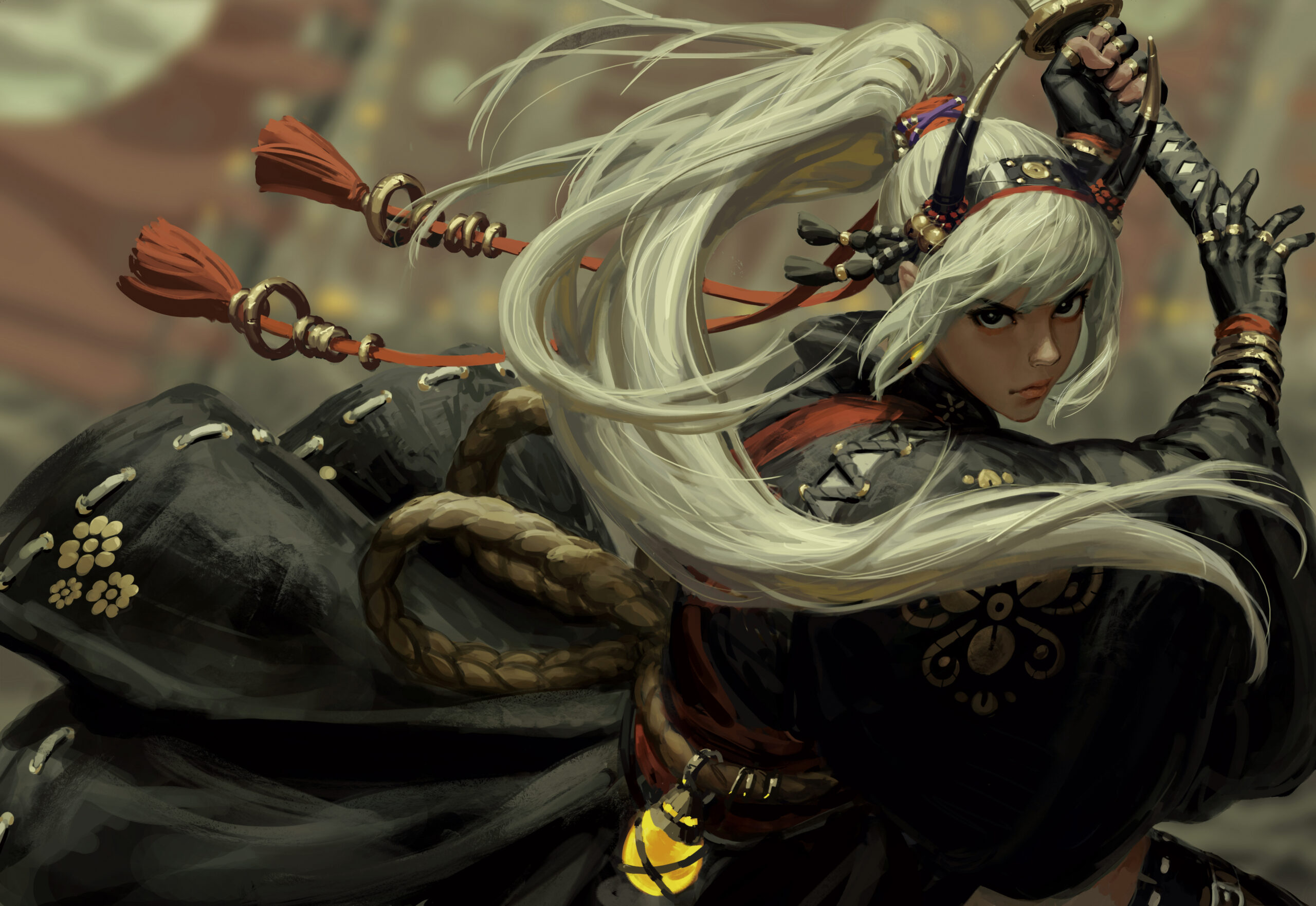
Acky Bright – My goal is to create characters that can be recognized by their silhouette alone. Rather than the typically Japanese approach to character design – changing hair color, eye style, or outfits – I’m drawn to the philosophy you see at studios like Pixar or Disney, where a character is identifiable purely by their shape. I was very conscious of this when working on WcDonald’s for McDonald’s North America. When designing multinational characters, I don’t just change skin tone; I pay close attention to ethnic characteristics such as bone structure, musculature, and facial shape, and make sure they’re reflected accurately. I once read an anecdote in a book where a manga artist was told, ‘When you reduce your characters to their skeletons, they all look the same.’ Since then, I’ve strongly believed that characters need to be identifiable even at the level of their bones.

A Message to Japanese Creators
Do you have any message you’d like to share with growing artists and aspiring creators?
Acky Bright – I strongly believe that if Japanese content is going to reach a wider global audience, Japanese creators need to step outside Japan and engage more actively with the world. When you go to conventions, many participants from Japan struggle with English or prefer not to show their faces, which often limits their interaction with fans. I completely understand those feelings – but from the perspective of American fans who genuinely want to connect with Japanese creators, it can feel unsatisfying. The reason I became known in the U.S. is because I committed myself fully to engaging with fans. Your English doesn’t have to be perfect to communicate. When I attended my first convention in New York in 2022, I was completely unknown in the U.S. Still, through these efforts, despite people saying, ‘Can you really make it work like that?’ – I eventually collaborated with McDonald’s, Meta, and Red Bull, and even held a solo exhibition at the Japan Society in New York. Trying to pursue the kind of activities I’m doing now entirely within Japan’s existing system often means running into walls built by vested interests. Yet there’s a strange phenomenon where, when you come in from the outside, by establishing yourself overseas, many things suddenly become much easier to achieve back in Japan.
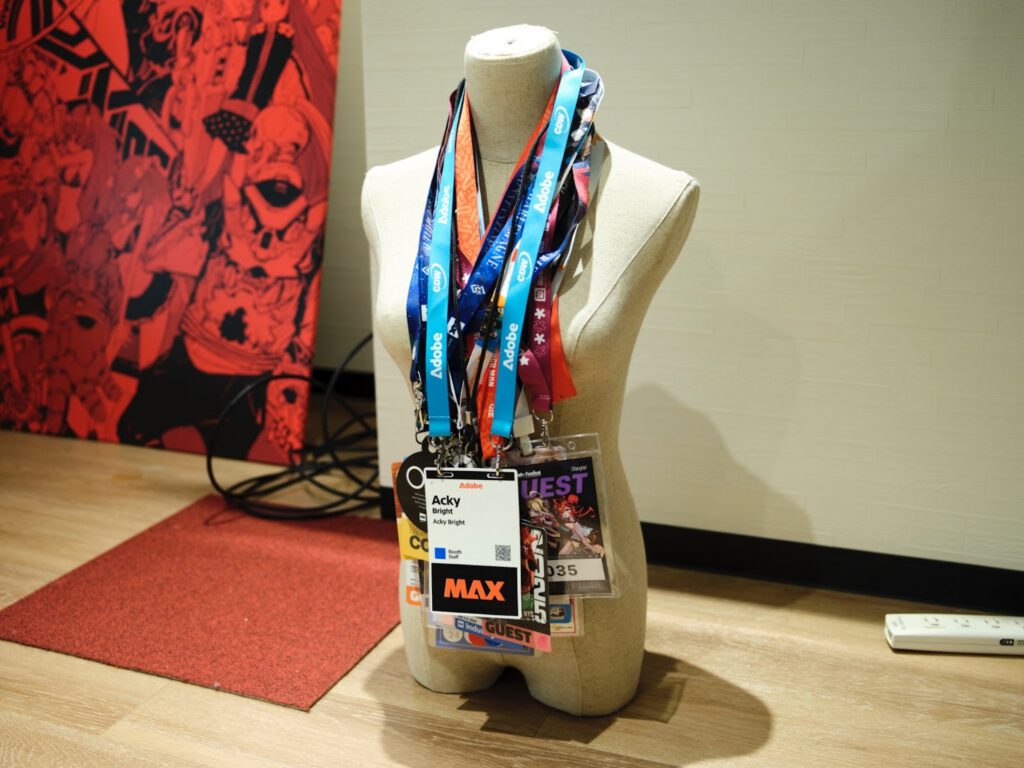
I’d be happy if my work inspires people to think, ‘Maybe I’ll try doing what Acky Bright is doing.’ Artists who overthink things before drawing are already out of step with the times. There are countless ways to communicate now – the important thing isn’t that. To keep working over the long term, you can’t let yourself be swayed by the number of ‘likes’ that might be right in front of you, or by whatever happens to be selling at the moment. Instead, look to the real veterans – people who have stayed active for thirty or forty years – and learn from them. Protect your own sense of ethics and your passion. Our industry is fortunate to have so many of those genuinely cool seniors. Because they exist, you can think, ‘Even if I’m nowhere near that level now, maybe I can get there decades from now.’ Going forward, I want to help create pathways that would guide Japanese creators to continue thriving on the global stage.