Imagine showing a work that we Japanese people are so naturally familiar with – something you could say has been embedded in our very DNA – to someone from overseas.
When they see these works – things that we Japanese kids just watched casually during meals or family time (enjoying them, of course) – they often get completely absorbed. It seems they appreciate them much more deeply than we might expect, almost as if looking at something sacred. It can even make us feel proud, almost like you made the work yourself (though maybe that’s going a bit far…).
At times like these, it would be nice if you could share even a small anecdote about the work. However, precisely because it’s so familiar, it’s surprisingly possible that you simply “don’t know” much about it.
Takashi Murakami, a Japanese contemporary artist, has stated the following
“I actually believe Doraemon1 is art. In my own art activities, I see my role as building a bridge, working towards the goal where manga is ultimately seen as the highest form of Japanese art.”
Hayao Miyazaki and Isao Takahata: What Are the True Feelings and Complexes of These Artists? [Takashi Murakami vs. Kohei Saito]
Even if we don’t go so far as to call it high art, perhaps there’s truth in the Japanese saying “even in close relationships, courtesy is essential (Shitakinaka ni mo reigi ari).” It seems like a wonderful thing, now that we are adults, to show a little more respect to the numerous masterpieces that supported our childhoods and make an effort to learn about them. I hope that through this article, it can become an opportunity for Japanese people to “get to know” these overly familiar masterpieces or to enjoy them once again from a fresh perspective.
For example, Doraemon, mentioned above, marks its 45th anniversary in 2025. Billed as the “Doraemon Film Festival 2025,” an event was held where 43 films of the series were screened over 34 consecutive days at the Jimbocho Theater in Tokyo. It’s still fresh in memory that this garnered significant attention, partly because the works released before 2010 were shown on 35mm film.
Furthermore, collaborations with Takashi Murakami, along with the “THE Doraemon Exhibition TOKYO 2017” held at the Mori Arts Center Gallery, proposed viewing Doraemon from an artistic perspective, adding to the existing perception of it as something to be read or watched.In the catalogue for “THE Doraemon Exhibition TOKYO 2017,” Japanese painter Kumi Machida remarked, “Elements are pared down to a minimum, yet the most accurate forms within that worldview are depicted,” suggesting the strength of each drawn picture as an individual work of art.
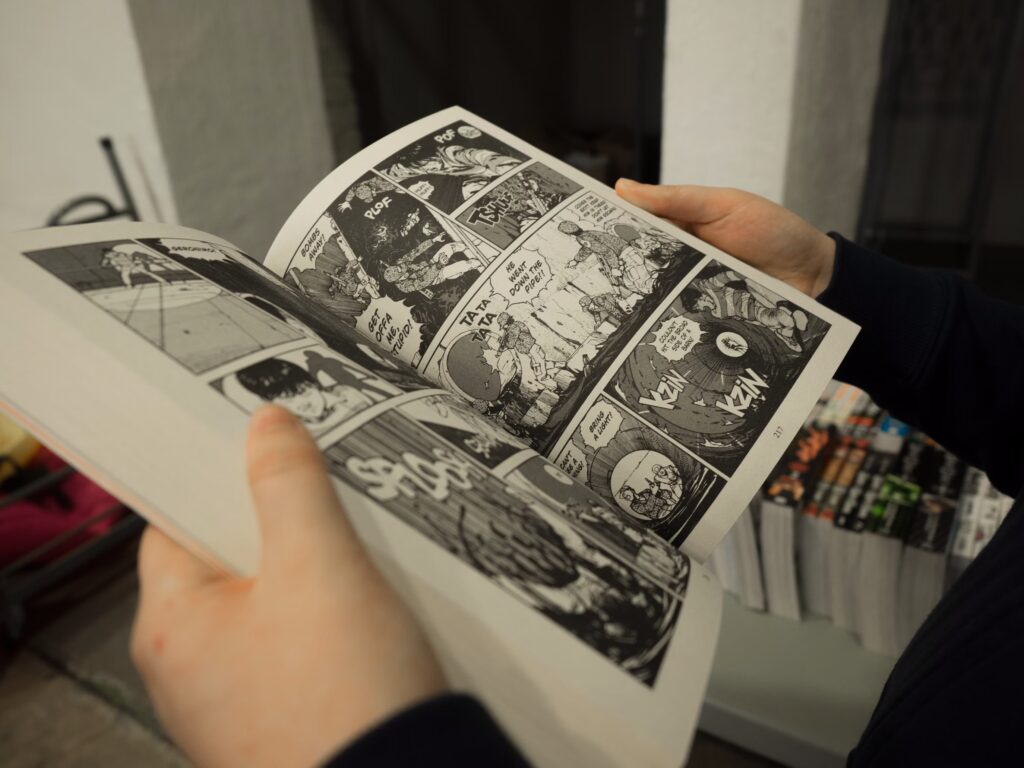
Typically, the average number of panels (koma) per page in manga is 5 to 7. For instance, Volume 1 of Doraemon, released in July 1974, has 192 pages. Assuming 6 panels per page, just one volume of the manga would require at least 1152 drawings.
In the world of anime, it’s said that about 8 drawings are used per second. Subtracting commercial breaks from a 30-minute broadcast slot leaves roughly 20 minutes for the animation itself. This, too, requires a minimum of 1200 drawings.
Of course, this applies not only to the creator Fujiko F. Fujio but to all manga artists and animators. Yet, Doraemon has continued for 45 years.
Its level of perfection, which impresses even painters and artists, truly makes us think, “That’s our Doraemon!”
This sense of closeness isn’t just because it has always been present in our living rooms (ochanoma). When you see his characteristic rounded form and consider that Doraemon’s character, despite possessing advanced technology (the secret gadgets, or himitsu dōgu), is just as endearingly flawed as Nobita, you can’t help but love him.
Intriguingly, the book “THE GENGA ART OF DORAEMON,” published in 2021, allows readers to appreciate individual panels as standalone “works,” like paintings. It carefully selects Doraemon panels from an artistic viewpoint based on seven themes, presenting enlarged original drawings (genga). Additionally, the Fujiko F. Fujio Museum, which opened in 2011, exhibits original drawings and three-dimensional items like a 1/5th scale model of Nobita’s house, offering a chance to reconnect with the history of Doraemon.
Doraemon has been beloved for so long in these ways. There are various ways to view it, and it can be enjoyed by everyone – from children to adults, painters to contemporary artists. Sadly, Fujiko Fujio A, the former creative partner and close friend of the creator Fujiko F. Fujio (who passed away in 1996), passed away in 2022. We’ll save the story of their partnership for another time, but just as Doraemon continues, the works and attitudes they left behind are certainly being inherited by many manga artists and painters. The dreams and hopes they depicted are immortal.
Finally, I want to conclude with words that Fujiko F. Fujio likely had Nobita’s father, Nobisuke (who aspired to be a painter in his youth), say.
It’s a scene from Volume 31 of Doraemon, where the father encourages Nobita, who is struggling with his inability to draw well:
“Painting comes from the heart! When you see something and feel in your heart that it’s beautiful or cute, expressing that feeling is art.”
“After Album” (Ato-kara Album): Included in Shogakukan’s Tentomushi Comics Vol. 31
- Doraemon is a hugely popular and iconic Japanese manga series created by Fujiko F. Fujio (the pen name of Hiroshi Fujimoto ↩︎