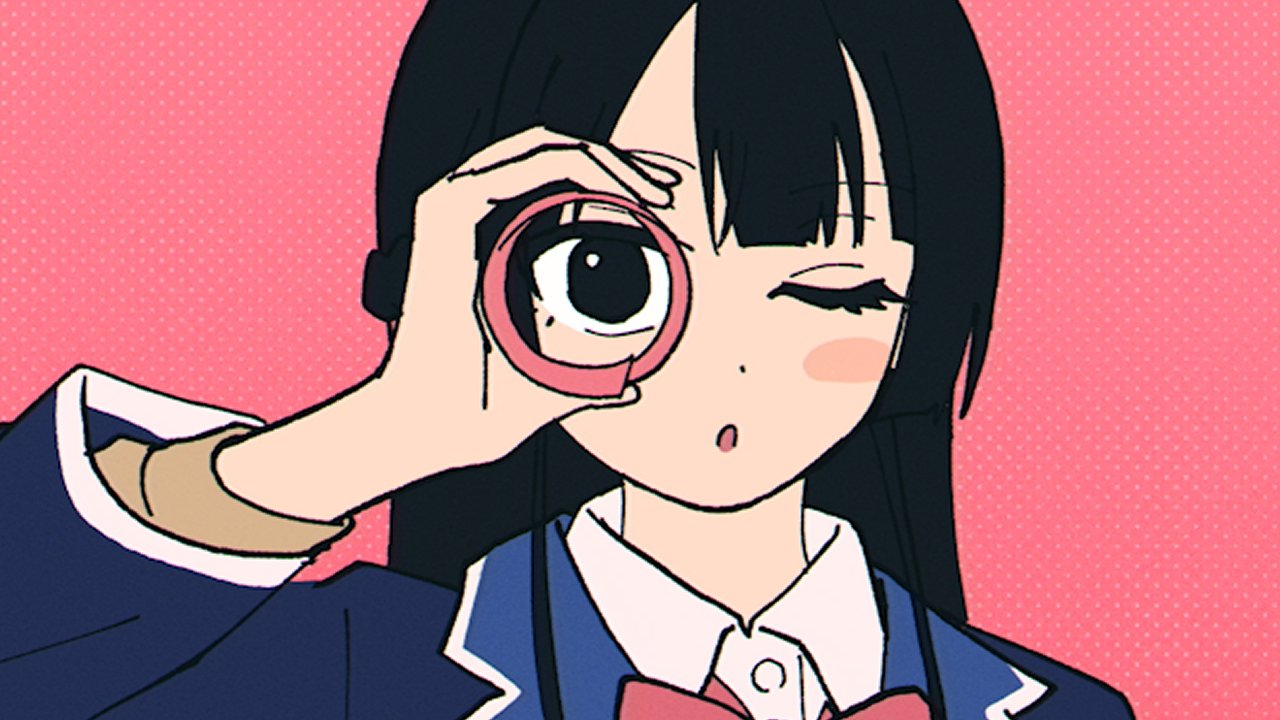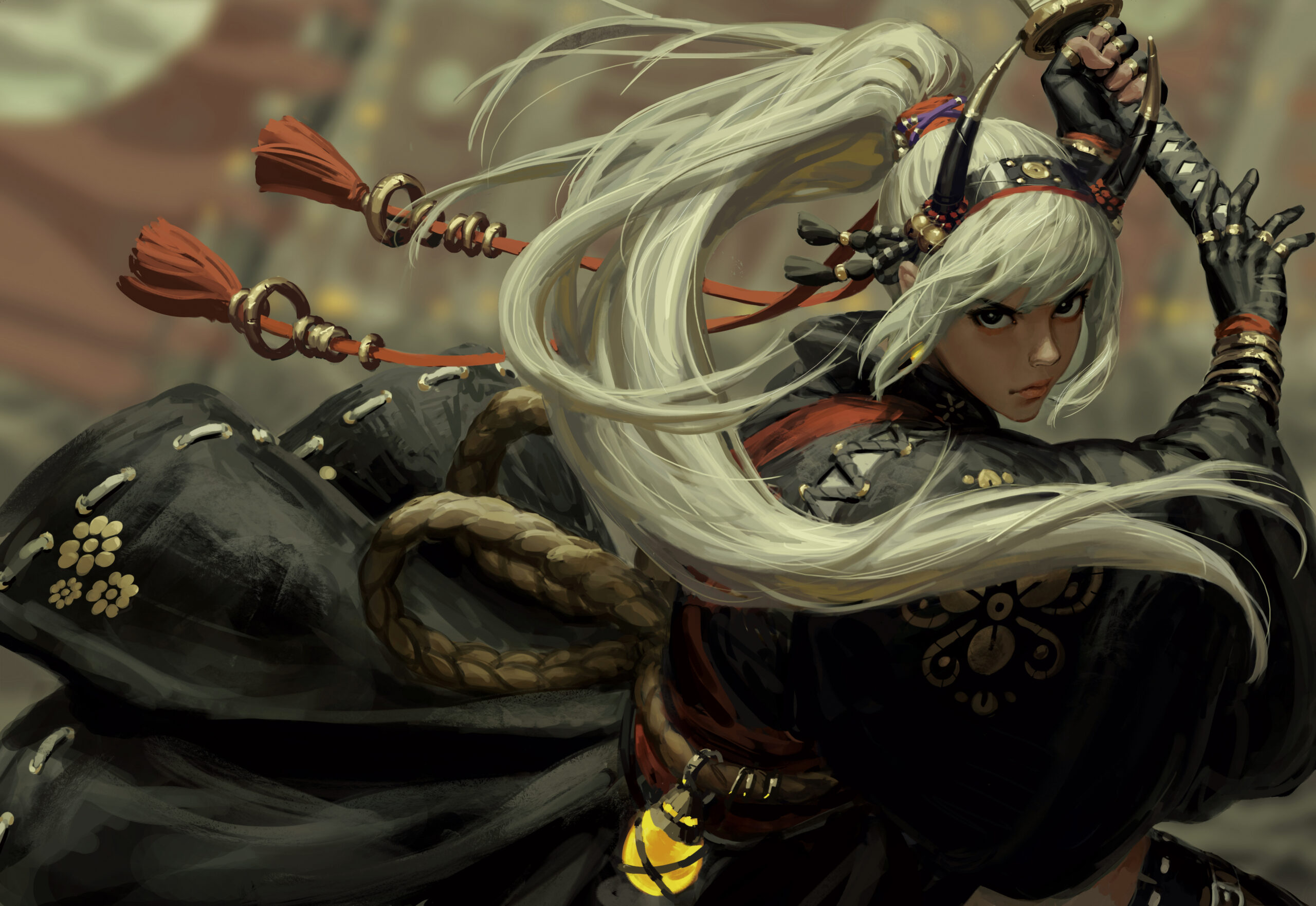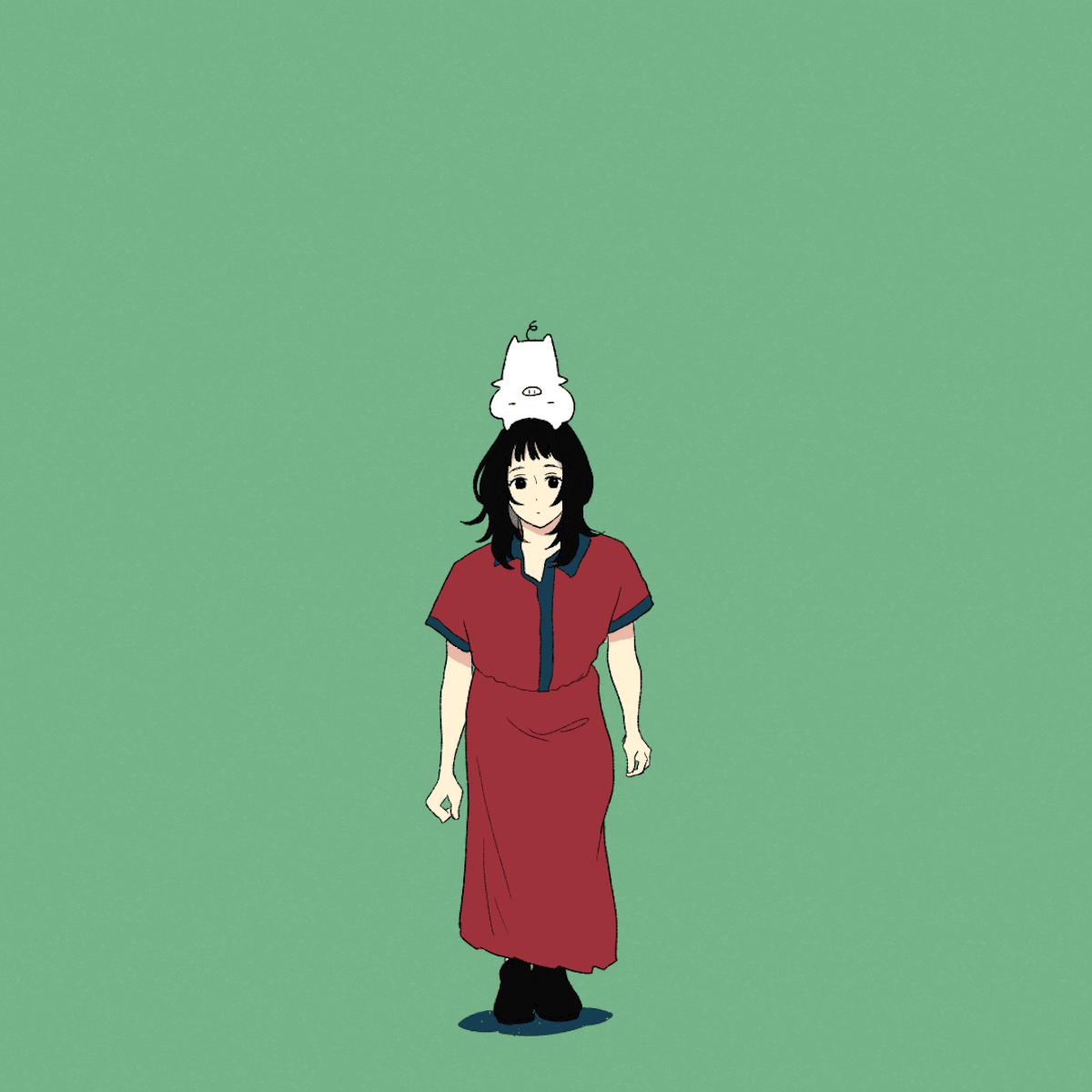
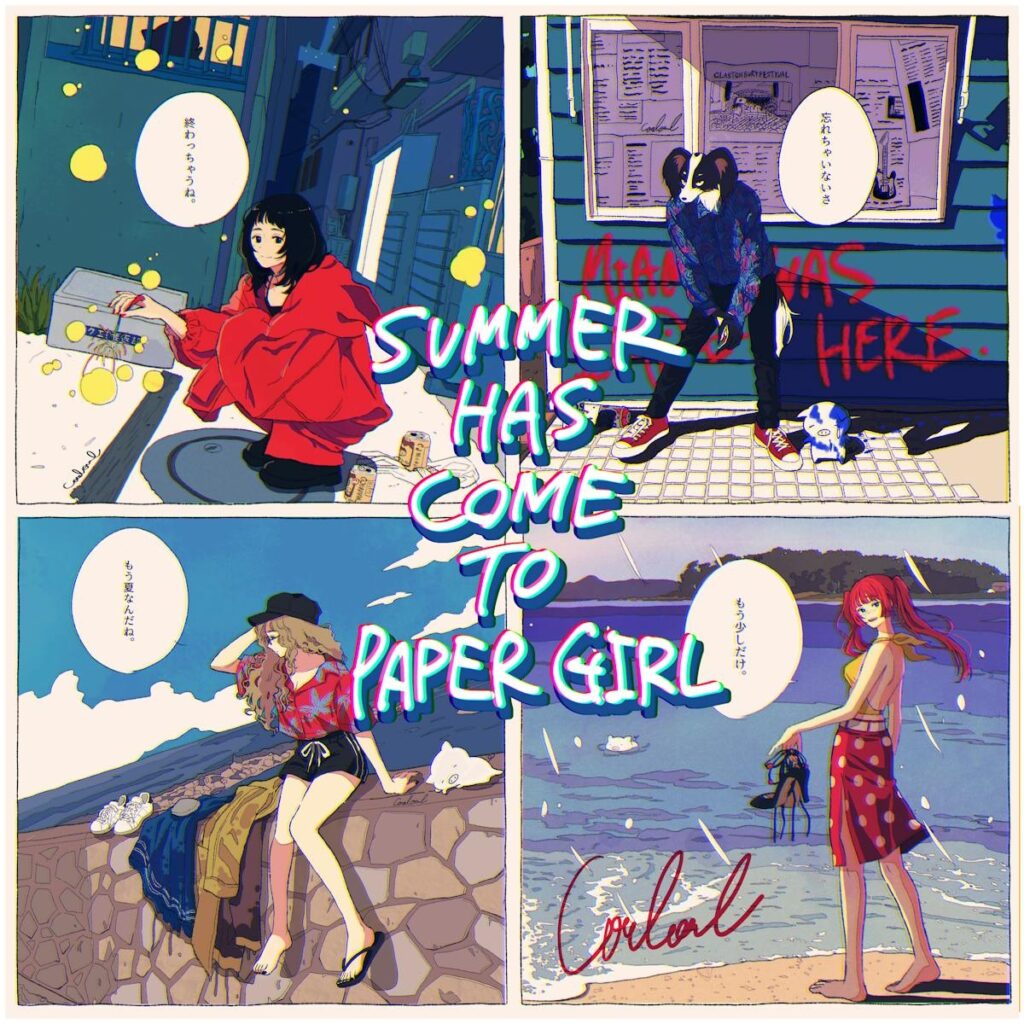
Illustrator and animation artist coalowl has made a remarkable mark on the creative scene, contributing to some of the most striking visual works of recent years — from the ending animation of the TV anime Chainsaw Man, to PEOPLE1’s Jōyatō music video, and the package illustrations for Kanro’s gummy brand Marosh.
Although she has long been active at the forefront of her field, coalowl has rarely spoken publicly about herself… until now. On the occasion of her first solo exhibition, we had the opportunity to hear her story firsthand. In this exclusive two-part interview, she opens up about her creative journey, the inspirations behind her works, and the hidden layers of imagination that define her distinctive world of animation.
From 9-to-5 to No Job?! The Unexpected Twist in Career
In the previous part, you shared the story of when you quit your job. Quitting so suddenly must have left you with nothing certain ahead. How did you manage your life after that?
coalowl: Back then, I really couldn’t see what was ahead. Of course, I had that fear of, “Am I going to be okay? Can I really survive like this?” I worked part-time at a convenience store, and when I got home, I spent all my time building up my illustration portfolio.
Was there a turning point for you?
coalowl: Yes – definitely in 2020, when I received a commission from Nijisanji’s VTuber Hakase Fuyuki to create an illustration for a music video. At the time, I only had around 500 followers on social media, so I was genuinely thrilled to be discovered like that. It also introduced me to VTubers I now love, like Mito Tsukino, so it was a really memorable moment for me.
How long did it take before you could make a living from your art?
coalowl: About two years after quitting my job.
Two years?! That’s incredibly fast. In the early days, when your work wasn’t getting much response, how did you stay motivated?
coalowl: Honestly, at first, there was almost no response whatsoever from the world, and it was tough! But I kind of had no choice – I’d already quit my job, so it was all or nothing. Still, the simple act of drawing made me happy. That feeling surely kept me going.
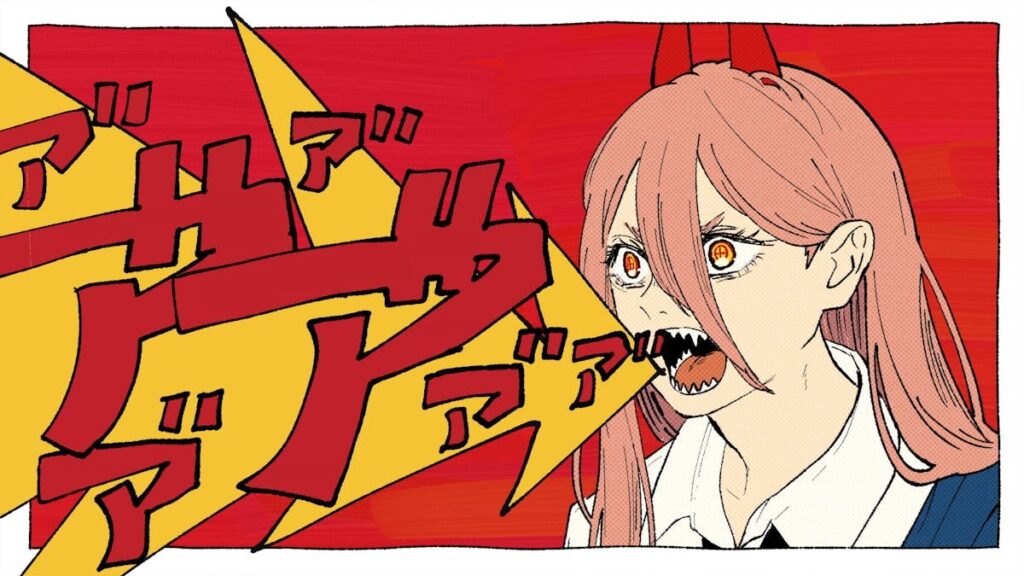
In the beginning, it sounds like you were in what we might call a “training period.” As you went through trial and error, did you ever change your drawing style?
coalowl: When I decided to pursue illustration as a career, I spent a lot of time exploring what kind of style and expression I truly liked. So yes, the way I draw now is quite different from the way I used to before that journey. The fundamentals haven’t really changed, but I’ve always been conscious of what I love. Even now, I keep questioning my own sense of “what I like.” I think staying critical of that is important.
All the Things I Love – All in One Place
Were there any artists or works that directly influenced you?
coalowl: I’ve always loved series like HUNTER×HUNTER, Cardcaptor Sakura, and Narutaru. I think I’ve been influenced by many different manga artists since I was a kid.
Does music, or other forms of art, find its way into your creative process?
coalowl: I think films have had the biggest influence on me. This particular piece, for example, was inspired by the idea of a movie poster.

Does the title “1997” have any particular meaning?
coalowl: This illustration itself is actually a poster for a fictional movie called 1997. I really love films from the ’90s – road movies, stories about people on the run… those kinds of themes just speak to me. I gathered all the elements that made me think, “This feels right.” There’s something bittersweet about the ’90s.. almost a sense of an ending in the air.
In the lyrics of PEOPLE 1’s “Jōyatō,” there’s a line that goes, “I wonder if there’s a school in heaven / With unsteady steps I found / The sad ending of an old movie.” The scene in the MV is said to be inspired by “Life Is Beautiful”, right?
coalowl: That’s right. I think that particular scene was part of a commission from PEOPLE 1. I sometimes include what you might call “homages” in my work as well. When I do, I make sure to tell the client, “This part is a reference to this specific work.” Though, to be honest, I usually mention it afterward, once the piece is done!
I move, I create – both with my own hands
Your animation has a fascinating mix of realism and “cuteness”. How do you achieve that balance in your work?
coalowl: I incorporate rotoscoping techniques in certain parts, but every frame is drawn entirely by hand – by myself. The thing is, if you trace rotoscope footage too literally, it doesn’t turn out cute; it ends up stiff or too small in scale. So I exaggerate movements or sometimes don’t trace them at all to keep the expression lively.
You draw everything alone… that’s an incredible amount of work! So for the dance scenes in your animations, do you use videos of real performances as reference? Do you collaborate with dancers?
coalowl: I actually dance myself and record it on video. In the early days, I worked with dancers to help create the choreography, but even then, I often performed it myself. Lately, I choreograph everything on my own and dance it myself, too. I even practice dancing just for the sake of making the music videos.
Did you start out using this method from the very beginning?
coalowl: Yes. Before that, I had never drawn animation, so when I was figuring out how to do it, I remembered, “Oh, I used to do rhythmic gymnastics… this is exciting! I’ll just dance and create it myself.” At first, though, I didn’t really know how to make animation. I would draw each frame using CLIP STUDIO PAINT’s illustration tools, save each one as a PNG, and then import all the frames into Final Cut to assemble the video. It took an incredible amount of time compared to now. Later, I learned that CLIP STUDIO PAINT actually has animation features…
Wow, that sounds incredibly hands-on and unusually DIY. Do any works made with that method still exist?
coalowl: Yes, totally DIY spirit… I Wanna Be Free, Jōyatō, and Telecaster B-Boy were all made that way. I think it was kind of silly of me. I only discovered the animation tools around Mahō no Uta.
By the way, the Jōyatō MV seems to have an enormous number of frames. How long did it take to produce?
coalowl: I think it took about two months…! Every day, from the moment I woke up until I went to bed, I spent all my time drawing whenever I wasn’t at my part-time job. I had no idea animation was this demanding – it was really tough.
When it was finally finished, I was like, “Whoa!!”It felt like running a full marathon. But because I had stared at the work so many times during production, I got used to it, and started doubting myself: “Will anyone actually like this…? Will anyone even watch it?”
Aiming for “Cute” Rather Than “Skillful”
Do your works share any particular approach to color or palette choices?
coalowl: I’m always conscious of visibility. Whenever I release a piece, I want it to stand out. It’s about clarity, or maybe about a sense of boldness, making sure it’s eye-catching.
When working on commissioned projects, do you think about how to incorporate your own style?
coalowl: I don’t really have a “I’m going to show them who I am!” mindset. Rather, I think clients commission me because they already know my style from my previous works. So I usually just draw naturally, in the way I always do.
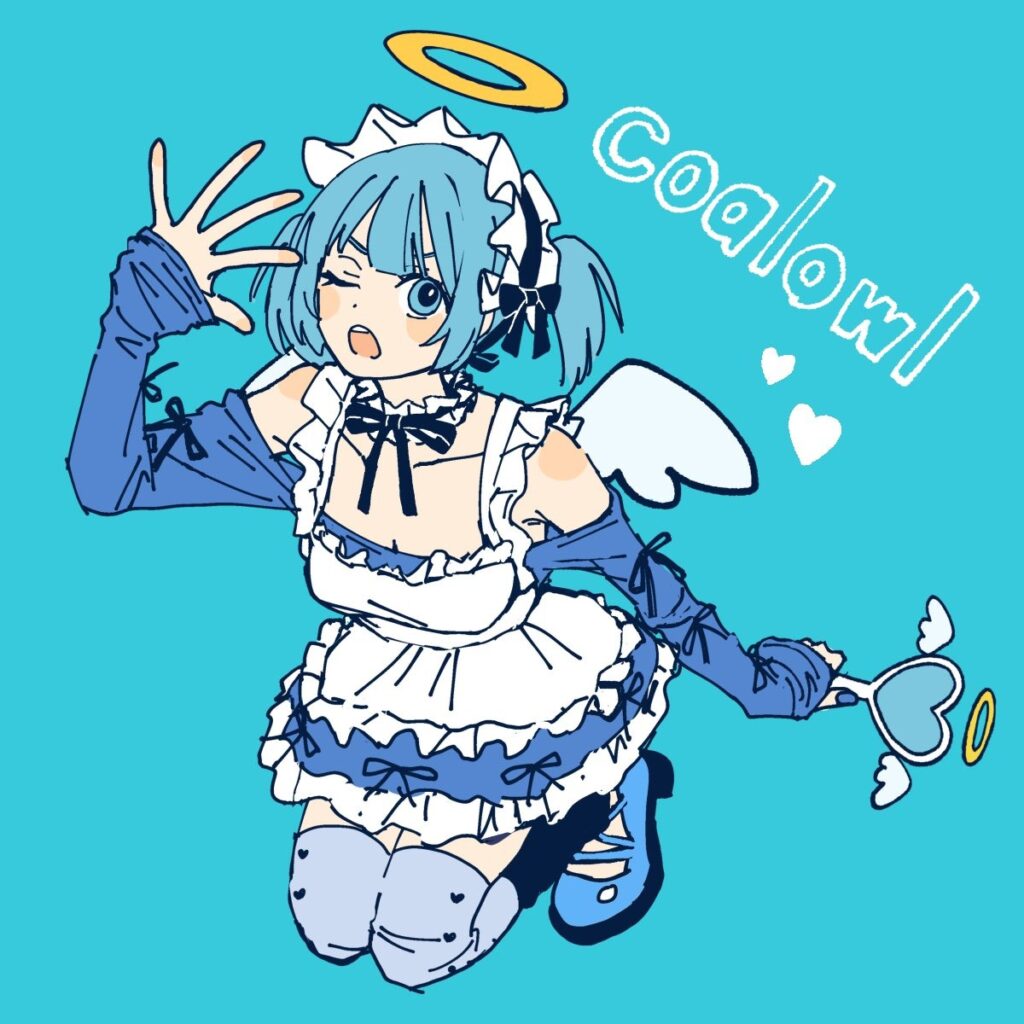
Among so many illustrators, what would you say is your defining characteristic?
coalowl: A while back, a friend of mine secretly made a secondary account for posting fan art. They already had quite a few followers, and I happened to notice it. I asked, “Is this you?” and they replied, “You caught me.”
Wow… you can tell?
coalowl: Yeah. I was surprised too. When I joked that I might try it myself, they told me, “You’d be recognized immediately, there’s no point.” I hadn’t thought my style was that distinctive, but apparently, it is. It’s hard to put into words, but I think an illustrator’s vibe naturally comes through. Honestly, I don’t think I have any standout features. But I’m conscious of keeping my style simple.
You also have a separate account called “Butasan,” apart from your main X account, right?
coalowl: I’m not especially obsessed with pigs, but I’ve been doodling them since my student days and really liked it, so I’ve just kept drawing them. It’s kind of like, “They were always there next to me.” I want to keep developing the Butasan account, so I hope people look forward to it!
Are there particular aspects of your work that you especially want people to notice?
coalowl: When people see my work, I hope the first feeling they get is “cute” rather than “skilled.” That’s something I’m always conscious of.
So the most important thing for you is “cuteness.”
coalowl: Yes, that hasn’t changed. I draw what I genuinely feel is cute – I won’t draw something unless I can feel that. I love cute things, I want to cherish them, look at them, keep them close. If people feel the same way about my illustrations, I’m really happy.
Your illustrations and music videos convey not only “cute,” but also “cool” and “emotional” qualities. How would you like to continue expressing yourself in the future?
coalowl: Of course, the things I love aren’t just necessarily cute things. I want to continue outputting everything I’ve absorbed in my own way. I’d like to try making self-produced, story-driven animations, and maybe even films someday. There’s still so much I want to work on!
First Solo Exhibition – The Fusion of Metal and “Cuteness”
Lastly, could you tell us about your solo exhibition? Were there any new approaches or experiments you tried?
coalowl: I was finally able to create cute goods that I hadn’t been able to make before. Things like clothing and metal-themed merchandise – items that are usually difficult to produce without working with a corporate. I also got to try creating clothing, which I’ve always wanted to do, paying close attention to design, colors, and materials, testing and refining multiple times.
Did you design the clothing completely from scratch?
coalowl: It started from one of my existing illustrations, and the idea was, “Shall we make this?” From there, I experimented and refined everything until it was complete.

How did it feel to see your illustrations turned into merchandise and MCAs?
coalowl: I’d created an MCA once before, but at that time, I personally couldn’t bring out the best of both the metal medium and my illustrations. I was really frustrated, so this time I felt like I could make up for it. I focused on emphasizing the metallic feel and matte textures in my new work.
I can imagine – metal tends to have a “cool” vibe, so merging it with the “cute” aesthetic of your illustrations seems tricky. But you’ve managed to make them coexist beautifully.
coalowl: Exactly! I drew everything as I normally would, but also thought carefully about how to bring out “cute” or “stylish” elements within the metal medium.
So in the end, it was all about “cuteness.”
coalowl: Yes, exactly!
Illustrator and animation artist coalowl is holding her first nationwide solo exhibition. Thanks to a collaboration with the art brand GAAAT, her popular works and new illustrations are now brought to life as the brand’s signature Metal Canvas Art (MCA).
At the exhibition, visitors can see the MCA pieces, pick up original merchandise only available at the show, and enjoy special screenings of coalowl’s animations. It’s a great chance to experience coalowl’s cute and imaginative world in a whole new way!
Illustrator and animation artist coalowl launches their highly anticipated first nationwide solo exhibition tour.
October 31 (Fri) – November 5 (Wed), 2025
12:00–18:00
Gallery: THE COFFEE BREW CLUB, 3F Tokyu Plaza Harajuku “Harakado”
[Tour Exhibition Details]
https://gallery.gaaat.com/pages/coalowl?srsltid=AfmBOopbNITSVWczycln2Qja84pgff2mgGHbJwzZL5kBpTYu6LKqLNLF