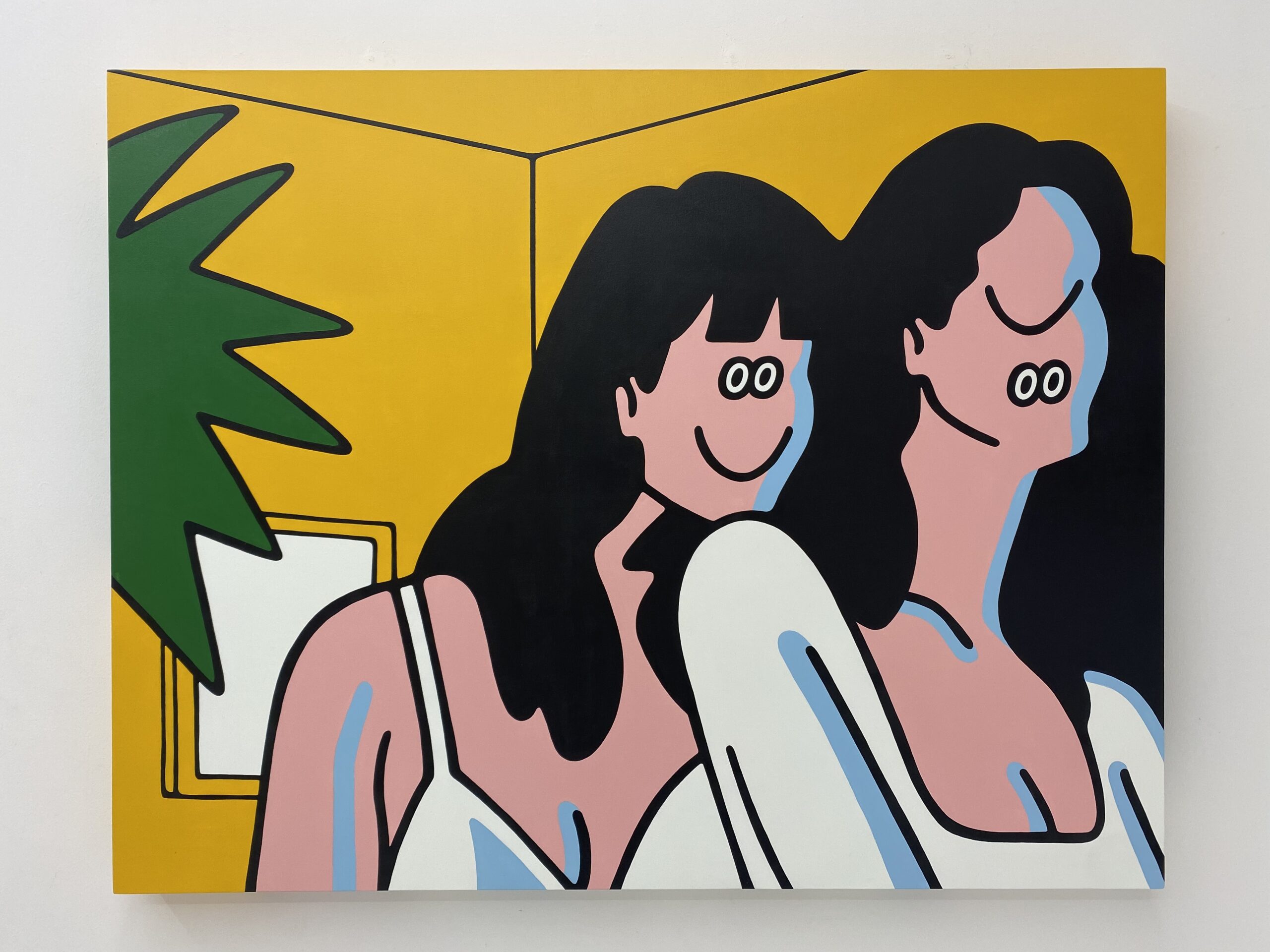
At one glance, anyone can recognize his work. The pieces are impactful yet surprisingly simple – one viewing is all it takes to make them unforgettable. His free-flowing and lateral style refuses to stick to just being an iconic illustration, and it all started by following the footsteps of artists he looked up to. The podcast “Too Young To Know,” which he co-founded with friends, has hit 173 episodes. Recently, he’s ventured into the puppet series “THE KIDDING HEADS,” operating them off-camera through his own voice and occasionally surreal movements.
So, who exactly is this artist?
We will be going deep across two parts – featuring “THE KIDDING HEADS” – to discover the answer.
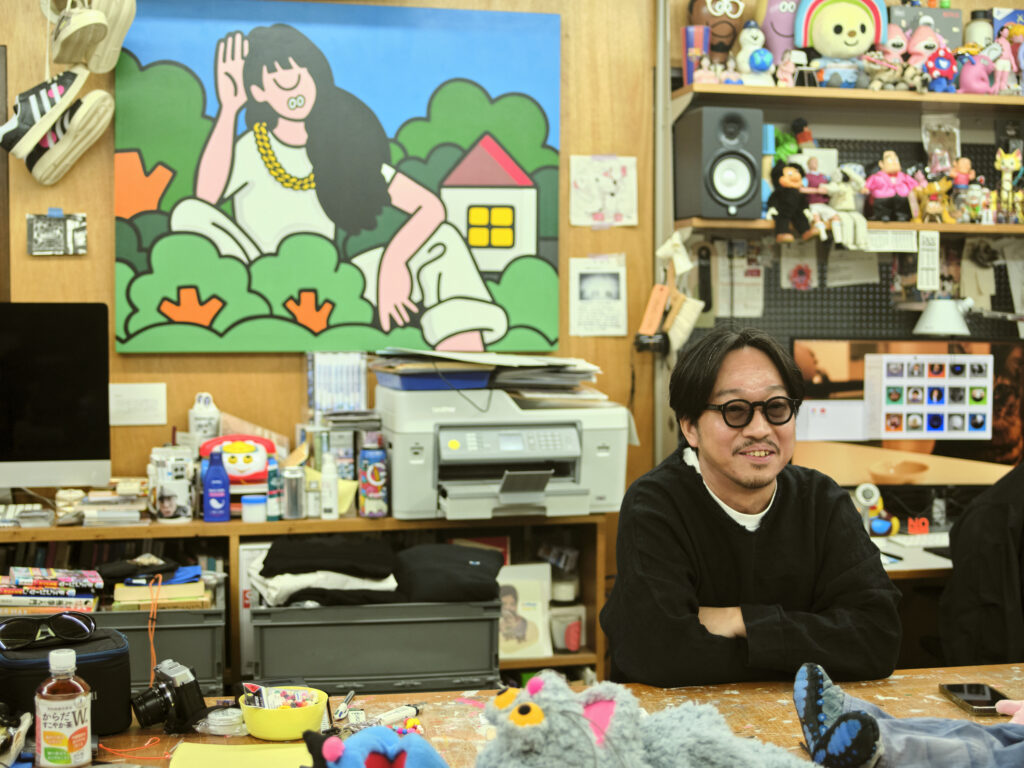
Student Days Immersed in Retail Fashion
While you started drawing when you were a child influenced by your family, how did you spend your high school and university years?
Face Oka (hereinafter: Face) – I attended a regular high school, but there was a course where I could enter straight into a university’s art program. So I pursued that program and majored in art at university. I played soccer until the end of high school, yet what I continued with was illustration and drawing. From childhood, I hardly dreamed of becoming a salaryman. In the end, I dropped out of university after two years.
What was it like during those two years in university?
Face – I barely did much (laughs). I had a lot of close friends from high school who did the same program as me, so I really spent my time freely. Like showing up to a class that was completely unrelated just because my friends took them (laughs). Also, I loved clothes, and so I worked part-time in retail fashion. At the time, I was going to a university in Machida, and there was this shop called “MARUKAWA” in the same area. It was a place like Jeans Mate, and I worked there. I had so much fun that I practically lived there (laughs).
My hometown is Machida too…! Where did you hang out back then?
Face – I see!! I used to go to every place in Machida. I loved vintage clothing, so places like “DESERTSNOW.”
And “DAMAGE DONE” (laughs)!
Face – Exactly (laughs). At “MARUKAWA,” they allowed me to freely hang my artwork in the fitting rooms. Moreso, I had a classmate from university who was around 25. He wished to seriously pursue art and he often organized group exhibitions, which I’d always participate in. Soon then, I started to slowly drift away from university…
Does anything you learned in university connect to what you do now?
Face – I love drawing but I never enjoyed the idea of “learning to draw.” Looking back now, I wish I’d studied it properly. Through various tasks, there were times when I couldn’t express what I really wanted to and that comes from the technical aspects that I lack. It’s something I need to make up for now.
After dropping out of university, what did you pursue?
Face – After that, I started working at STUSSY. At that time, led by artists like KAWS and Barry McGee, there was this standard where success meant you could launch your own T-shirt. Working there wasn’t all about just being a shop staff – I had a big admiration towards “putting out my own designed T-shirt.” So whenever I had the time off, I was constantly drawing.
What kind of drawings were you making back then?
Face – While I’d always loved street culture, hardcore graphical letters weren’t my type. Like Barry McGee, KAWS, and if you trace it back, Keith Haring too, they’re graffiti but also not really. I loved those who were creating characters and doing a range of things, so I think I was always trying to explore some sort of original character.
Your illustrations are instantly recognizable as yours, and while simple, they have an unforgettable impact. Wasn’t it scary to commit to a direction and stick to it?
Face – I never had confidence that this would work out. As a student, I would doodle characters during class and show them to my friends to see their reactions. Looking at the drawings, they’d always have a positive response and it genuinely made me happy. What I’m doing right now feels like a continuation from that. Before I knew it, the people viewing my works weren’t just friends – it started expanding to many more people.
Artists Who Influenced Him
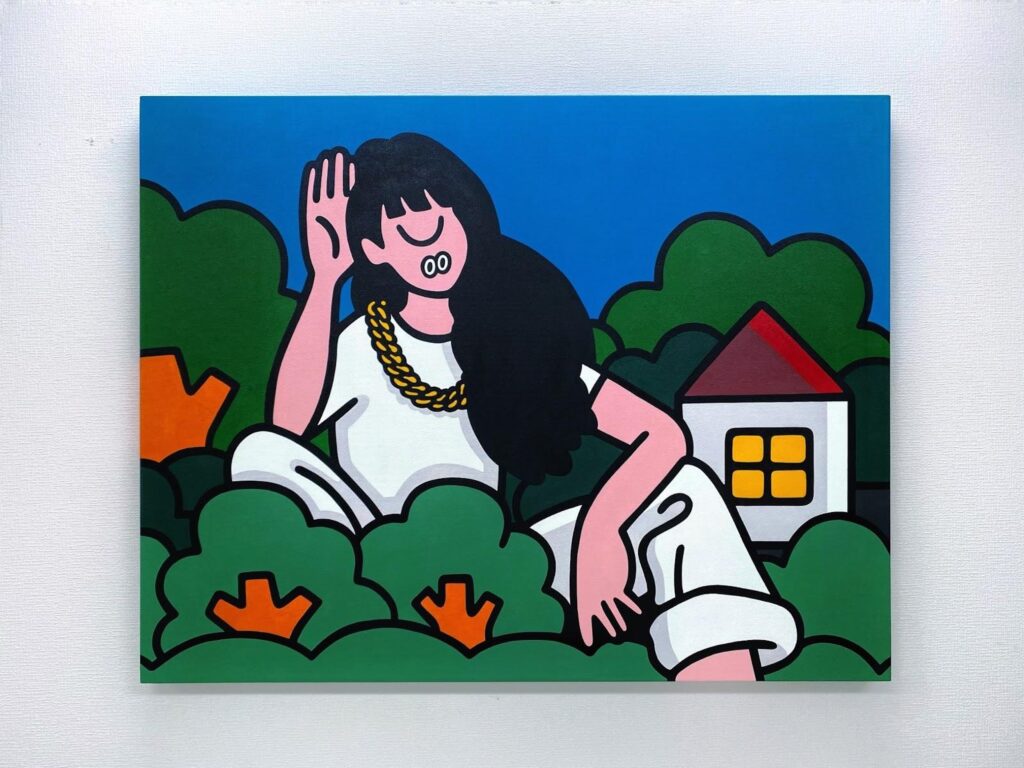
Through your works, I heard there’s a hidden theme of “peace-addled Japanese people,” but the colors of the “faces” you draw aren’t the typical yellow of Japanese people and it rather appears to be closer to pink.
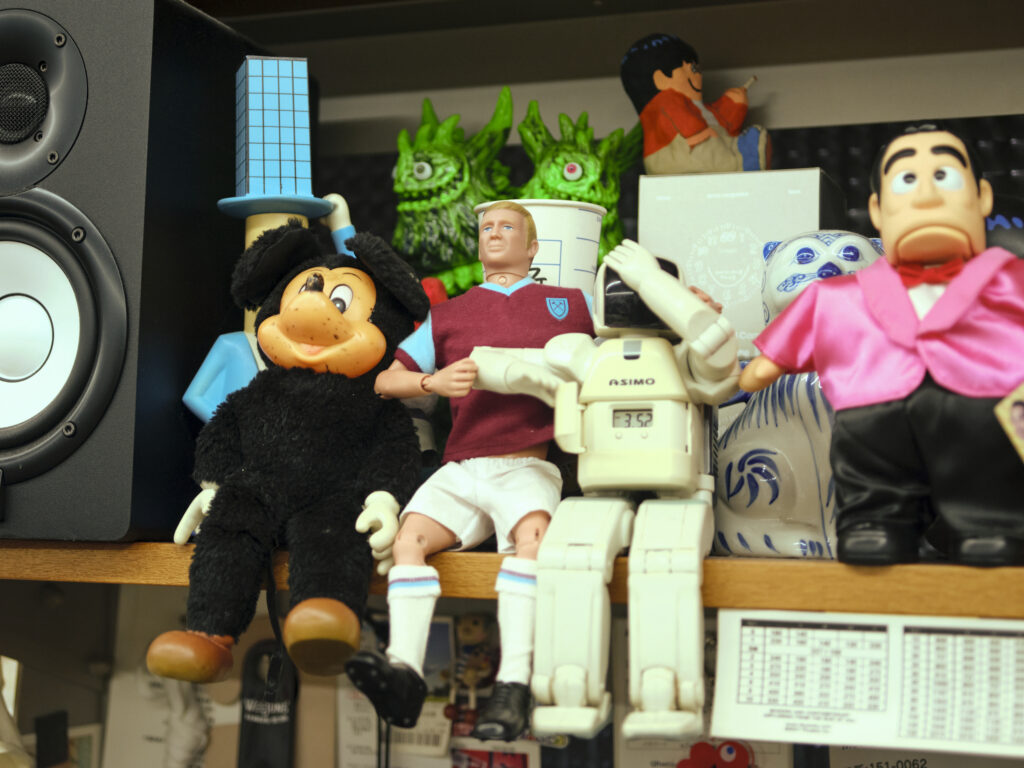
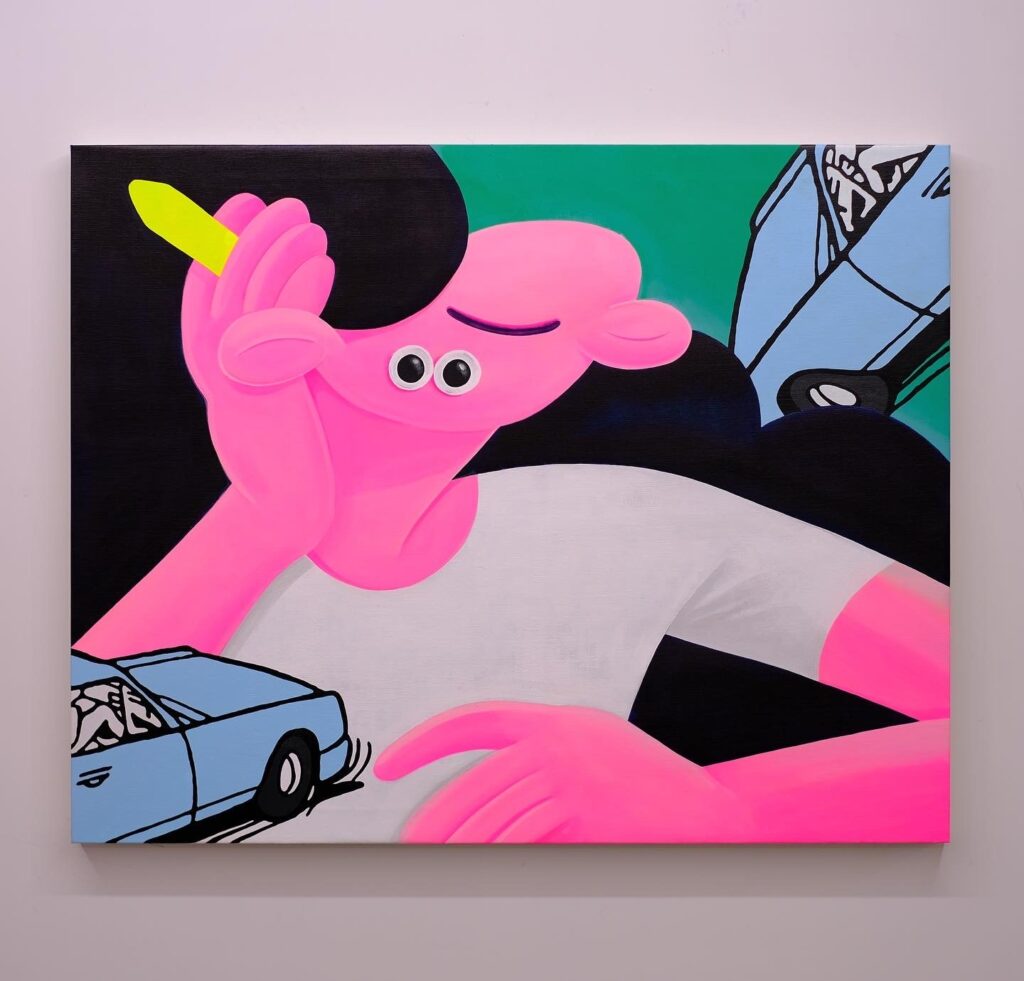
Face – In terms of that, I think the influence by James Jarvis is quite significant. In his works, he uses a lot of pink and also, there’s this brand called Perks and Mini (P.A.M.) that has clothing with fluorescent pink-ish characters. The brand uses vibrant colors, and I think there’s influence from their graphics too.
Another thing is, recently with all the compliances to consider, there’s no pink skinned races, right? I wanted to capture something in between that didn’t belong to any race or groups.
Do you have a contemporary artist who particularly influenced you?
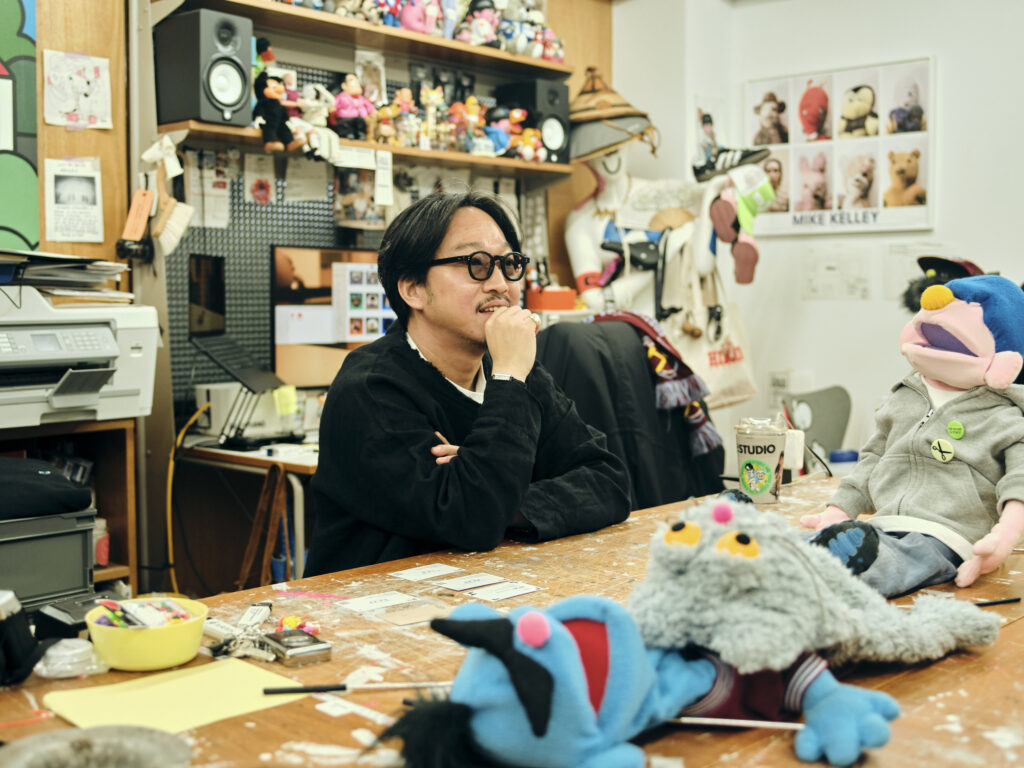
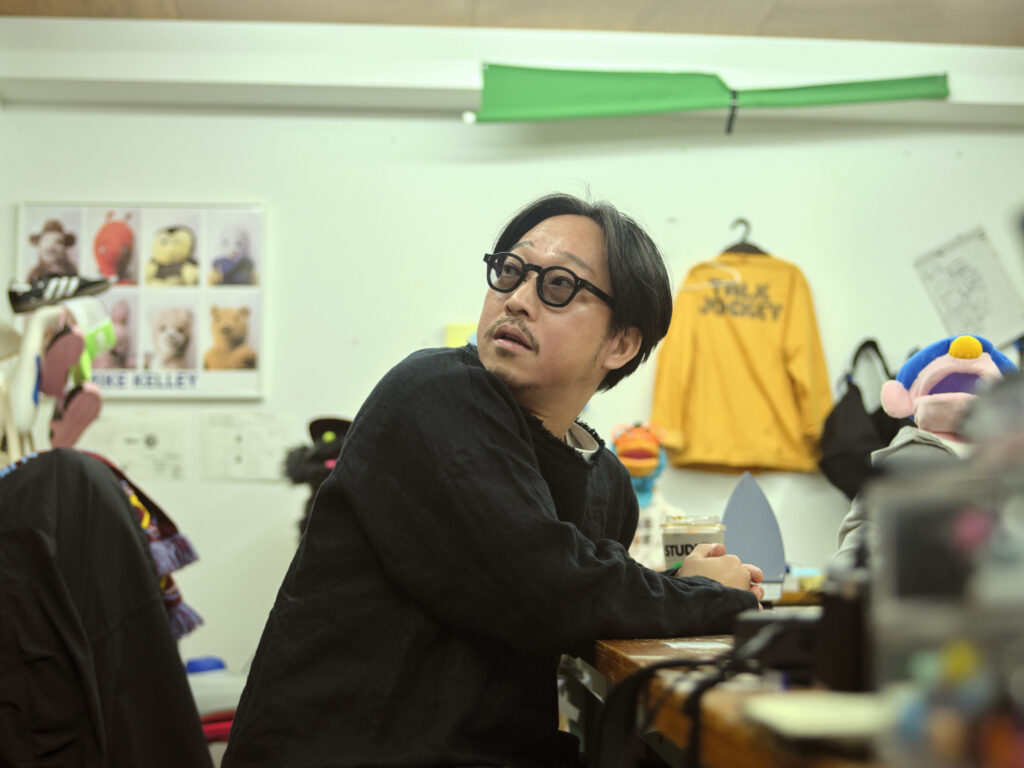
Face- I would say Mike Kelley. Starting with my current puppet works, his influence is huge. And Paul McCarthy as well. His style is quite hardcore, but I’ve been strongly influenced by overseas artists like them.
Your company name “Picabia” also has a meaning, doesn’t it?
Face – Yes, this comes from the name of a French artist, Francis Picabia. He was a contemporary artist from the same period as Marcel Duchamp and is one of the Dadaism members. This person had no single style of which you could call “Picabia’s style.” He constantly kept doing different things and his style changed from period to period. I really look up to that freedom and attitude of not fitting into existing frameworks.
Was the title of your past solo exhibition “Inconvenient Existence” also influenced by him?
Face – That’s right. This title comes from an episode where Picabia was once evaluated as an “inconvenient existence.” He never followed trends or what was happening at the time, always doing something different. It was kind of counter-culture like, with a rebellious spirit. He was doing things different to what everyone was saying or thinking, so from their point of view, he was probably an “inconvenient existence” (laughs).
Truly the embodiment of an antithesis.
Face – Exactly. Similar to Duchamp’s “Fountain,” there’s this sense of “art isn’t just about drawing pictures.”
Light and Lateral, Like a Groove
For example, with “painting,” do you ever want to try a completely different style?
Face – Things that I like have never changed. Like these paintings, it uses thick black lines and contains a character, but I would want to try more photorealistic styles too. It’s not that I am all fixated on my current style, and it would be nice to try various different directions.
Like KAWS, Barry McGee, and Keith Haring?
Face – Right. There used to be a brand called “SILAS” in Daikanyama, where Todd James made figures called “AMOS TOYS.” It was a kind of trend happening at that time. I’ve always wanted to do something similar to that someday.
In the past, your illustrations seemed more flat, but now, like the works here, there’s more expression of shadow in them. Was there trial and error or conscious change in that part?
Face – Actually, for these series, there wasn’t much trial and error, and in my mind, this style is already complete. So when I want to do something new, I try to approach it in a different direction to this. For instance, including the puppet works, if I were to do oil paintings again, I wouldn’t paint in this style.
If you were to do oil painting, what do you think it would look like?
Face – I’ve actually done it in the past. It was about two years ago when I had a solo exhibition at “Gallery Target” after a long time. I think many people expected works like this series, but 80% of the works were completely unrelated oil paintings.
Did you have any intentions behind that?
Face – Rather than intention, I simply felt like “I can’t keep drawing the same thing…” Also, I’ve always thought that “continuing the same thing forever isn’t necessarily the right thing,” so I wanted to challenge myself with oil paintings. On top of that, I’m also experimenting with something like “is there a way to combine this character (series) while painting in oils?” I try to show these attempts in my exhibitions too, but I feel like I’m constantly experimenting.
The Meaning of “Doing It Myself”
As you are trying out different forms of expression, what do you think about “the meaning in doing it yourself”?
Face – I have a creative theme of “peace-addled Japanese people,” so the word “peace” has always been fundamental to me. Of course I want people to feel happy when looking at my works, but within that, I also want them to feel a sense of “hidden crisis.” I wish to become an artist who can express those kinds of messages well towards the viewers.
When creating, which weighs more – “for yourself” or “for the viewers”?
Face – At the basic level, the primary criterion is whether I’m pleased with it. However, with only that, there are definitely parts where it would become difficult to make a living. So I try to balance the two. In the future, I also think I need to become more famous – not just because I want fame, but more so to be able to do activities for children that will connect to the next generation. Through my expression, I wish to do things that lead to what comes next.
In part two, we will hear about the currently trending puppet work “THE KIDDING HEADS,” the soccer team he supports, and his thoughts on creation and art.
Stay tuned!