Japan is a gaming powerhouse. The recent release of Momotaro Dentetsu 2: Your Town is Surely There Too (桃太郎電鉄2 ~あなたの町も きっとある~), the latest in the Momotaro Dentetsu series, has been making waves. But in Japan, living life without ever playing a video game is probably just as difficult as going through life without ever watching a Ghibli film.
The first Japanese computer games appeared in 1973. Home console video game machines emerged, and the center of the “game” world shifted from arcades to your hands. Even today, game consoles and software developed in Japan, from companies like Nintendo and Sony, remain influential worldwide. In fact, it is precisely because of this current moment that the world of games continues to expand, showing us beautiful design, unique settings, and a growing convergence with the realm of media art. In this article, I’d like to introduce you to this diverse world of gaming.
Starting with Beautiful Background Design
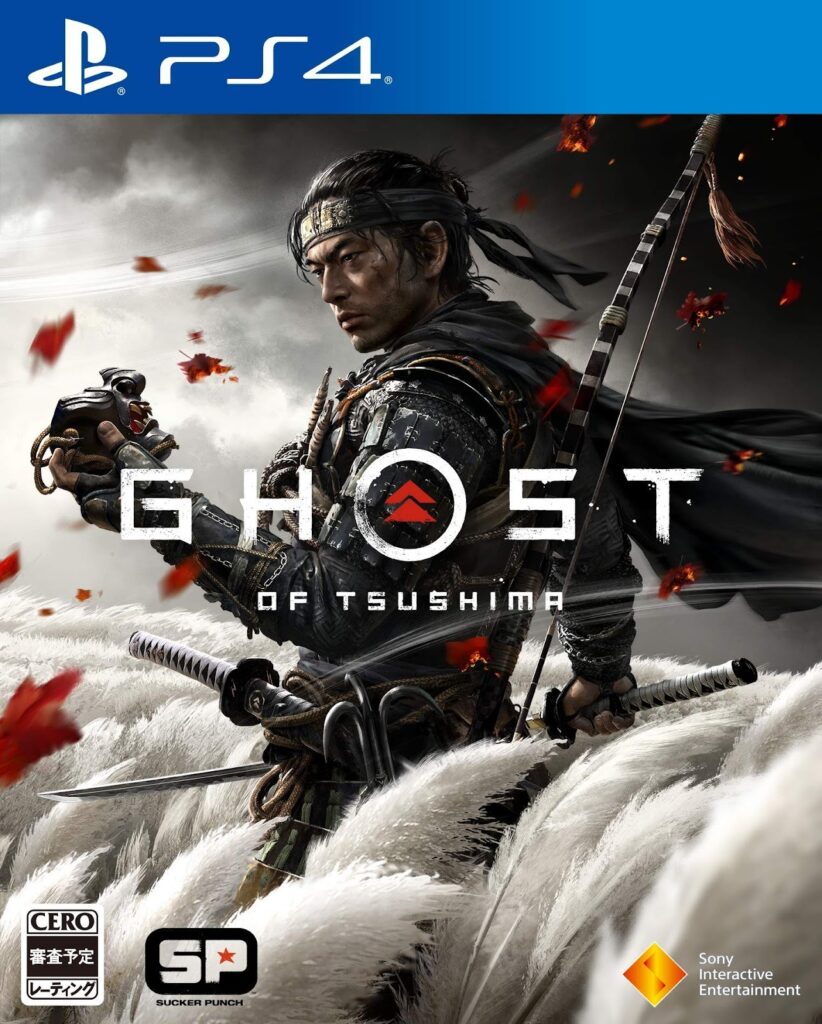
“I’m not interested in games, but I love beautiful scenery.” If that sounds like you, how about Ghost of Tsushima? The setting, Tsushima, is a lush island in the Genkai Sea, off the coast of Kyushu, where forests cover 89% of the land. The story is based on history from the Kamakura period, when the island was invaded twice by Mongol forces. The protagonist, Jin Sakai, strays from the path of the samurai to become “The Ghost”—a warrior returned from the dead—to liberate Tsushima from enemy hands. While the gameplay itself is compelling, one of its main attractions is the environmental design, inspired by the actual landscapes of Tsushima. You can visit locations like Komoda Beach with its beautiful white sands, Mount Shiratake (revered as a sacred mountain since ancient times), and Mount Ariake. You can enjoy the changing seasons across these landscapes, all rendered with a visual style reminiscent of a Kurosawa film.
Fight, build, or just relax. A revolutionary series that lets you do anything amidst a beautiful landscape is The Legend of Zelda. The two most recent titles, The Legend of Zelda: Breath of the Wild and The Legend of Zelda: Tears of the Kingdom, unfold in an “open world.” They offer a game experience where the player can move around a vast map, freely approaching their objectives. While firmly rooted in the “open world” genre, they achieved an entirely new level of gameplay by recreating a level of freedom that goes beyond reality, allowing you to climb any wall, cliff, or cave. You can craft your own weapons like DIY-style, all while soaking in beautiful sunrises and sunsets and immersing yourself in the stunning scenery.
Feeling the Art in Unconventional Games
A little prince rolls a ball around on Earth, making it bigger and bigger. This is Katamari Damacy (塊魂), a game that boasts a core popularity for its simple yet unique rules. With the latest in the series, Once Upon a Katamari Damacy, released this year, the game’s charm lies not only in its intuitive fun and colorful design but also in its numerous “Suteki Songs” (original songs) used as background music. Among them, “Houston (Re-Arranged by KIRINJI)” by KIRINJI is a masterpiece.
The music adds color to the game’s fun atmosphere. It is the game that symbolizes the unique creativity Namco is known for.
If we’re talking about a legendary game directed, designed, and written by the multi-talented Shigesato Itoi, known as a copywriter and essayist, it has to be MOTHER. Catch phrases from its TV commercials, like “Don’t cry until the end” and “Guaranteed masterpiece,” are still remembered, and the game maintains a passionate fanbase more than 30 years after its release. Set in a contemporary-styled America, the story delves into the mysteries of strange phenomena like aliens, psychic powers, and poltergeists. Full of love for American culture, it was a groundbreaking game with a novel setting that made a clear departure from the “sword and sorcery” worldview typical of RPGs at the time. The soundtrack, composed by Keiichi Suzuki of the Moonriders, is full of classics. “Eight Melodies,” which plays a key role in the game, was even featured in an elementary school music textbook and is also familiar to younger generations as the sample source for the rapper VAVA’s “Genjitsu Feelin’ on my mind.”
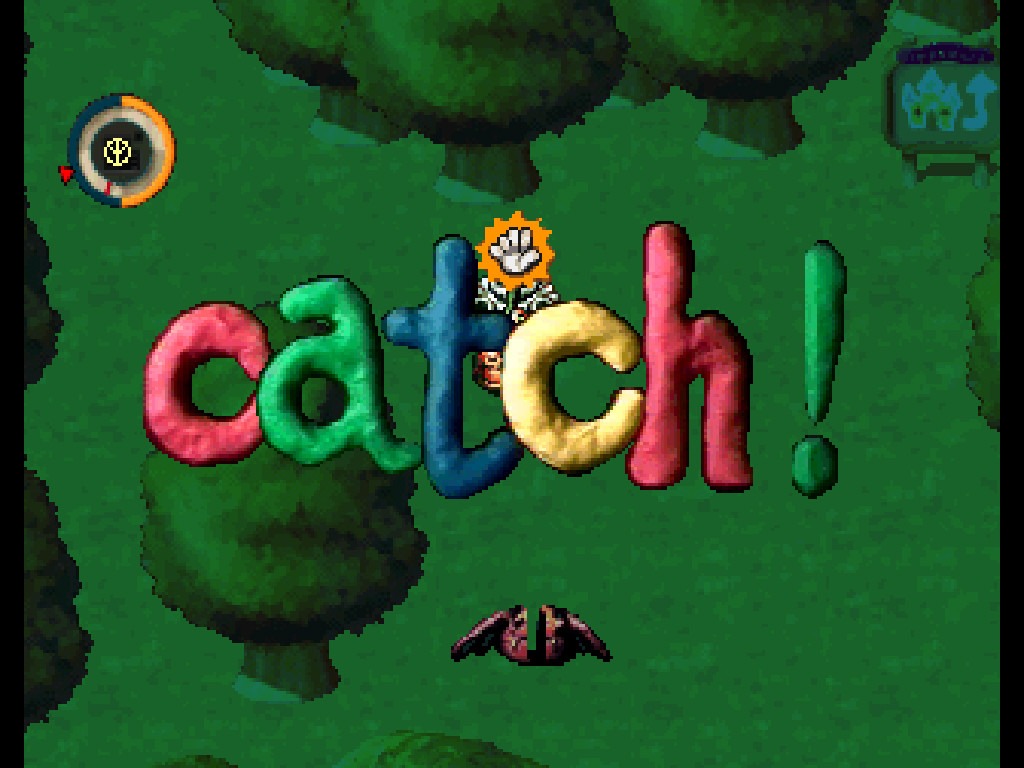
True innovation. An endeavor that revolutionizes existing values is, in many ways, artistic. In that sense, a monumental work that fundamentally overturned the framework of gaming is the “Anti-RPG” moon. This game begins with the line, “Stop playing games…” The protagonist, transported to another world, must “save” the souls of innocent animals already defeated by the “Hero” by “catching” them. The goal is not to defeat enemies, but to “rescue” them, making it a story overflowing with a rebellious spirit. The lives and activities of the residents go beyond the “anti-RPG” framework, as the game is sprinkled with philosophical questions that seem to serve as a critique of our modern society.
The World of Art x Games
There are also games that artists themselves pay respect to. One example is Donkey Kong Country, a side-scrolling action game for the Super Famicom (SNES) developed by the British company Rare and published by Nintendo in 1994. Musician Mac DeMarco is one such admirer. He cites ‘Aquatic Ambiance’—the mellow, ambient track that plays during the game’s underwater scenes—as one of his favorites. It was composed by David Wise, a legendary figure among enthusiasts who also worked on titles like Wizards & Warriors and the Battletoads series. The soundtrack CD commands high prices on secondhand sites like Mercari. Then there is actor and illustrator Lily Franky, who says he was hooked on video games in college. He based his graduation project on the world of Super Mario Bros. Reportedly, it was a video recording of himself playing as Mario, completing the first four worlds on a single life without a single mistake. While some people, like him, have been inspired in their own creative work by games, there are also cases where games themselves intersect with art.
Since 2015, Japan’s Agency for Cultural Affairs has been running the “Japan Media Arts Collaborative Promotion Project,” targeting the four fields of games, anime, manga, and media art. In short, the government has officially recognized games as a form of ‘Media Arts’ that Japan can be proud of. The initiative involves not only efforts to preserve and archive games, but also support for artists who approach games as an artistic medium. This convergence of the gaming and art worlds is definitely one to watch.
A noteworthy example of an artist incorporating games into their work is Sakiko Fujishima’s 2024 solo exhibition, “WRONG HERO.” Fujishima is an artist who has developed a wide range of media art, treating virtual spaces as if they were canvases and simultaneously conducting live performances within the metaverse. In this exhibition, she focuses on the femininity often treated as a mere side character to support the protagonist’s story. The exhibition brings buried voices to the surface through a 2D game about a woman who “chooses to be the hero instead of the princess,” as well as 3D video works based on it.
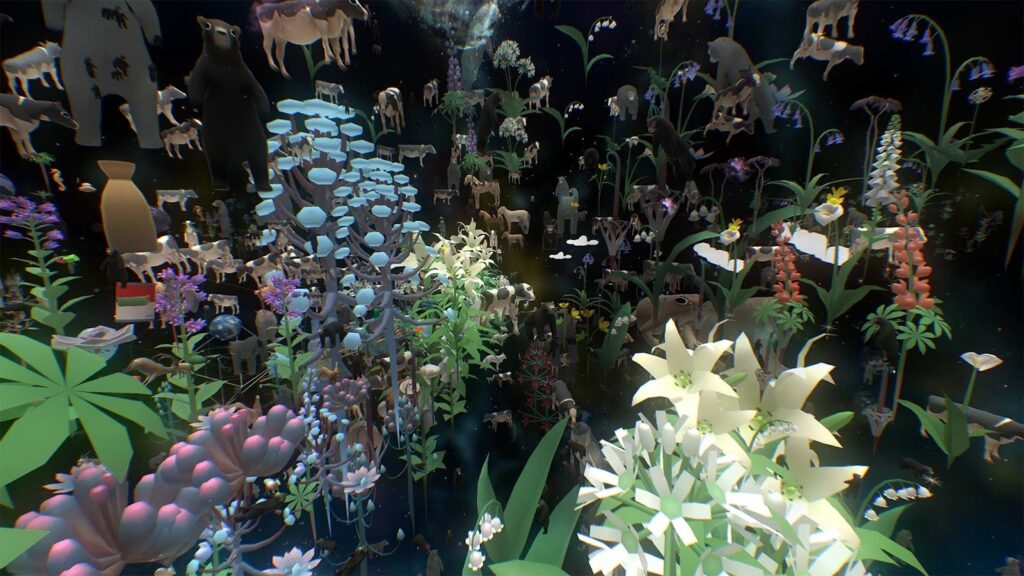
The game works by Irish filmmaker David O’Reilly are also conceptual. He has released two titles: Mountain, a too-simple game where the player becomes a mountain and can do nothing else, and Everything, a game where you continuously transform into anything and everything, from atoms to galaxies, from pizza to giant trees, from microbes to massive buildings. These works provide a practical user experience that eliminates the foundational elements of gaming—”storytelling” and “characters”—and moves away from a superficial interpretation of the world. You don’t know what to do or how to operate it. There is no tutorial. It is an experience of the “world” itself. We highly recommend you try playing these artistic “anti-games.”
The Ever-Expanding Game Universe
It has been about 50 years since home consoles were born in Japan. With the market flooded with titles, one might worry we’ve reached a state of saturation. A game that easily shatters such fears is Astro Bot. Starring a small robot named Astro, this action game tasks you with rescuing bot companions scattered across over 50 planets. Released by Sony Interactive Entertainment in the fall of 2024, it earned a stellar Metascore of 94 on Metacritic and achieved the feat of winning “GAME OF THE YEAR.” It was praised for its simple yet meticulously crafted mechanics—specifically the haptic feedback that simulates the feel of surfaces like grass, gravel, and metal, the sensation of water, and the dynamic impact of attacking enemies. Developed by Sony’s Japanese studio, TEAM ASOBI, the game returns to the primal joy of tactile gameplay. Through this finely detailed experience and its stunning visuals, Astro Bot has arguably elevated the standard of modern gaming.
From viral indie hits like The Exit 8 and Suika Game to VR titles with vast, untapped potential for real-world application, the future of “games” has only just begun. And essential to this development is an “artistic” perspective. So go out and find that next groundbreaking masterpiece, and give it a play.