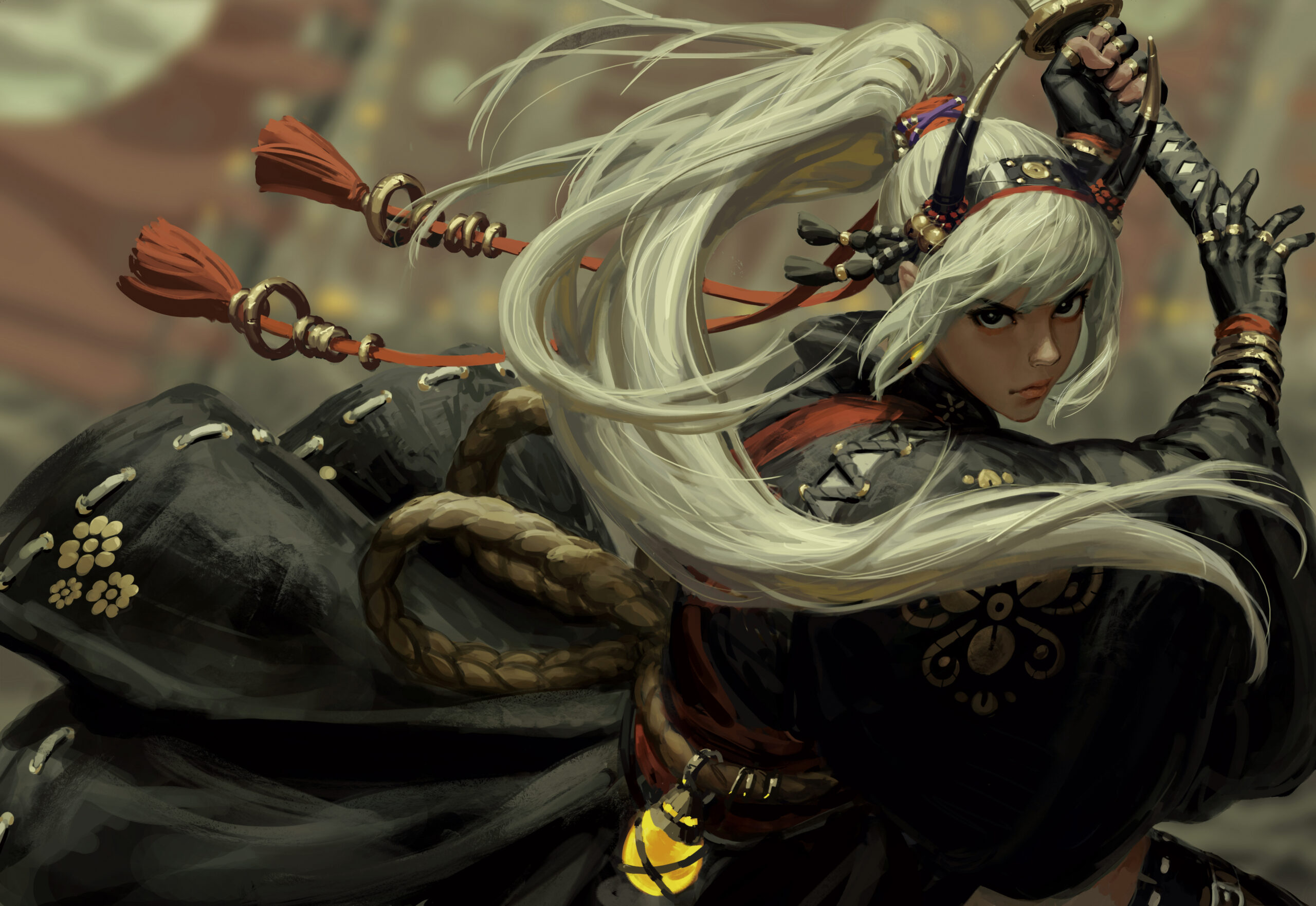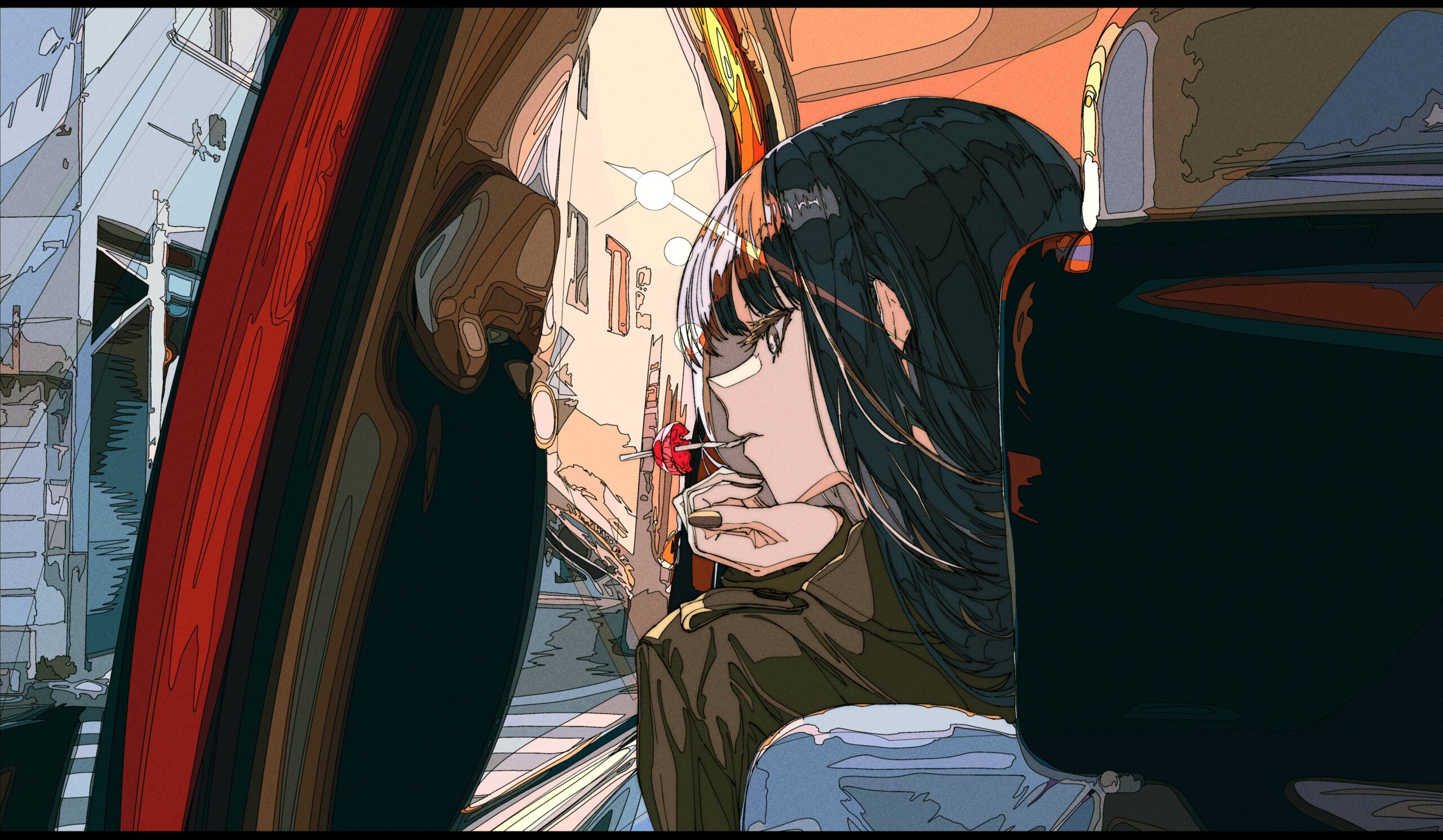
Even after his sudden passing in 2020, illustrator Kogecha continues to attract countless fans. With his long-awaited first art book, Reproduction, set to be published alongside a solo exhibition of the same name, let’s look back at the numerous works he released and trace his footsteps.
So, who was the illustrator Kogecha?
“Lines” Derived from Nihonga, Expressed Digitally
To balance his love for digital illustration with his desire to “draw while retaining an analog feel,” he chose a “liquid crystal tablet” (pen display). From his experience with Nihonga (Japanese painting), he had confidence in his “lines.” He would later speak*1 of influences like Yoshida Hiroshi, Ito Jakuchu, Suzuki Eijin, and Watase Seizo. He likely saw the potential in pen displays to digitally express his own “lines,” overlaying them with the “crisp” style of these artists.
He saved up money from a part-time job and bought a Cintiq 13HD. He drew and drew, creating fan art (niji sosaku) of Aikatsu! —which he said was his favorite at the time—and gradually got the hang of it.
Through active posting on social media, he gradually gathered a following. He was also energetic in producing illustration collections and dojinshi (self-published works).
His first two such books were “PEOPLE ARE PEOPLE” and “BLACK DOG.”
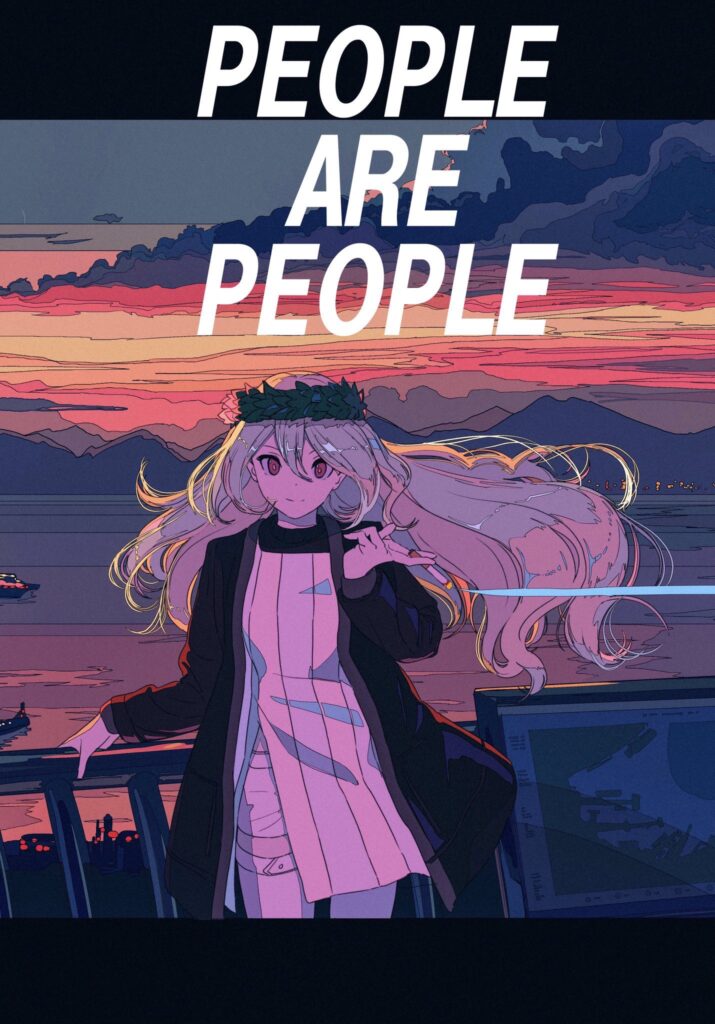

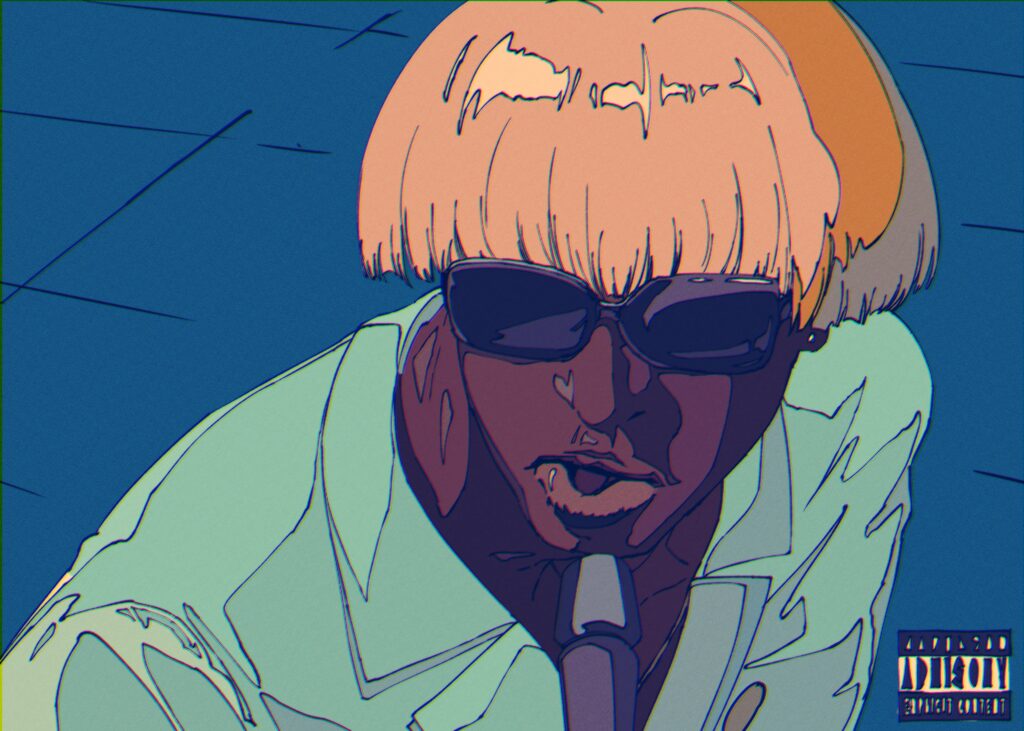
Whether it’s a coincidence that both share names with songs by English rock bands… “PEOPLE ARE PEOPLE” is the Depeche Mode song about the sadness and anger of prejudice that sparked their later success. “BLACK DOG” is a renowned classic by Led Zeppelin. Considering his X (Twitter) post depicting the American rapper Tyler, the Creator (who just held his first Japan concert in eight years) as part of a Sailor Moon homage, his keen interest in music is likely not just a misinterpretation.
「SNOW MIKU 2017」
A turning point came for him when he received an offer to create the main visual for “SNOW MIKU 2017.” The event’s special website features an illustration gallery. In his submitted work, the “crisp style” and “influence of Nihonga” he mentioned are strongly apparent, making his piece instantly recognizable among those of the other illustrators. We highly recommend checking out the official SNOW MIKU 2017 website to see the actual illustration.
Gravity Alchemic
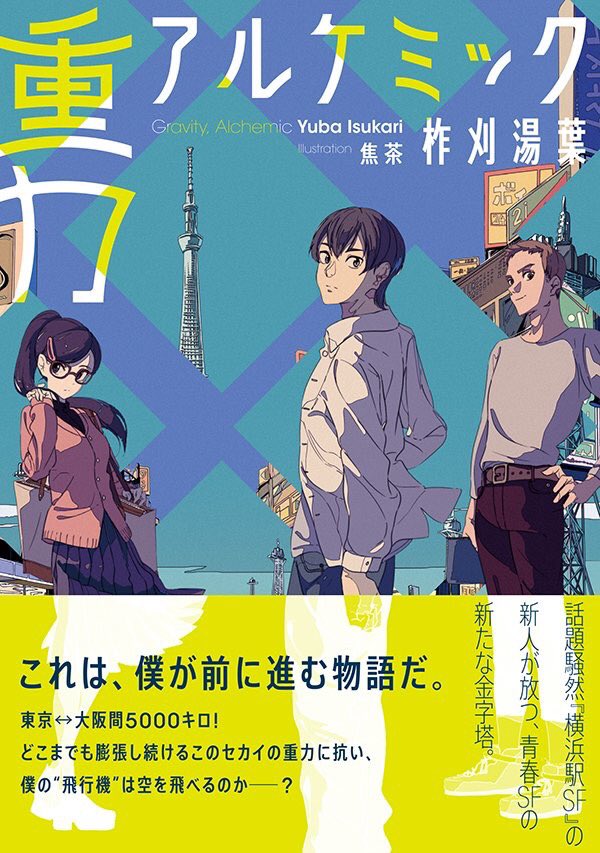
He didn’t stop there at all. That same year, the novel Gravity Alchemic by Yuba Isukari, for which he drew the cover, was released. His style of visiting real-life locations for research and drawing them as backgrounds seems to have been established by this time. The story is set on an Earth that continues to expand due to the mining of “gravitons,” where the distance between Tokyo and Osaka has surpassed 5,000 kilometers… Just as the synopsis suggests, the illustration is spatially divided in a grid, sparking the imagination: perhaps the light-blue section is Tokyo—you can see the Tokyo Skytree—and the bluish-purple section depicts a street in Osaka.
He would later post photos of his actual locations on X for several other works.
The “Kogecha Style” Seen Through His Creative Process
Kogecha often shared his creative process on X, and not just his locations. He would sketch scenes he encountered and then use those as a base for the final piece. His ability and sheer fortitude to draw, for example, a mountain of sneaker boxes lining a shelf from front to back, in full detail, is beyond imagination.


Furthermore, Wacom’s official YouTube channel has uploaded a video that records his entire creative process, where you can also see the finished illustration. Be sure to check it out.
While we appreciate his generosity in using social media to show us pre-completion states and his so-called “source material,” one post stands out. He posted a completed work and then showed it again with his trademark “lines” removed.
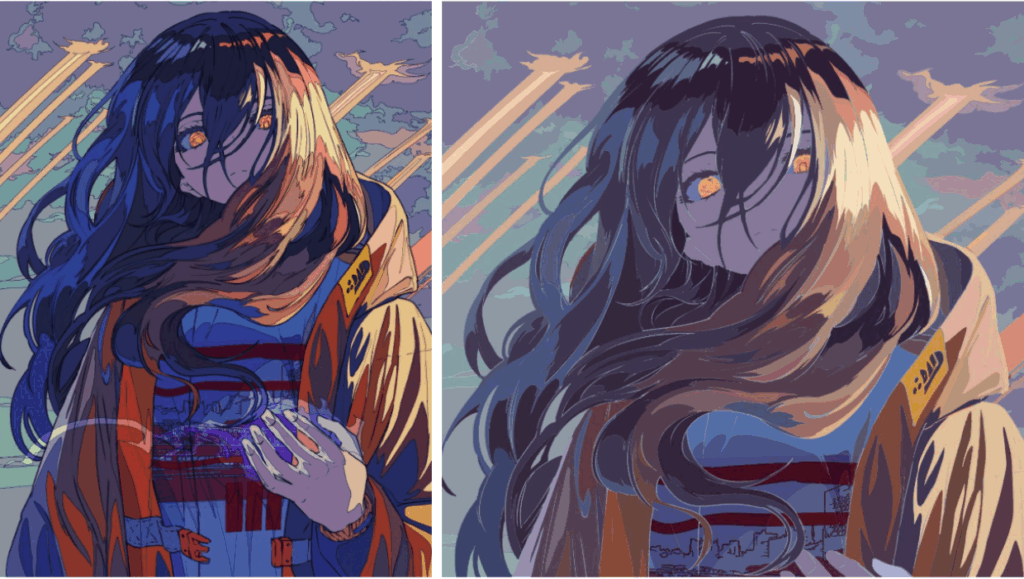
It’s startling to see them side-by-side: the anonymous atmosphere of the “no-line” version, pale and flat, versus the “line-art” version, which is so crisp and defined it feels like a self-introduction. It’s like the abstract suddenly becomes concrete; a character gains a “contour” and vividly appears right before your eyes. And of course, the charm of his art isn’t just the lines. The contrast between the precise linework and the flatly colored sections, the overall color balance—the depth in a single image is so great that your gaze has no time to rest, moving from one point to the next. As he put it, he “guides the gaze” through a single illustration, as if through many different layers. This is likely what leads to the lyricism in his work.
In 2018, he was featured in ILLUSTRATION 2018, published by Shoeisha. ILLUSTRATION is an annual art book that features 150 notable illustrators of the year, supervised by Koji Hiraizumi. Since its first publication in 2013, nearly all featured artists have been selected by Hiraizumi’s discerning eye.

The book designer for this volume was Tomoyuki Arima, someone Kogecha would later say he was “super influenced by.” It seems Arima had a significant influence on the design elements in Kogecha’s own work, and they were reportedly good friends.
In 2018, while his commercial work increased, he also prolifically published original works like dojinshi. The number he released this year was considerable, including DIE LORELEY, AUTOMNE MALADE, Second’s, SUPERSTITION, and TAKE ON ME. Regarding AUTOMNE MALADE, there is a precious article where his family members spoke about it, which we also recommend reading.
The Tumultuous Year of 2019: A Circle of Connections Expanding Through Illustration
In 2019, he displayed the skills and experience he had cultivated without reserve. His commercial work increased dramatically, and it was the year his popularity truly ignited. Particularly noteworthy was his work on the music video for Yurei Tokyo (Ghost Tokyo) by Ayase, who at the time was gaining unstoppable momentum as both a Vocaloid producer and as part of YOASOBI. The song has become a mega-hit, with a combined 50.08 million views for the “Hatsune Miku” version and the “self-cover” version (as of September 15, 2025).
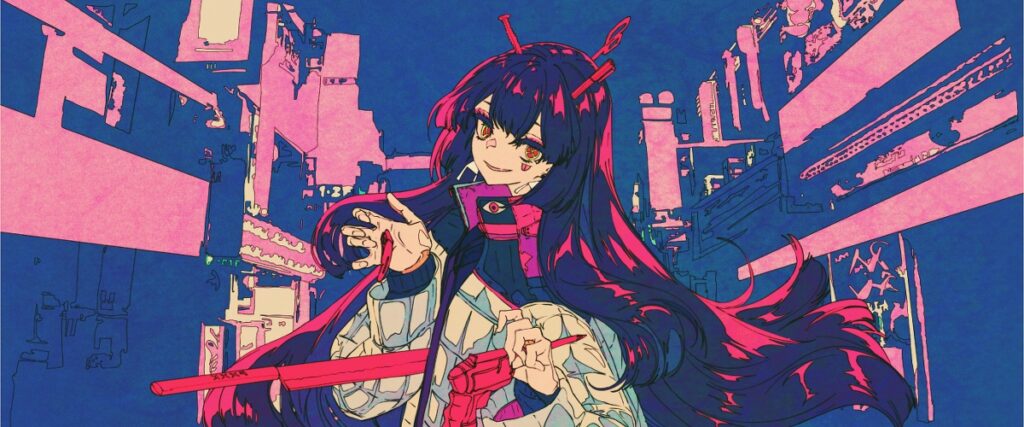
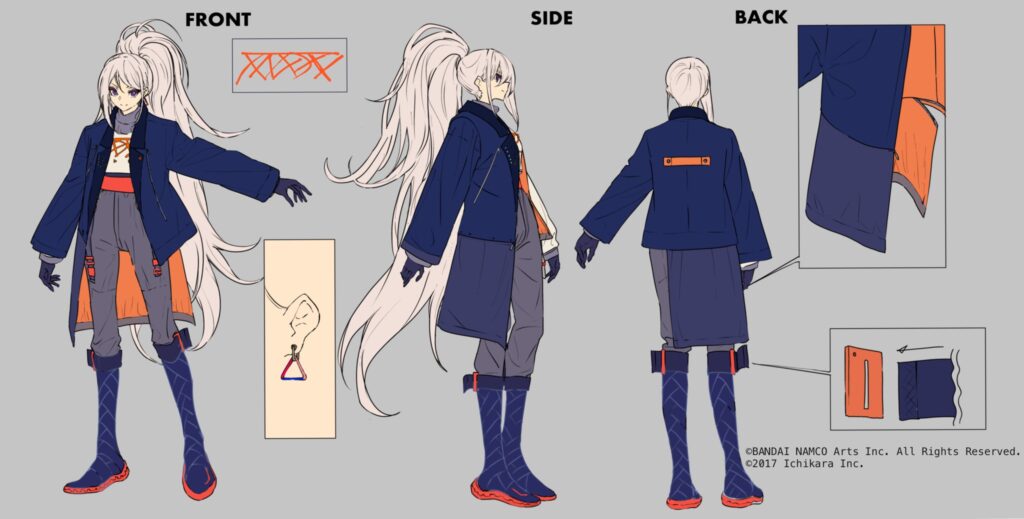
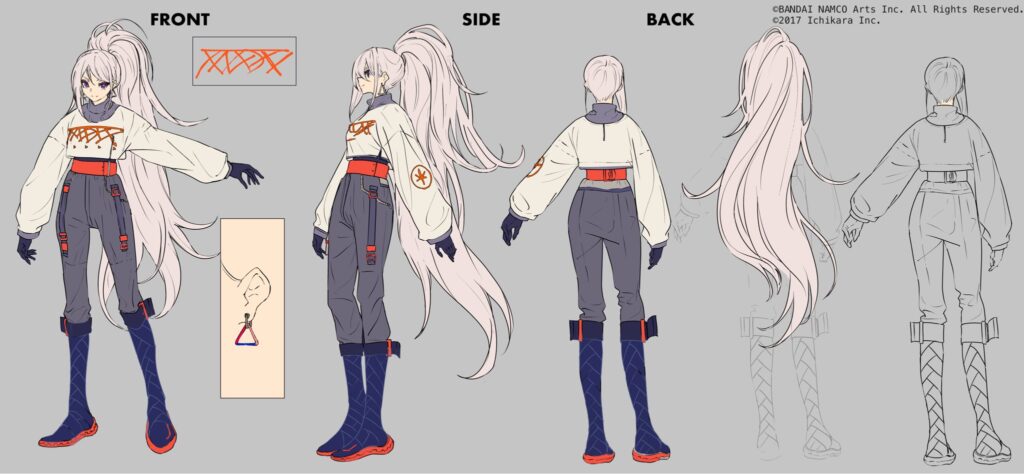
That same year, he also handled the 2nd visual and costume design for the Virtual Singer AZKi. This was the first time his own work had been fully animated, and it can be called a turning point that showed new possibilities. The distinctive sneaker design reflects Kogecha’s own love for sneakers, and you can feel his meticulous attention to detail everywhere—from the street-style fashion and the inner buttons of the coat to the meshed hairstyle.
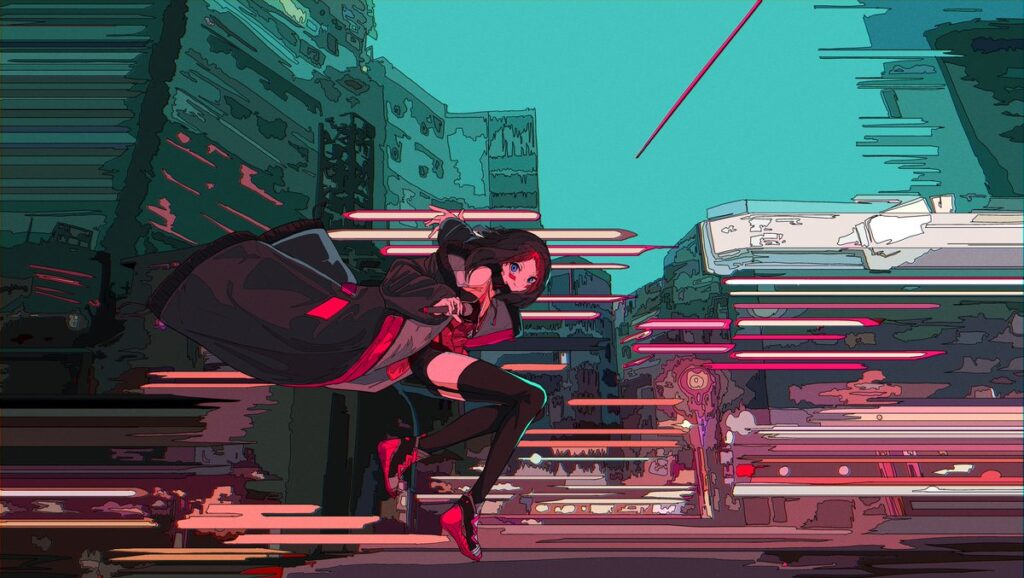
Also in 2019, the poetry collection I Saw an Angel That Summer was released. The work joins Kogecha’s illustrations with the poetry of Fumiya Iwakura, a highly expected new poet and winner of the Mainichi Kadan Award. The work born from this encounter of young talents emits a unique radiance.

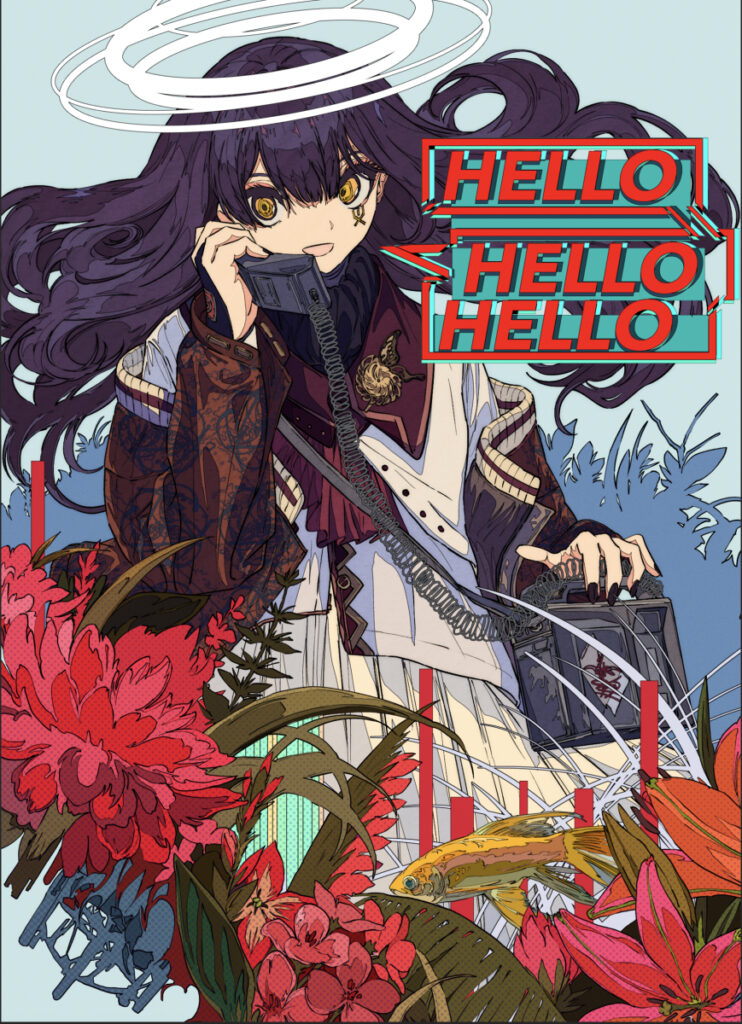
While handling numerous other commercial projects, 2019 was also the year he held his first solo exhibition. Titled “HELLO HELLO HELLO,” the show featured 40 of his past works plus 10 new analog pieces. He had later upgraded to a large-screen “Wacom Cintiq Pro 32,” and in a way that matched his style of zooming in to draw fine details, the venue was lined with large-format works, including a massive 1.8-meter panel and a 2-meter-tall tapestry. It must have been an incredible opportunity to fully appreciate his meticulously detailed art.
The following year, 2020, he designed the costume for the VTuber Higuchi Kaede. The design skillfully blends her “cool” side with her cute tendency to “flop over,” proposing a new visual image that is unmistakably Kogecha’s while still honoring her previous atmosphere.
Final Thoughts
We have just traced the career of Kogecha, a truly spirited young artist. And all of this is, certainly, in the past. But does “time,” a thing as vaguely real as a ghost, truly make us forget the person? Does it all just become the past?
An artist speaks through their art. As we all become accustomed to loss, if we can hold on to the important feelings, then this is by no means a one-way exchange. The raw, emotional transaction that occurs when we stand before his work is something that not even “time” can steal. No matter how much time passes, his art will remain for posterity.
There is a reason I believe this.
One of the X posts from when he was alive, there was this one:
#IWantToBeSomeonesFavoriteArtist

The replies were overflowing with comments from his fans. Kogecha’s story will continue.
Kogecha Art Book: Reproduction
Illustrator Kogecha continues to receive immense support from Japan and abroad even after his sudden passing in 2020.
His long-awaited first art book, Reproduction, is set to be published. The book is designed around the theme of “music,” a subject deeply connected to the artist, and will also include the storyboards (rough drafts) for an unreleased manga he was working on.
Solo Exhibition: Reproduction
A solo exhibition will be held to coincide with the publication of Reproduction.
The exhibition will display a wide range of his career, from client work to precious personal pieces. Furthermore, unreleased works that have never been seen before will be reborn as art through “Metal Canvas Art” by the art brand GAAAT. The metallic luster, three-dimensional feel, and the material’s ability to retain its beauty for a long time will express his world more compellingly, proposing a new relationship with art—one where Kogecha’s world continues to exist in the glances we cast during our daily lives. Please come and see this precious opportunity at the venue.