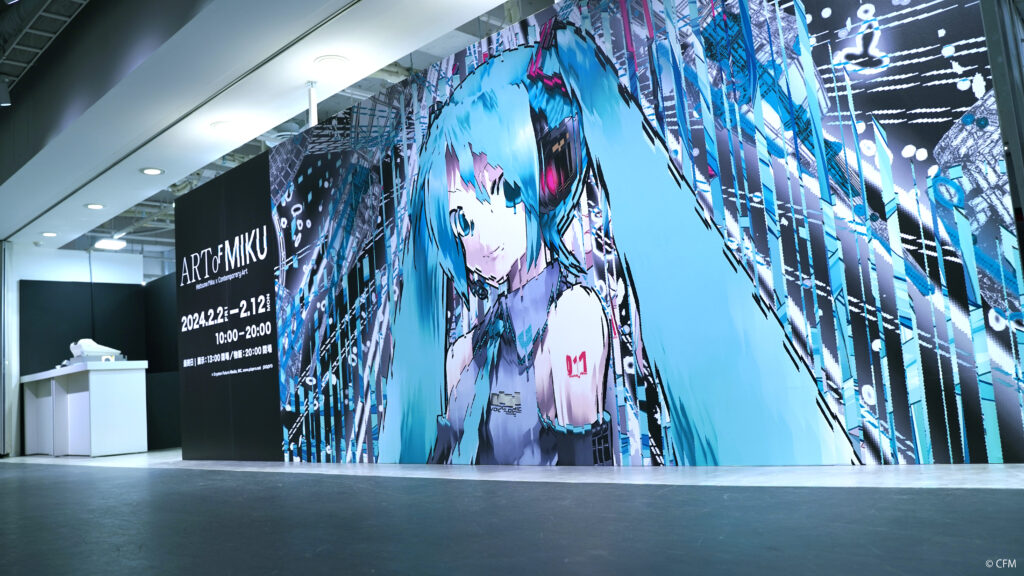
Digital and real. Subculture and high art. A project that bridges these seemingly opposing worlds is now in the spotlight. Under the title “ART OF MIKU”, the project reimagines Hatsune Miku – a beloved Japanese IP (Interactual Property) owned by Crypton Future Media, Inc. – through the lens of contemporary art, curated and produced by W.creation Inc. Known for redefining the value of characters and creative content, W.creation delivers fresh cultural experiences to audiences in Japan and beyond, bridging artists’ passion with the enthusiasm of countless fans. As cultures intersect and energy surges across creative boundaries, one can’t help but wonder – what kind of stories unfold behind the scenes of this vibrant, ever-evolving movement.
One standout example is “ART OF MIKU,” a contemporary art exhibition themed around Hatsune Miku, first held in Sapporo and Shibuya in 2024. Drawing large crowds of fans, the event proved to be a resounding success. Since then, the exhibition has continued its remarkable trajectory – unveiling new works and hosting shows in Yokohama, Roppongi, Kobe, Fukuoka, and Osaka. With such unstoppable momentum, it’s become nearly impossible to look away from its evolution.
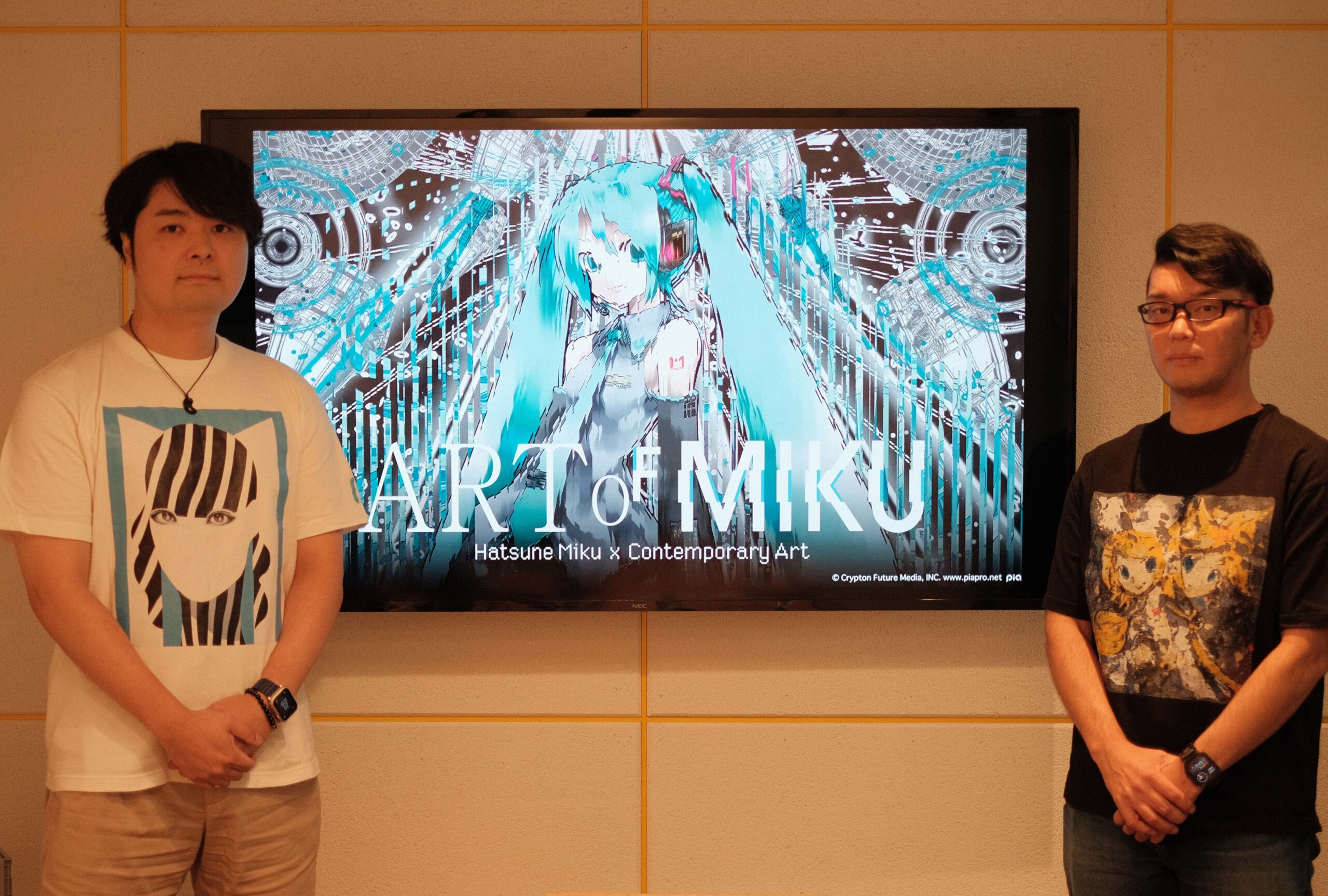
To explore the origins and creative journey of ART OF MIKU, we sat down with Genki Ikeda, Creative Director, and Masato Onishi, Art Director, for an in-depth interview. The story unfolds in two parts.
The Origins of “ART OF MIKU”
Please tell us about how this project first started.
Ikeda: First of all, I believe Japan’s contemporary art market still has plenty of room to grow compared to the global art scene. At the heart of this project was a desire to make art feel more accessible, to create more opportunities for people to engage with it. That’s where the idea came from: to present a character that Japan is proud to share with the world, but within the framework of contemporary art. We wanted to leverage Japan’s unique culture while giving creators a platform where they could express themselves with freedom. That vision led directly to the launch of “ART OF MIKU” and to staging exhibitions that went beyond the walls of a gallery.
What made you choose “Hatsune Mike” amongst all characters?
Ikeda: Hatsune Miku isn’t just globally recognized as a subcultural icon – she’s also an incredibly open, “big-hearted” character that has embraced derivative works and countless forms of creative expression. In many ways, she already functions as a flexible platform where creators can freely explore their visions. That’s exactly why we felt she was the perfect fit for the diverse and ever-expanding context of contemporary art. The very essence of Hatsune Miku carries a universal language of “diversity,” and it’s precisely because of that that this project could come to life.
In celebration of Hatsune Miku’s 16th anniversary, the first exhibition featured 16 artists. How did you decide who to bring on board?
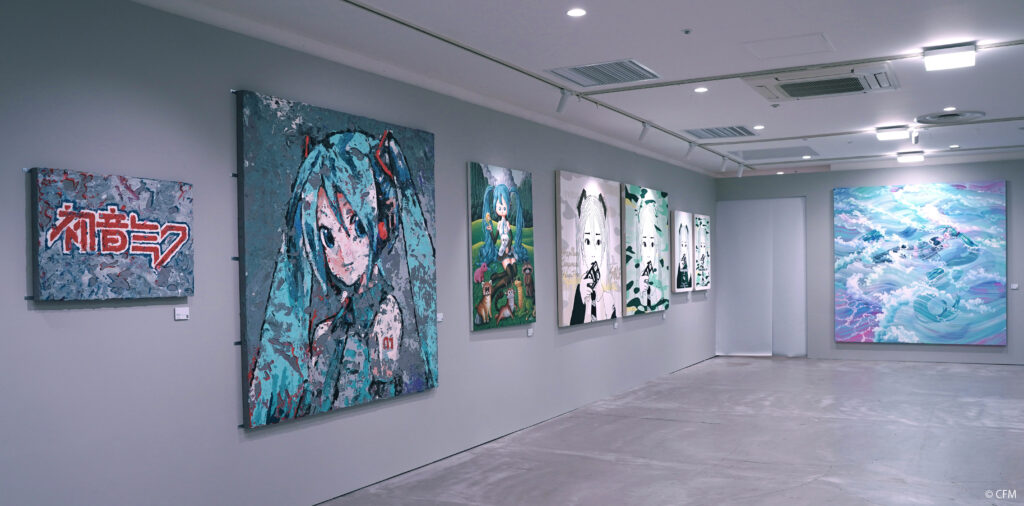
Ikeda: The selection was led primarily by our producer, Yamanaka, but the whole team placed great importance on finding the right balance. Even within what we call “contemporary art,” the forms of expression are incredibly diverse. To avoid leaning too heavily on one edge, we organized the lineup carefully and reached out to artists across a range of genres – from contemporary art, abstract expressionism, realism, and minimalism to conceptual art and beyond. With Hatsune Miku as the central IP (Intellectual Property), we were genuinely excited to see how each artist would interpret her through their own unique style.
Is this still and really “Hatsune Miku?”
I understand that a big challenge was finding the right balance between creative freedom and the rules around using the IP. Do you have any particular stories or examples from the process?
Ikeda: One of the most memorable challenges was aligning with Crypton Future Media, the company that holds the IP for Hatsune Miku, on what kinds of expression would be acceptable and what’s not. As the artworks started coming in, there were moments where we had to ask ourselves, “Is this still and really Hatsune Miku?” It became clear that we needed a common language to connect the artists and the IP holders.
We carefully explained, “Yes, this piece is highly abstracted, but there’s a process behind that transformation. It’s being elevated as contemporary art, not breaking the essence of Hatsune Miku.” The key was respecting the original form while pushing it into abstraction. Achieving this shared understanding of culture required repeated dialogue, and we worked very hard to get it right.
Onishi: In most cases, we resolved these potential-conflicts before production even began. We always asked the artists to submit rough drafts of their work that showed the style and direction they intended, and had the IP holders review them in advance. If a problem arose after the piece was completed, it would obviously mean reworking everything, so we repeated this pre-review process dozens of times to avoid that from happening.
Additionally, the IP holders had certain regulations regarding specific types of expression. Since we were using their IP, it was crucial to explain these rules to the artists – but simply saying “You can’t do this” wasn’t enough, because that could prevent them from creating the art they wanted. The artists needed to fully understand the reasoning behind the guidelines to produce meaningful work, and that explanatory process ended up being far more time-consuming than we initially expected.

From Everyday Goods to Artworks
I understand that for this project, the target was two distinct audiences: contemporary art fans and Hatsune Miku fans.
Ikeda: Exactly. On one hand, we had pure contemporary art fans, and on the other, Hatsune Miku fans, many of whom don’t normally engage with art. Reaching these two very different groups was another major challenge. We aimed to create works that, for Miku fans, clearly say “This is Hatsune Miku,” while for art enthusiasts, they recognize the artist’s style or see the work as part of a broader series. Striking that balance and crafting an exhibition that resonates with both audiences were definitely a challenge.
We heard that you prepared a wide range of merchandise for the exhibition. What was the idea behind that?
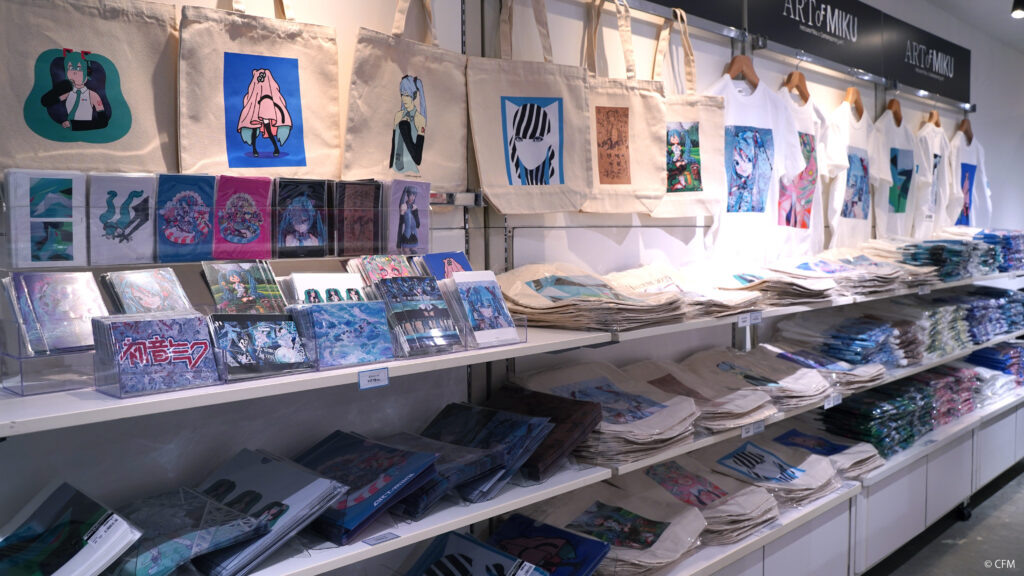
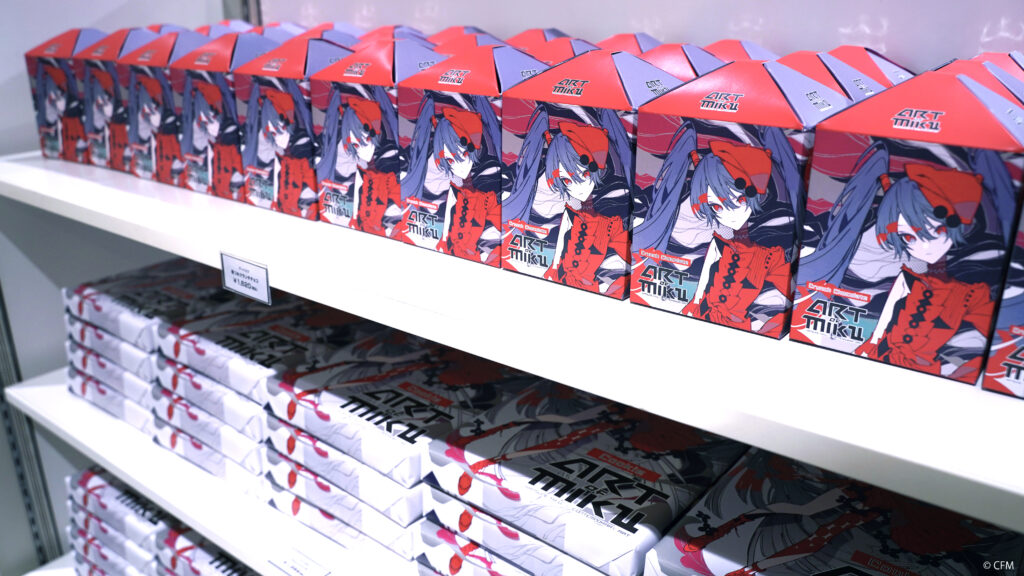
Ikeda: We wanted the merchandise to act as a “hook” to spark interest in art among a broader audience. While the exhibition itself presented works within an art context, the merchandise offered a more accessible entry point. Because Hatsune Miku has such a vast fanbase, we knew that even presenting these items as art would be accepted and enjoyed. Plus, the culture of embracing derivative works provided a very welcoming foundation for this approach.
Can you tell us about any standout merchandise, or do you have any personal favorites from the collection?
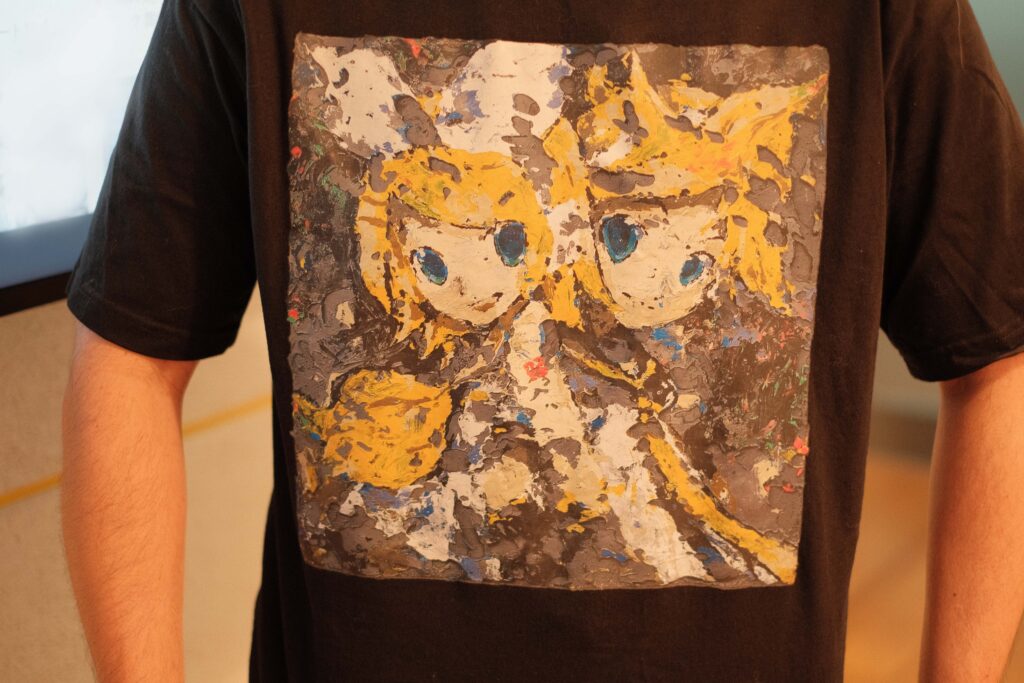
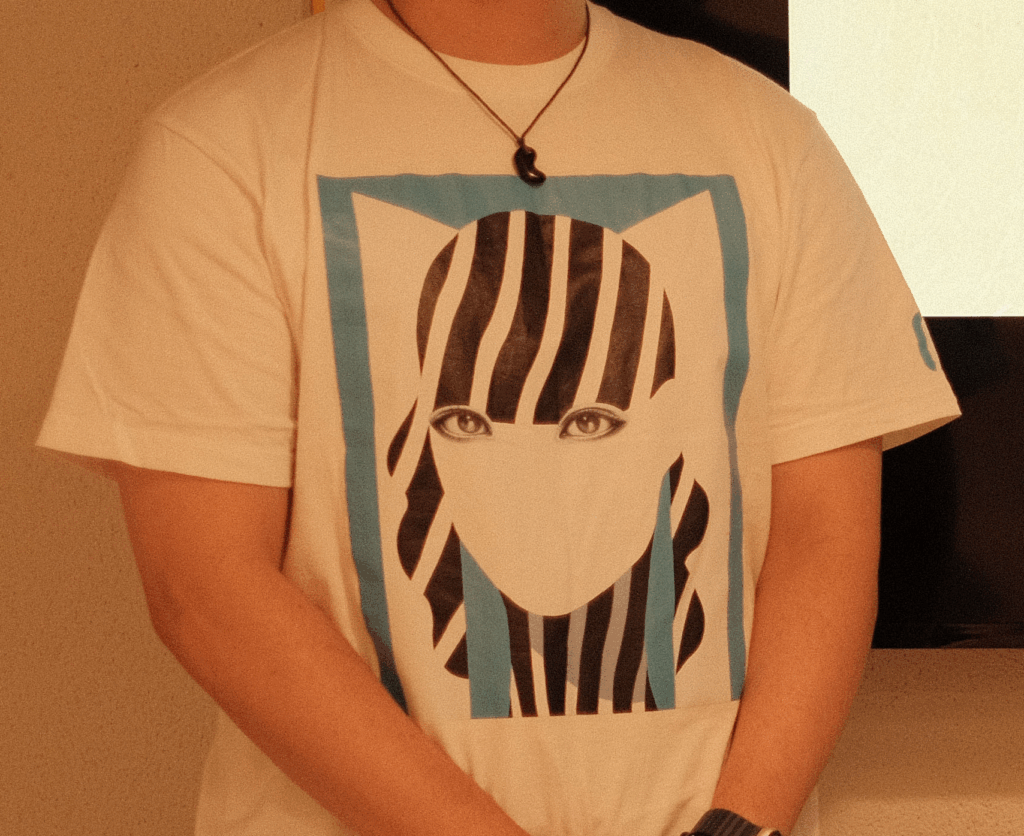
Onish: Among all the merchandise we created, our top pick is this T-shirt that we’re both wearing. The artwork is printed prominently on the front, isn’t it incredibly stylish? The real appeal lies in the unique experience of literally “wearing” a piece of art.
The piece I’m wearing is R&L by Erika Naka, while Ikeda is wearing Portrait of Dazzle MH-03 by Shigeki Matsuyama.
With “ART OF MIKU,” we wanted to maximize the appeal of the artworks while also making them accessible to both contemporary art fans and Hatsune Miku fans alike, letting everyone enjoy them in the form of approachable, collectible merchandise.
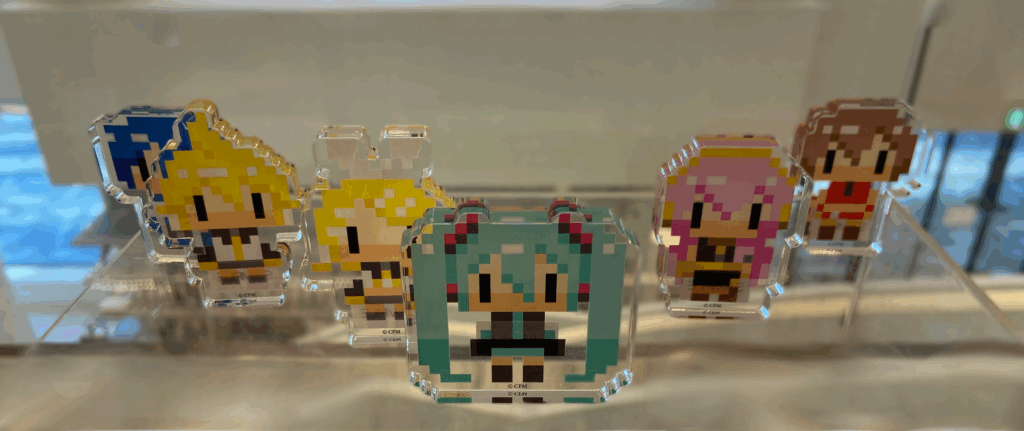
Onishi: Another favorite piece has to be the acrylic figure of the character from Maho Takahashi’s Masayume. It’s like a tiny slice of the artwork you can hold in your hands, blurring the line between “art” and “merch.” Sure, one-of-a-kind masterpieces can be out of reach, but this lets fans bring a piece of the exhibition home in a fun, approachable way. The coolest part? It exists in a whole different context from typical subcultural merch, making it feel fresh and unique.
Were there any hurdles in working with the artists when turning their works into merchandise?
Ikeda: It’s still pretty rare for contemporary art to collaborate with a character and be turned into merch, even across the industry. That’s why we explored a variety of approaches, like T-shirts, acrylic stands featuring characters from the works, and more, to bring these pieces into a tangible, collectible form.
Onishi: True. Some artists were hesitant about seeing their unique, one-of-a-kind pieces become “simplified” merchandise. But by carefully explaining our goal, which was to make art more accessible while respecting their intentions, we were able to get their support eventually. Many artists agreed to get onboard, and the result is something quite rare: Hatsune Miku merchandise inspired by contemporary art. Fans who might not be able to afford an original piece can still enjoy it in a fun, collectible way.
Carefully Curated Captions: An Art Show That Speaks to Everyone
We heard that you put special thought into the way the artworks were explained at the exhibition. Could you tell us more about that?
Ikeda: In many contemporary art exhibitions, captions tend to be minimal like just listing only the artist’s name, the title, and the year. This is, I think, is because it leaves “space” for viewers to freely interpret and engage with the work based on their own experiences, knowledge, and emotions. However, this very minimalism can sometimes make it difficult for audiences to grasp the core concept of a piece or the artist’s intent. I see this “lack of information” as one of the silent barriers separating contemporary art from the general public.
To address this, we curated captions that carefully, but surely weave in the artist’s background and the concept behind each work, while still leaving room for personal interpretation. The goal was to create an experience where viewers could connect more deeply with the artwork and fully immerse themselves in its world.
Indeed, it’s quite rare for captions to reveal the full concept behind a work.
Onishi: We aimed to make the captions accessible even to visitors who don’t normally engage with contemporary art. Beyond simple work descriptions, we included the artists’ backgrounds and the concepts behind each piece – information that typically wouldn’t get highlighted – so visitors could read them as engaging mini-articles.
The exhibition also featured guided tours that went beyond the artworks’ concepts, offering behind-the-scenes stories to draw in the audience. The response was overwhelmingly positive: many visitors said, “I always thought contemporary art was difficult, but understanding the concepts made it fascinating,” or, “I felt a closer connection to the works.”
Were any of the artists hesitant about revealing so much about their concepts?
Ikeda: Surprisingly, there was very little pushback from the artists. In fact, most were cooperative. Once we carefully explained the purpose of the event and the broader goal of “allowing people unfamiliar with contemporary art to enjoy it,” many of them resonated with the idea. Many artists were happy to provide their concepts to help more people engage with their work. For those who didn’t have a specific concept, we made the conscious decision not to include one.
The website was also quite unique. What was the concept or design approach behind it?
Ikeda: Contemporary art encompasses such a wide range of expression that we didn’t want a flat, conventional campaign-style website. Instead, we aimed for an interactive experience that sparks curiosity, so that as users scroll through the website, the artworks come to life through dynamic, engaging elements.
Did the first exhibition leave you a sense that the project was resonating with audiences?
Ikeda: We were definitely exploring new ground, but we felt that with a cultural icon like Hatsune Miku, people would also be open to contemporary art. There was very little criticism online, and we were grateful for the warm reception. It was rewarding to show a completely different way of expressing Miku, beyond the usual illustrations. This project was possible because her fan culture has long embraced creative reinterpretation.
To conclude the first part of this interview, we are pleased to share a special comment from Kumiko Meguro, Manager of the License Business Team at Crypton Future Media, Inc., the rights holder of Hatsune Miku.
What are your thoughts on seeing “Hatsune Miku” reimagined through the “ART OF MIKU” project?
Meguro: “Hatsune Miku” has collaborated with countless creators and brands over the years, but there have been very few examples of her being presented within the realm of contemporary art. When we first heard the proposal for “ART OF MIKU,” we honestly had no idea what kind of response it would receive. From the early planning stages through to the final curation and launch, every step was new to us. Even as the rights holder overseeing the project, we often found ourselves questioning what the ‘right’ approach might be, learning and exploring alongside the team every step of the way.
After the exhibition opened, the response was overwhelming – not only from fans, but also from creators who have long worked with Miku on illustrations and music, as well as from people on social media. Seeing how each participating artist interpreted the existence of “Hatsune Miku” in their own way, transforming that vision into diverse forms of artistic expression, was deeply inspiring. Witnessing their creative processes and passion allowed us to experience a new, unexplored world through Miku. Like the fans, we too found it to be a truly remarkable experience. We are profoundly grateful to everyone involved for expanding the possibilities of what “Hatsune Miku” can be.”
In the second part of this article, we dive deeper into the behind-the-scenes of the 400 team meetings held annually, the motives driving the team, and their vision for international expansion in the years ahead.