Autumn: the season for the arts. With art fairs and events proliferating across the nation, “alter.2025, Tokyo” (hereafter alter.) marks its first edition. This experimental design event takes product design as its starting point, bringing together creators working across diverse fields to explore the future of next-generation design. Living up to its name, alter. offers an alternative path to the current mature and oversaturated post-”design” era.
Subverting Existing Design Events
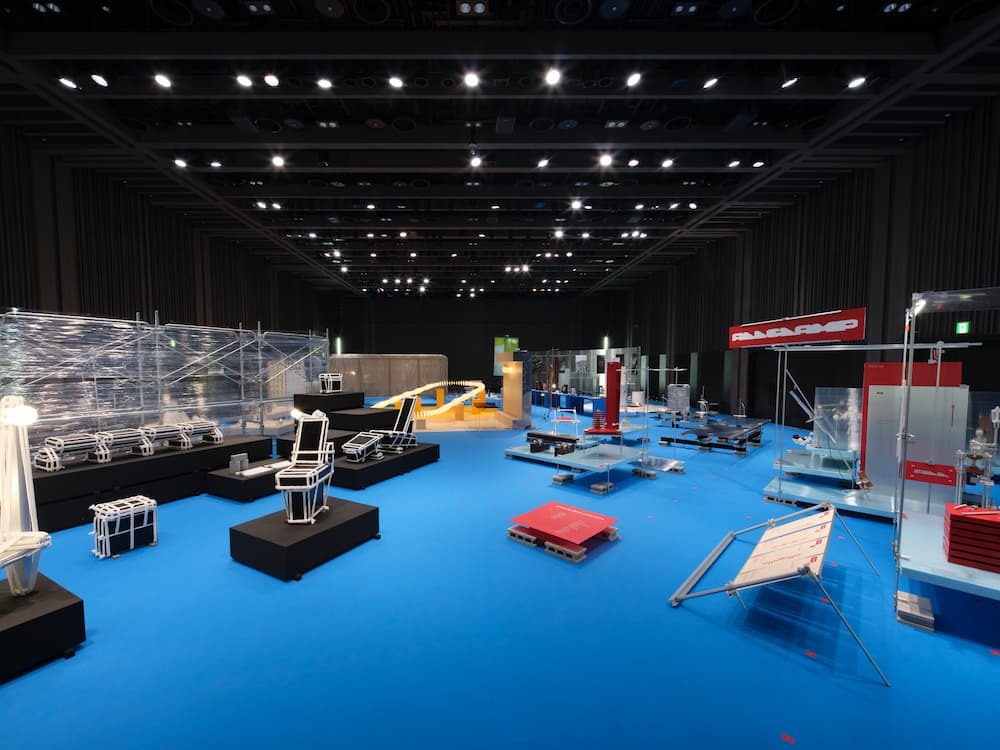
The designed products are displayed in a stylish venue. At first, this may not seem any different from conventional events and art fairs. alter., however, sets themselves apart by having committee members carefully select exhibitors and providing grants of up to 3 million yen to support their projects.
Many events are dominated by mega-galleries, corporate-backed galleries, or young artist groups. Financial capacity becomes a decisive factor in presentation quality, and participation fees often run high. Instead, alter. offers opportunity for experimental, idea-driven projects and explorations beyond one’s typical field of practice.
The committee is structured with five members: Tanja Hwand, a curator at Museum of Modern Art (MoMA) in New York and a leading authority on contemporary art; Olivier Zeitoun, a curator at Paris’s Centre Pompidou; Formafantasma, a design studio at the forefront of the global design scene; Keisuke Nakamura, the representative of “SKWAT” , which operates across urban culture worldwide; and Kristen de La Vallière, founder of international design platform “say hi to_” . This well-rounded team combines Tanja and Olivier’s curatorial expertise in conceptual approaches, Formafantasba and Nakamura’s practical and environmental perspectives, and Kirsten’s editorial approach that explores appeal through text.
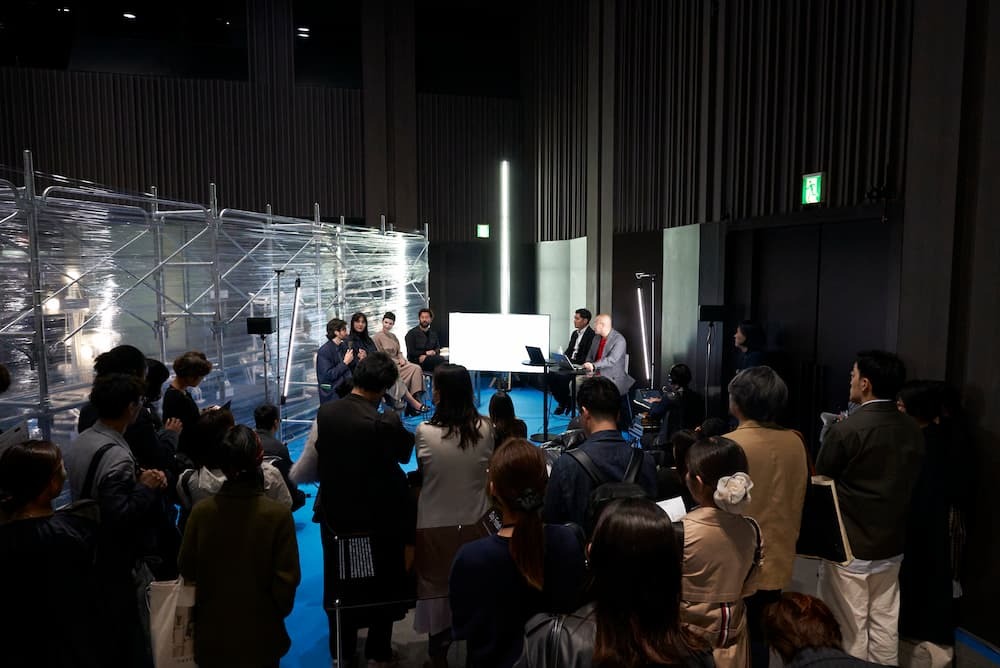
A total of 11 groups comprising 56 participants joined the event, with members primarily under the age of 35, and was held for three days from Friday, November 7 to Sunday, November 9, 2025.
New Works Featuring a Direct Path of the Process From Idea to Creation
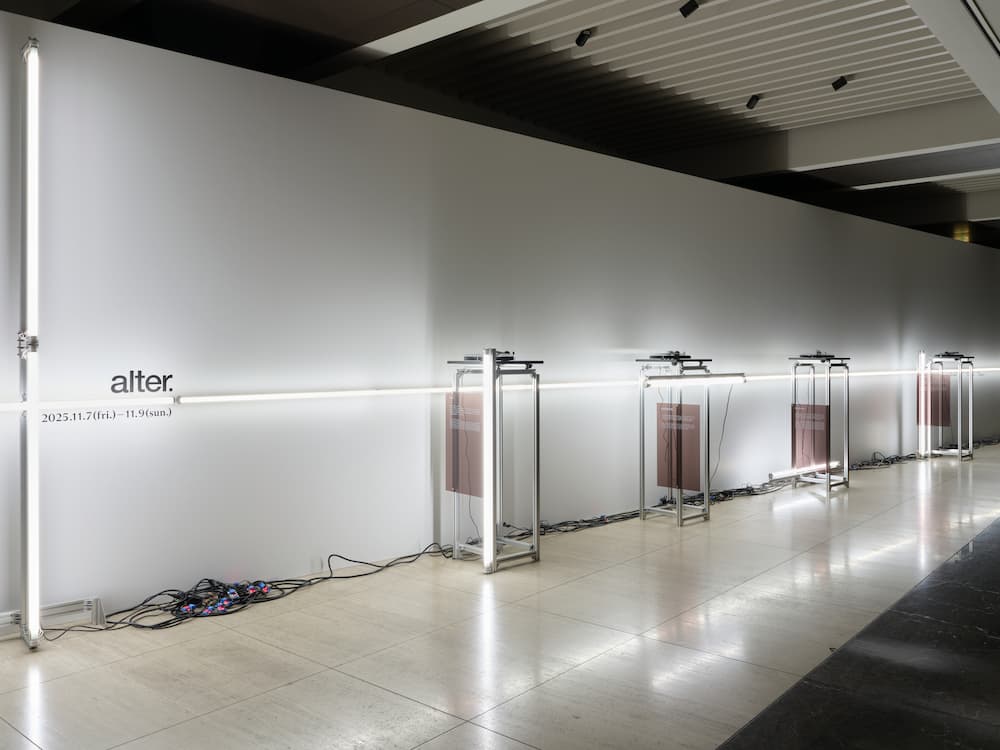
Passing through Nihonbashi’s evening crowds, inside COREDO Muromachi’s Nihonbashi Mitsui Hall – Japan’s financial center, populated by business professionals – the illuminated “alter.” sign appears. A transparent record spins continuously behind it, displaying captions that outline alter.’s four principles. “Alter” means to change – not a total replacement, but modifying parts to improve the whole. Looking around, the venue retains the hall’s dignified, sophisticated atmosphere while adding new elements, essentially embodying the “alter.” philosophy. The venue design was held by Rondade, recognized for its diverse creative work from art exhibition to book direction. Following the lighted signs, visitors pass Kristen de La Vallière’s work continuing to the Exhibition area with its extensive collection of displayed pieces.
packing list / MULTISTANDARD Takuro Tamayama x Midori Kawano Voidbark
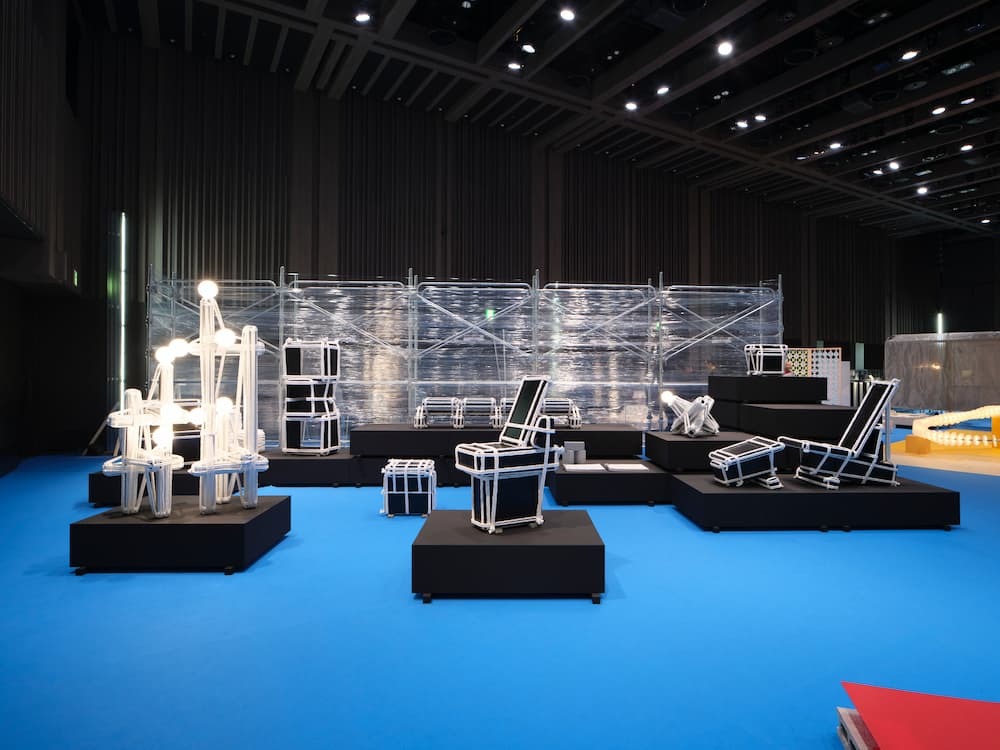
Vivid blue punch carpet stretches across the floor, where participant-created products are arranged with a factory-like precision. The eyes were immediately drawn to the “packing list” by MULTISTANDARD – an assemblage of diverse forms tied together with rope. Taking inspiration from the transport packaging process, the work critiques Japan’s underdeveloped international art market, artist domestication, and geographical handicap. It cleverly transforms the invisibility of art packaging by making the act itself the artwork. The rope binding references traditional stonemason transport technique and is designed so that when the final knot is tied, the work and its packaging is simultaneously completed.
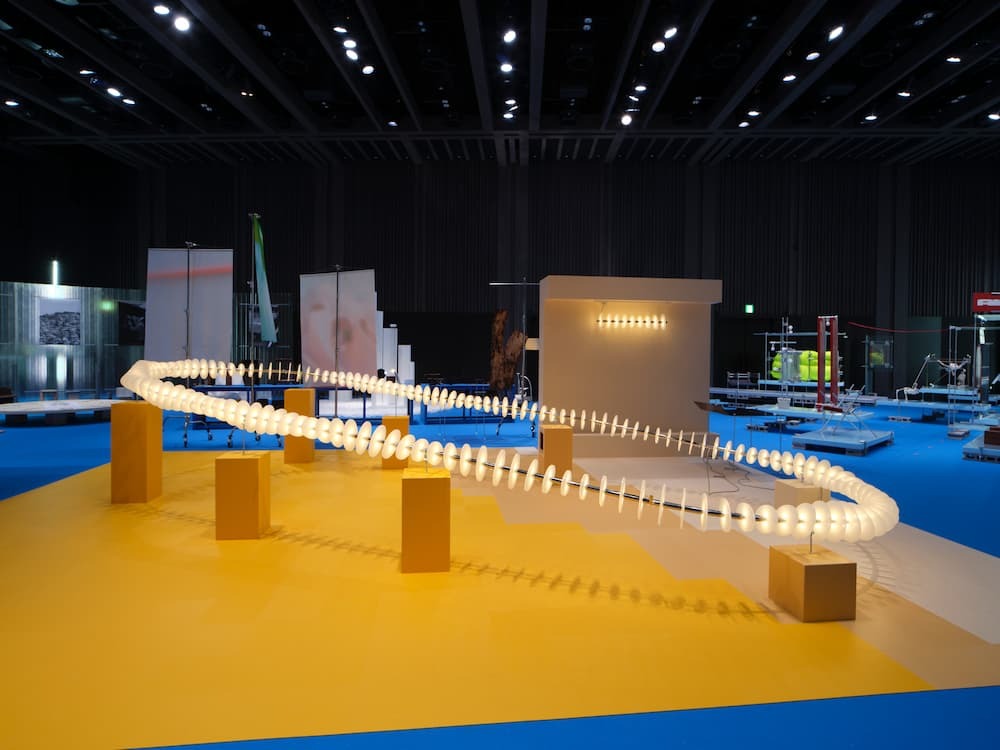
Takuro Tamayama, an artist who transforms furniture and space into creative motifs, collaborated with visual director and graphic artist Midori Kawano to develop “Product and Space.” a large-scale light installation.
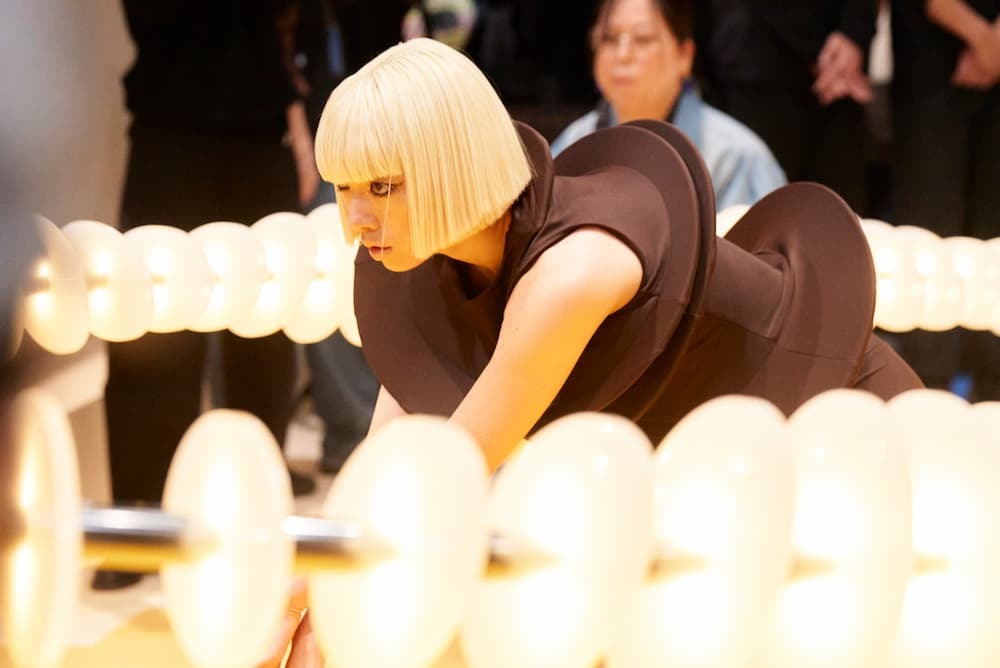
Aoi Yamada performed alongside this work at the opening reception. The disc-shaped lights, arranged freely along the flexible pipe structures, function beyond simple illumination – they become objects that sharpen our perception of spatial dimensions and our own corporeal presence. Personally, I’d like to duck beneath or sit down on these lights (laughs).
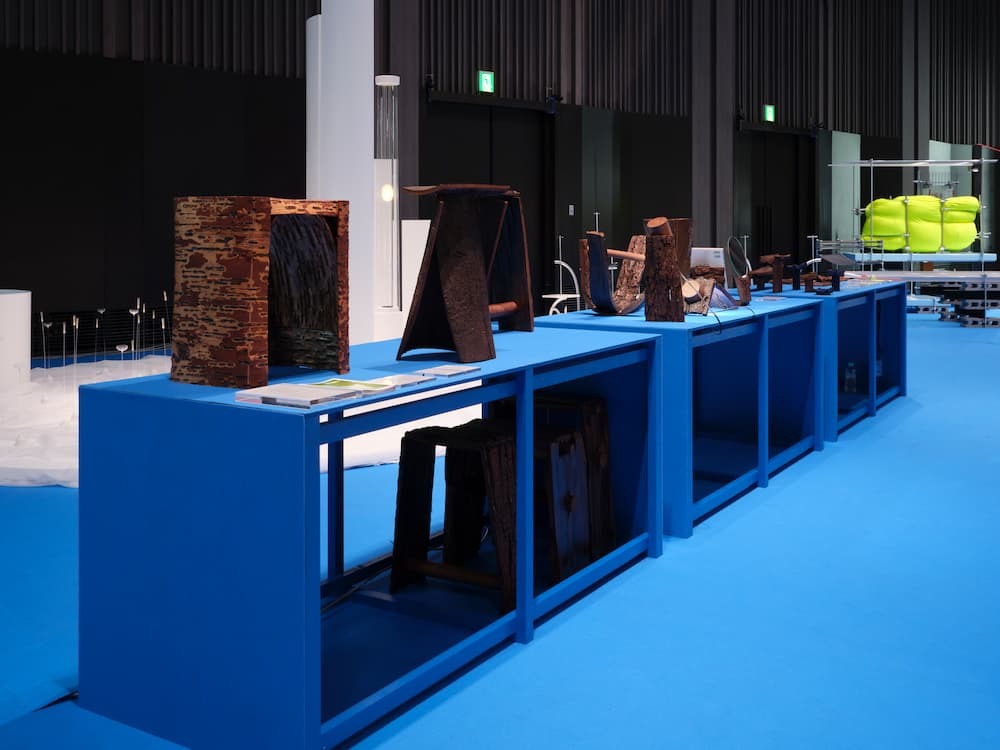
Voidbark – a team of four comprising a designer, lumber processor, photographer, and furniture craftsman, centered their work on tree bark. Annually, over 50 tons of bark in architectural and furniture production are either discarded or processed into unrecognizable forms. Yet bark offers visual appeal along with considerable thickness and strength. The “Japanese White Birch Stool” lets these properties shine through its characteristic surface patterns and simple structural form.
In recent years, “technology” and “craftsmanship” have become prevalent words in manufacturing discourse. While both concepts have value, their ubiquity has dulled their impact. alter.’s exhibited works stand apart by clearly positioning themselves as product design with clear purpose and application. They engage with everyday concerns and challenges, finding charms in small, deliberate interventions. At this unusual design event, visitors experienced authentic creation – one that depends neither on high-tech spectacle nor romanticized craft narratives.